
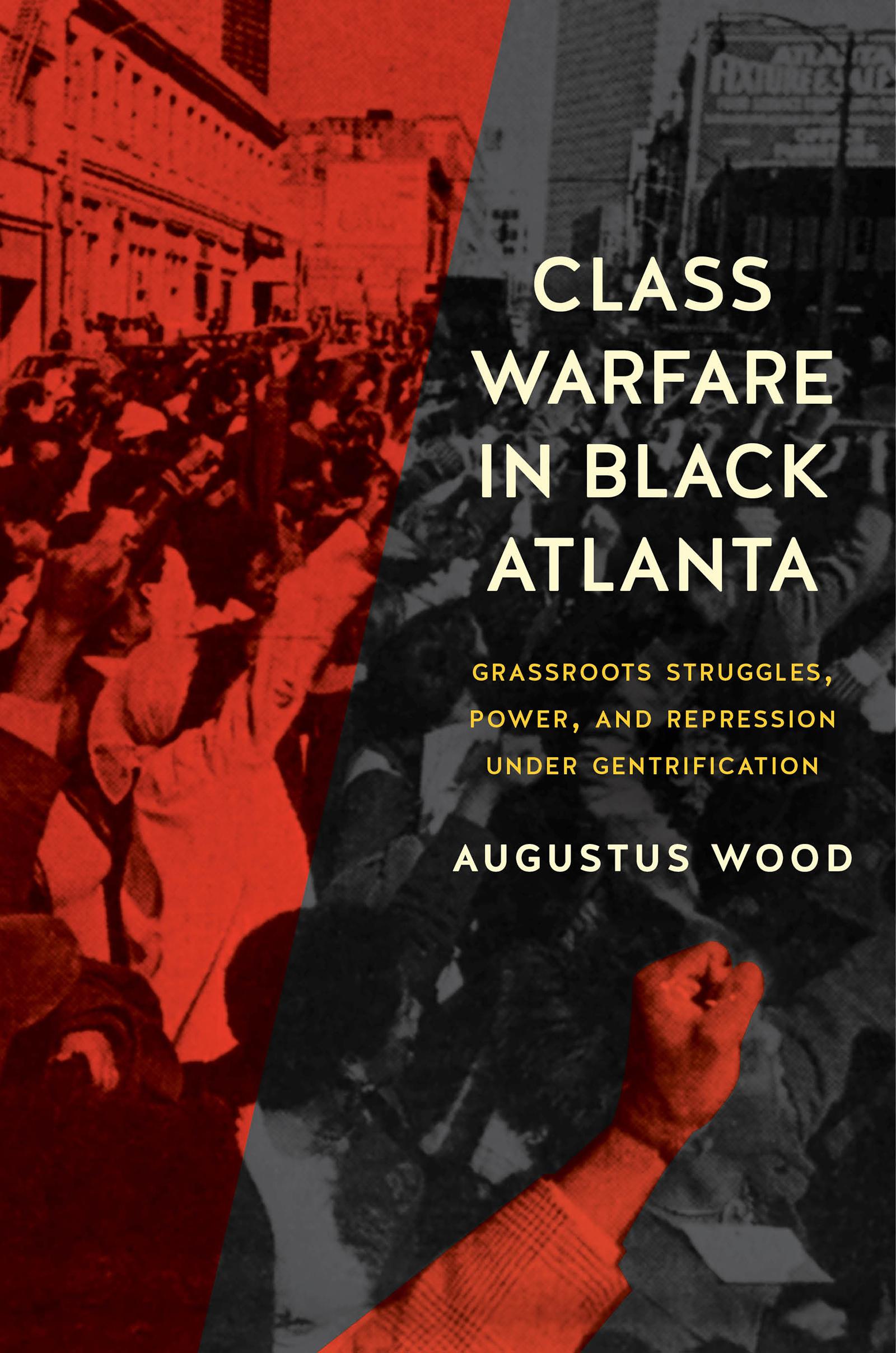
Between 1966 and 2015, the city of Atlanta was transformed. In the late 1960s, Black politicians ascended to the top of the power structure for the first time thanks to newly enfranchised Black working-class voters. Through the early 1970s, the demographics of the city shifted, and the combination of Black empowerment and white flight produced a growing Black working-class majority that increasingly demanded Black Power policies that often clashed with the policies supported by affluent residents. But by the 2010s, Atlanta’s city core had been thoroughly gentrified, and the ability of Black working-class Atlantans to organize and build power had diminished significantly.
Tracing the history of post–civil rights Black Atlanta through rigorous class analysis, Augustus Wood argues that Black and white elites responded to an energized and politicized Black working class by forging a public-private partnership power bloc that included the small but growing Black political leadership, expanding the racial class contradictions in Black Atlanta. This bloc worked to shift state funding away from public services and toward gentrification projects that demolished subsidized housing, and it ramped up police surveillance to deter working-class resistance. Paying close attention to political economy and class while drawing on unexamined archival sources and oral histories of Black working-class Atlantans, especially Black women, Wood reframes our understanding of contemporary Black urban life by highlighting the centrality of the dynamics of intraracial class conflict in urban space.
Tracing the history of post–civil rights Black Atlanta through rigorous class analysis, Augustus Wood argues that Black and white elites responded to an energized and politicized Black working class by forging a public-private partnership power bloc that included the small but growing Black political leadership, expanding the racial class contradictions in Black Atlanta. This bloc worked to shift state funding away from public services and toward gentrification projects that demolished subsidized housing, and it ramped up police surveillance to deter working-class resistance. Paying close attention to political economy and class while drawing on unexamined archival sources and oral histories of Black working-class Atlantans, especially Black women, Wood reframes our understanding of contemporary Black urban life by highlighting the centrality of the dynamics of intraracial class conflict in urban space.
Betal enkelt med kort, Klarna, Apple Pay eller Google Pay. Ikke fornøyd? Du har alltid 14 dagers angrerett. Les mer i våre vilkår. Har du spørsmål, send oss en e-post på hello@memmo.org.
Memmo gjør det enklere å studere – uansett hvor du er i verden. Hos oss samler du pensumbøker og smarte studieverktøy på ett og samme sted: sammendrag, quizer, podkaster og flashcards. Og så Ted, din studiekompis som svarer på alt du lurer på. Over 50 000 studenter studerer allerede her – bygget for at du skal lære raskere og stresse mindre.
Du vil kanskje også like
Kjøp boken0