
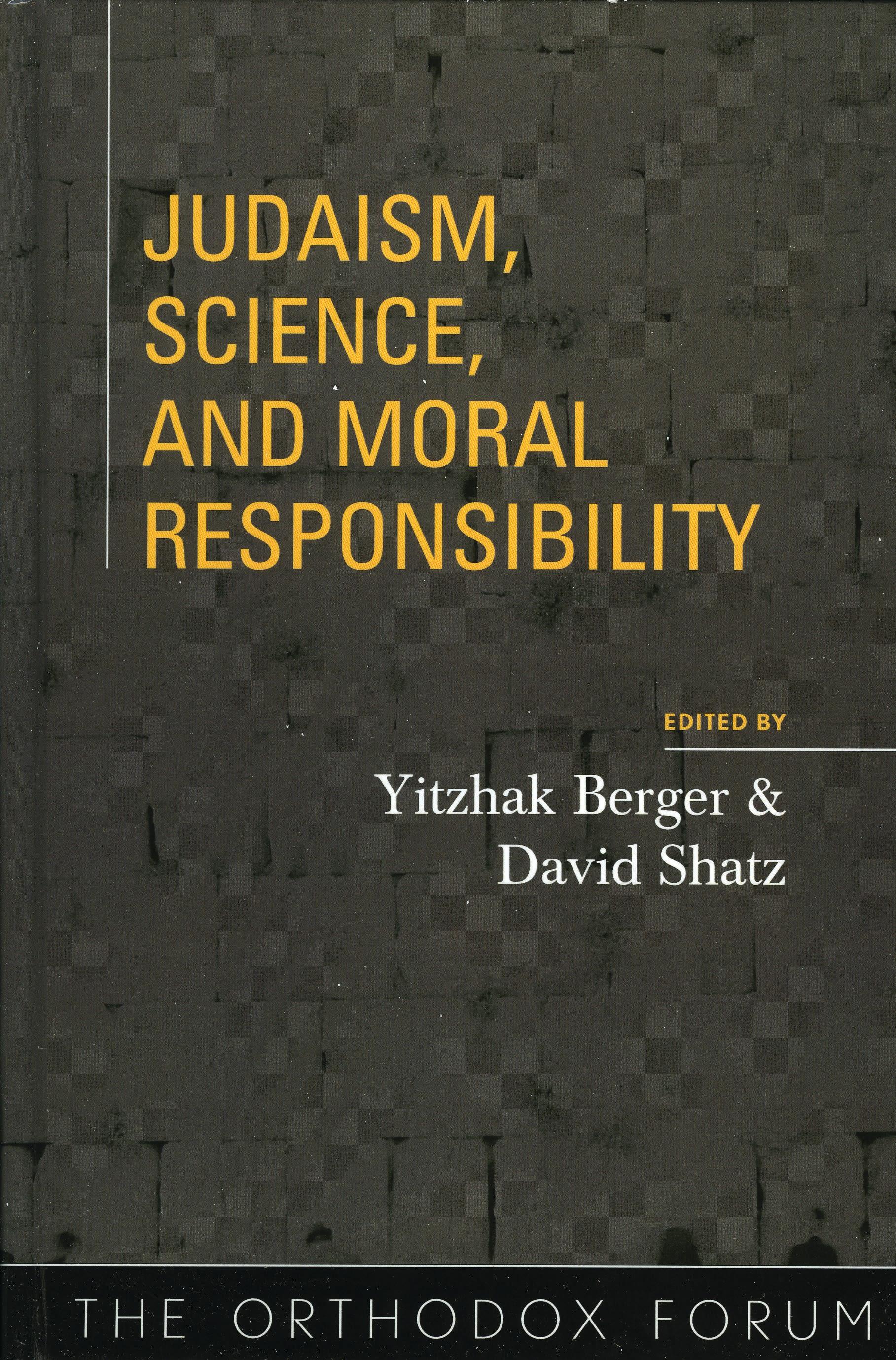
Do human beings have free will? Are they genuinely responsible for their actions? These questions have persisted all through the history of philosophy, but in the 21st century they have become defined more sharply and clearly than ever. Indeed, a vivid and mighty tension underlies today's intellectual struggles over free will. On the one hand, the rapid advances of several empirical disciplines, notably neuropsychology and genetics, threaten our instinctive affirmation that free will and moral responsibility exist. On the other hand, the depth and force of our instincts-our powerful intuition that there is free will, that there is moral responsibility-present, for most people, an almost impenetrable barrier against the sweeping denial of free will suggested by empirical research. The papers in this volume address this tension from a dual vantage point. While drawing heavily upon traditional Jewish texts and teachings, they also offer a blend of scientific, philosophical, psychological, and social insights into this most mystifying of topics. In addition, they illuminate the concept of repentance, a transformation of character that ranks in much of Jewish literature as the highest expression of free will.
Betal enkelt med kort, Klarna, Apple Pay eller Google Pay. Ikke fornøyd? Du har alltid 14 dagers angrerett. Les mer i våre vilkår. Har du spørsmål, send oss en e-post på hello@memmo.org.
Memmo gjør det enklere å studere – uansett hvor du er i verden. Hos oss samler du pensumbøker og smarte studieverktøy på ett og samme sted: sammendrag, quizer, podkaster og flashcards. Og så Ted, din studiekompis som svarer på alt du lurer på. Over 50 000 studenter studerer allerede her – bygget for at du skal lære raskere og stresse mindre.