
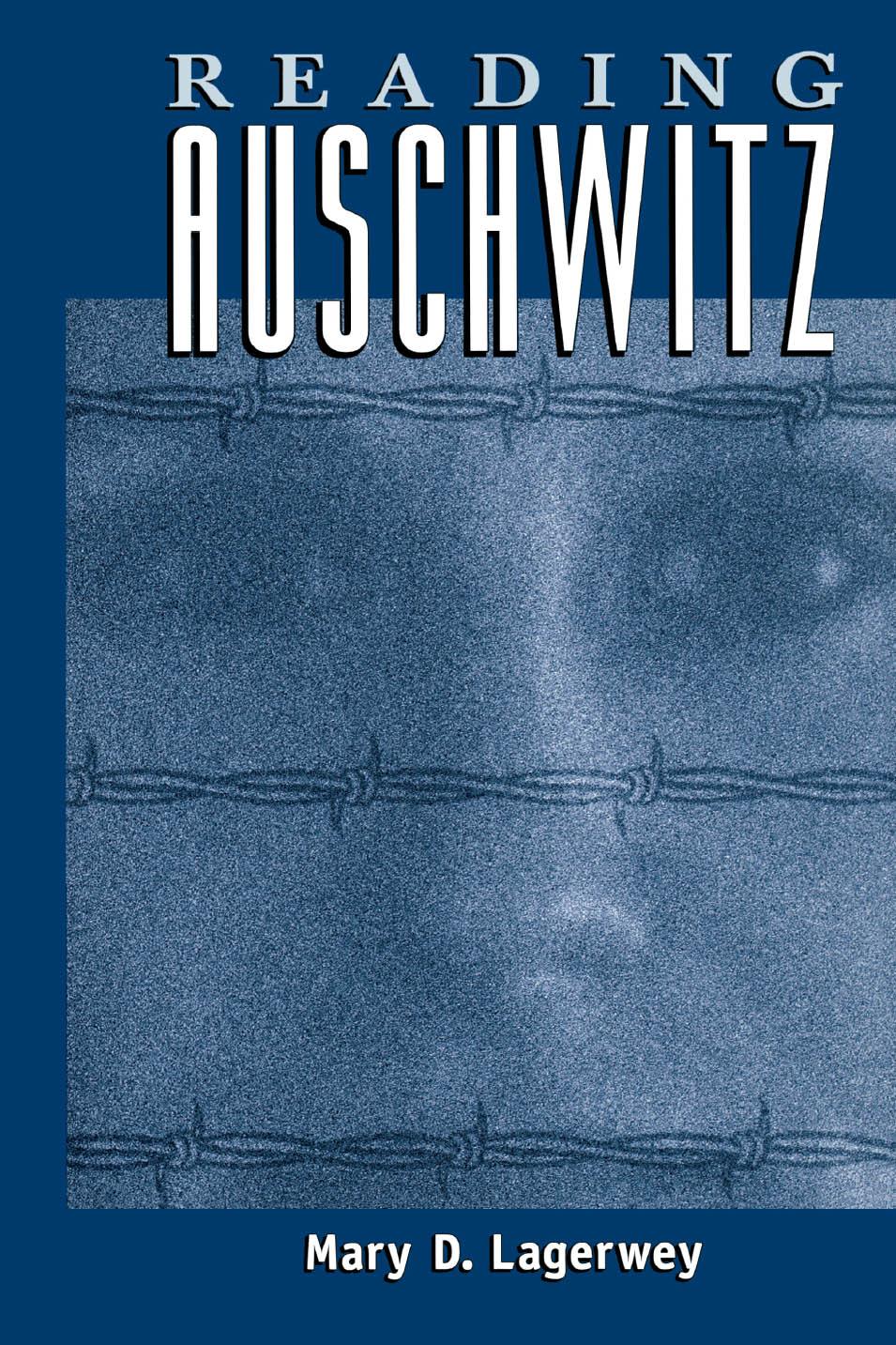
'My mind refuses to play its part in the scholarly exercise. I walk around in a daze, remembering occasionally to take a picture. I've heard that many people cry here, but I am too numb to feel. The wind whips through my wool coat. I am very cold, and I imagine what the wind would have felt like for someone here fifty years ago without coat, boots, or gloves. Hours later as I write, I tell myself a story about the day, hoping it is true, and hoping it will make sense of what I did and did not feel.' _From the Foreword Most of us learn of Auschwitz and the Holocaust through the writings of Anne Frank and Elie Wiesel. Remarkable as their stories are, they leave many voices of Auschwitz unheard. Mary Lagerwey seeks to complicate our memory of Auschwitz by reading less canonical survivors: Jean Amery, Charlotte Delbo, Fania Fenelon, Szymon Laks, Primo Levi, and Sara Nomberg-Przytyk. She reads for how gender, social class, and ethnicity color their tellings. She asks whether we can_whether we should_make sense of Auschwitz. And throughout, Lagerwey reveals her own role in her research; tells of her own fears and anxieties presenting what she, a non-Jew born after the fall of Nazism, can only know second-hand. For any student of the Holocaust, for anyone trying to make sense of the final solution, Reading Auschwitz represents a powerful struggle with what it means to read and tell stories after Auschwitz.
Betal enkelt med kort, Klarna, Apple Pay eller Google Pay. Ikke fornøyd? Du har alltid 14 dagers angrerett. Les mer i våre vilkår. Har du spørsmål, send oss en e-post på hello@memmo.org.
Memmo gjør det enklere å studere – uansett hvor du er i verden. Hos oss samler du pensumbøker og smarte studieverktøy på ett og samme sted: sammendrag, quizer, podkaster og flashcards. Og så Ted, din studiekompis som svarer på alt du lurer på. Over 50 000 studenter studerer allerede her – bygget for at du skal lære raskere og stresse mindre.