
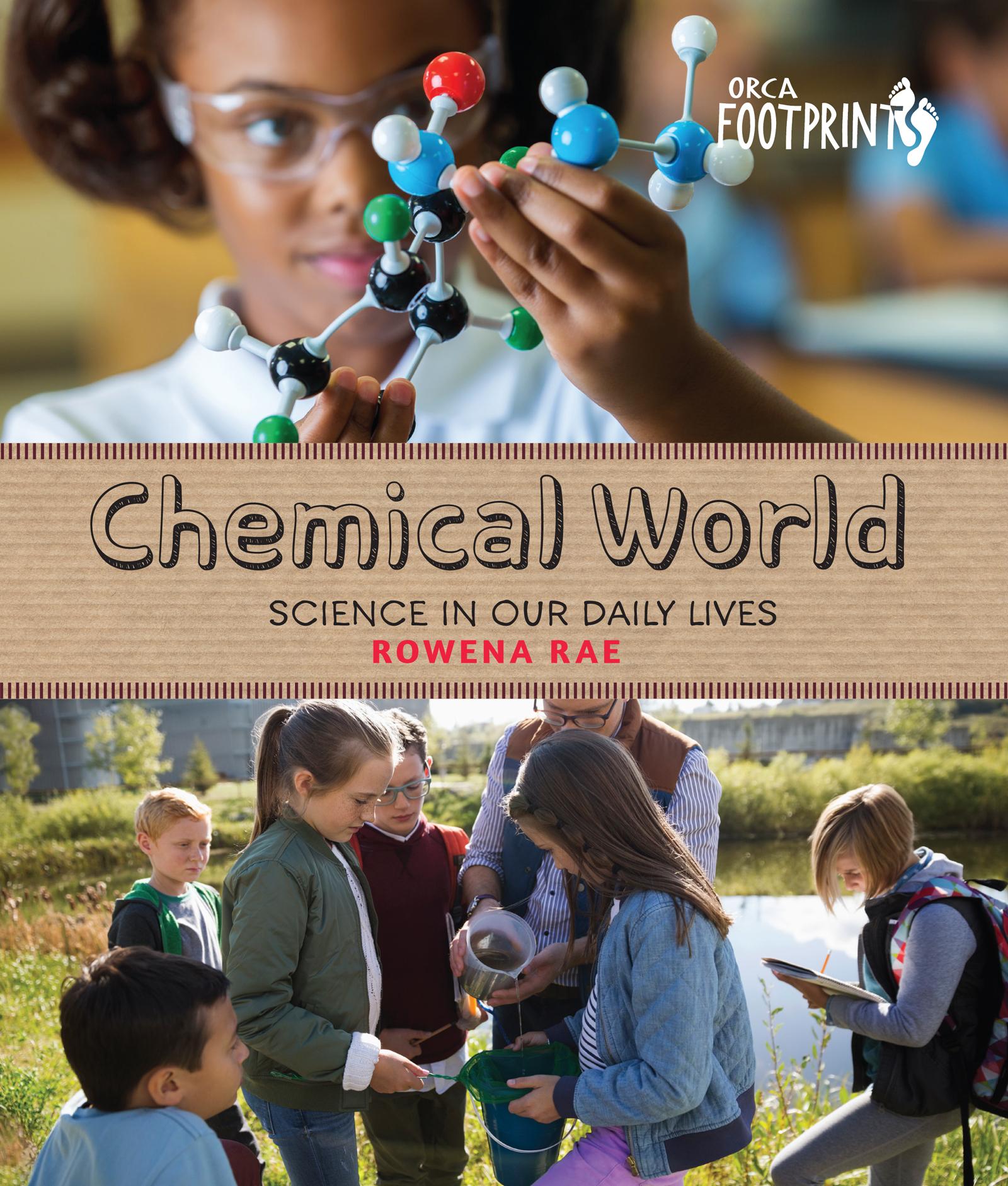
Despite people using both natural and synthetic chemicals with (mainly) good intentions, some chemicals have had unintended negative consequences.
Chemical residues have contaminated ecosystems the world over and are compromising the health of many ecosystems, animals and humans. The goal of Chemical World: Science in our Daily Lives is to introduce readers to basic chemistry and chemical history, and to show how chemicals are used for particular reasons but sometimes turn out to be harmful to environmental and human health. It invites readers to take a look at the world around them and ask questions about what’s in their environment and how the things they use and eat every day can affect their own health and the planet’s health.
Chemical World: Science in Our Daily Lives explores some of the materials—all of which are made of basic chemical elements—that humans use or come into contact with in their day-to-day lives. Some of these chemicals are naturally occurring—clay, mercury, lead. Others have been synthesized by chemists during the past 150 years and used in a bewildering array of products ranging from roof shingles to toothpaste. Many chemical inventions, as well as naturally produced chemicals, have had profound effects on food supply, developing medicines and creating hosts of useful items for modern life.
The epub edition of this title is fully accessible.
Betal enkelt med kort, Klarna, Apple Pay eller Google Pay. Ikke fornøyd? Du har alltid 14 dagers angrerett. Les mer i våre vilkår. Har du spørsmål, send oss en e-post på hello@memmo.org.
Memmo gjør det enklere å studere – uansett hvor du er i verden. Hos oss samler du pensumbøker og smarte studieverktøy på ett og samme sted: sammendrag, quizer, podkaster og flashcards. Og så Ted, din studiekompis som svarer på alt du lurer på. Over 50 000 studenter studerer allerede her – bygget for at du skal lære raskere og stresse mindre.