
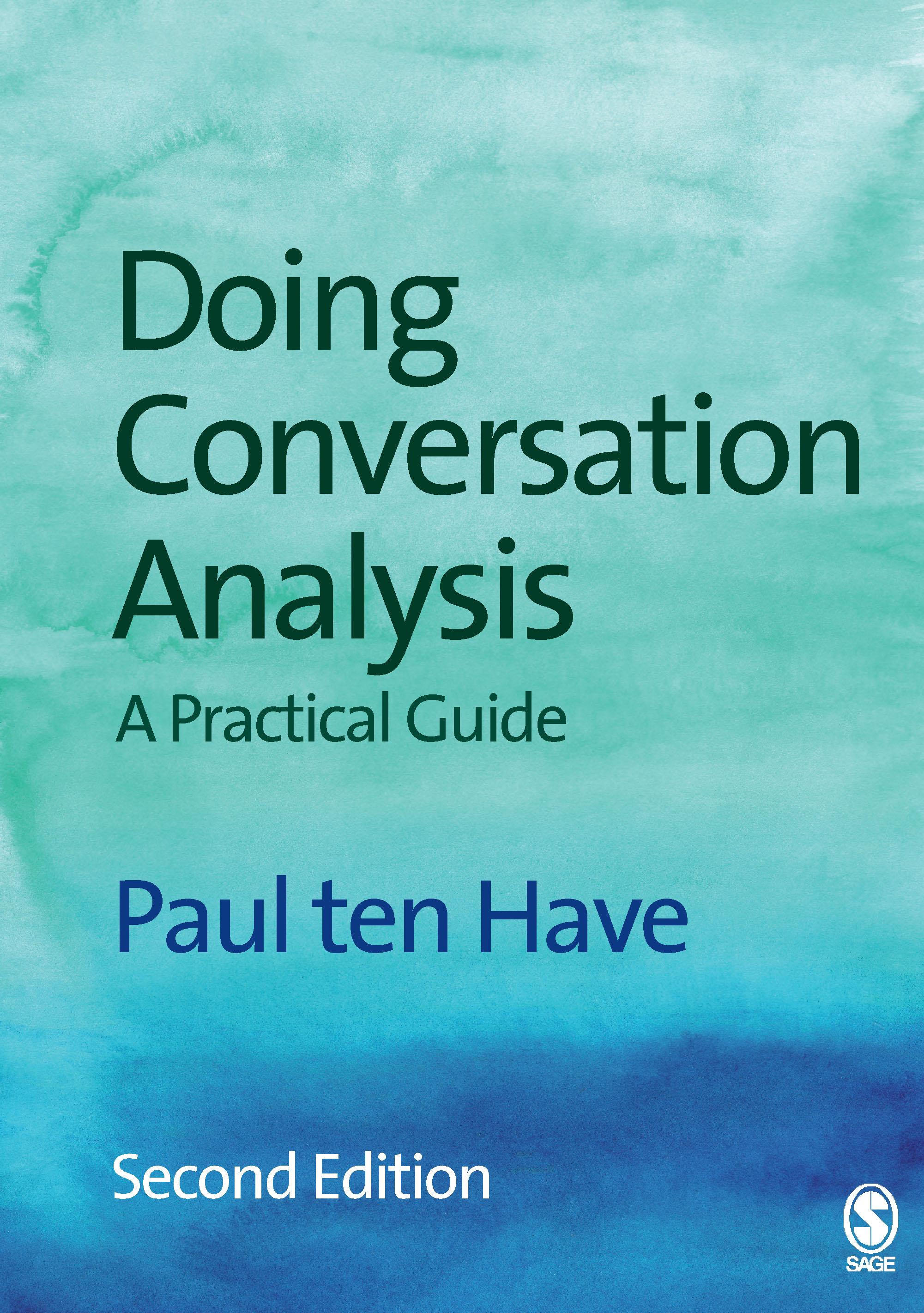
This is the book for introducing and getting to grips with conversation analysis. Accessible, comprehensive and very applied.
- Steven Wright, Lancaster University
"A clearly written book. It puts CA into perspective by presenting exemplary studies and differentiating CA from other approaches to discourse. It is full of advice concerning the technicalities of recording, transcription and analysis. It will be most useful to my students."
- Spiros Moschonas, University of Athens
The Second Edition of Paul ten Have′s classic text Doing Conversation Analysis has been substantially revised to bring the book up-to-date with the many changes that have occurred in conversation analysis over recent years.
The book has a dual purpose: to introduce the reader to conversation analysis (CA) as a specific research approach in the human sciences, and to provide students and novice researchers with methodological and practical suggestions for actually doing CA research.
The first part of the book sets out the core theoretical concepts that underpin CA and relates these to other approaches to qualitative analysis. The second and third parts detail the specifics of CA in its production of data, recordings and transcripts, and its analytic strategies. The final part discusses ways in which CA can be ′applied′ in the study of specific institutional settings and for practical or critical purposes.
- Steven Wright, Lancaster University
"A clearly written book. It puts CA into perspective by presenting exemplary studies and differentiating CA from other approaches to discourse. It is full of advice concerning the technicalities of recording, transcription and analysis. It will be most useful to my students."
- Spiros Moschonas, University of Athens
The Second Edition of Paul ten Have′s classic text Doing Conversation Analysis has been substantially revised to bring the book up-to-date with the many changes that have occurred in conversation analysis over recent years.
The book has a dual purpose: to introduce the reader to conversation analysis (CA) as a specific research approach in the human sciences, and to provide students and novice researchers with methodological and practical suggestions for actually doing CA research.
The first part of the book sets out the core theoretical concepts that underpin CA and relates these to other approaches to qualitative analysis. The second and third parts detail the specifics of CA in its production of data, recordings and transcripts, and its analytic strategies. The final part discusses ways in which CA can be ′applied′ in the study of specific institutional settings and for practical or critical purposes.
Betal enkelt med kort, Klarna, Apple Pay eller Google Pay. Ikke fornøyd? Du har alltid 14 dagers angrerett. Les mer i våre vilkår. Har du spørsmål, send oss en e-post på hello@memmo.org.
Memmo gjør det enklere å studere – uansett hvor du er i verden. Hos oss samler du pensumbøker og smarte studieverktøy på ett og samme sted: sammendrag, quizer, podkaster og flashcards. Og så Ted, din studiekompis som svarer på alt du lurer på. Over 50 000 studenter studerer allerede her – bygget for at du skal lære raskere og stresse mindre.