
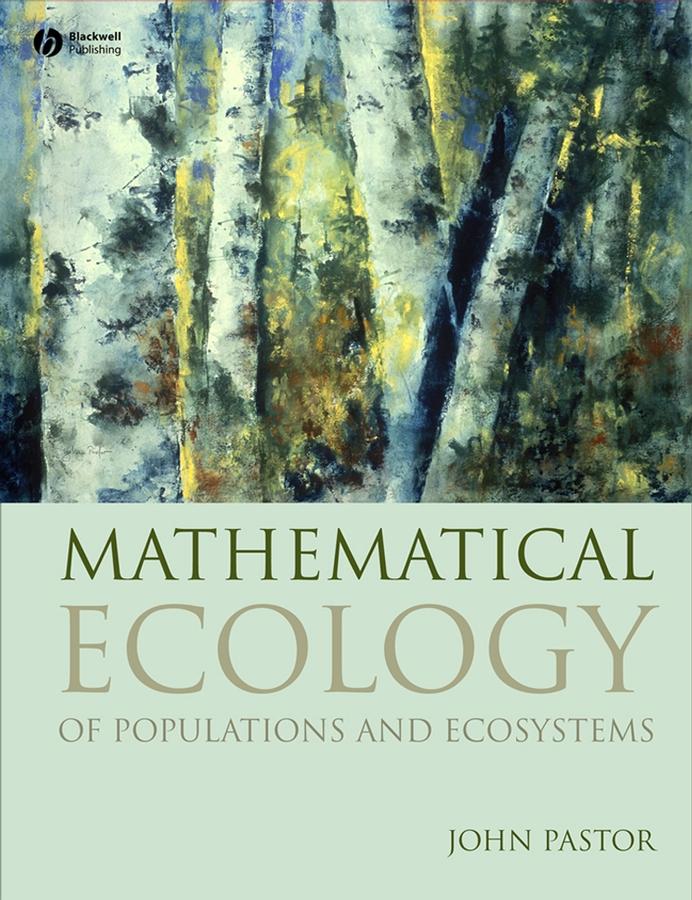
Population ecologists study how births and deaths affect the dynamics of populations and communities, while ecosystem ecologists study how species control the flux of energy and materials through food webs and ecosystems. Although all these processes occur simultaneously in nature, the mathematical frameworks bridging the two disciplines have developed independently. Consequently, this independent development of theory has impeded the cross-fertilization of population and ecosystem ecology. Using recent developments from dynamical systems theory, this advanced undergraduate/graduate level textbook shows how to bridge the two disciplines seamlessly. The book shows how bifurcations between the solutions of models can help understand regime shifts in natural populations and ecosystems once thresholds in rates of births, deaths, consumption, competition, nutrient inputs, and decay are crossed.
Mathematical Ecology is essential reading for students of ecology who have had a first course in calculus and linear algebra or students in mathematics wishing to learn how dynamical systems theory can be applied to ecological problems.
Betal enkelt med kort, Klarna, Apple Pay eller Google Pay. Ikke fornøyd? Du har alltid 14 dagers angrerett. Les mer i våre vilkår. Har du spørsmål, send oss en e-post på hello@memmo.org.
Memmo gjør det enklere å studere – uansett hvor du er i verden. Hos oss samler du pensumbøker og smarte studieverktøy på ett og samme sted: sammendrag, quizer, podkaster og flashcards. Og så Ted, din studiekompis som svarer på alt du lurer på. Over 50 000 studenter studerer allerede her – bygget for at du skal lære raskere og stresse mindre.