
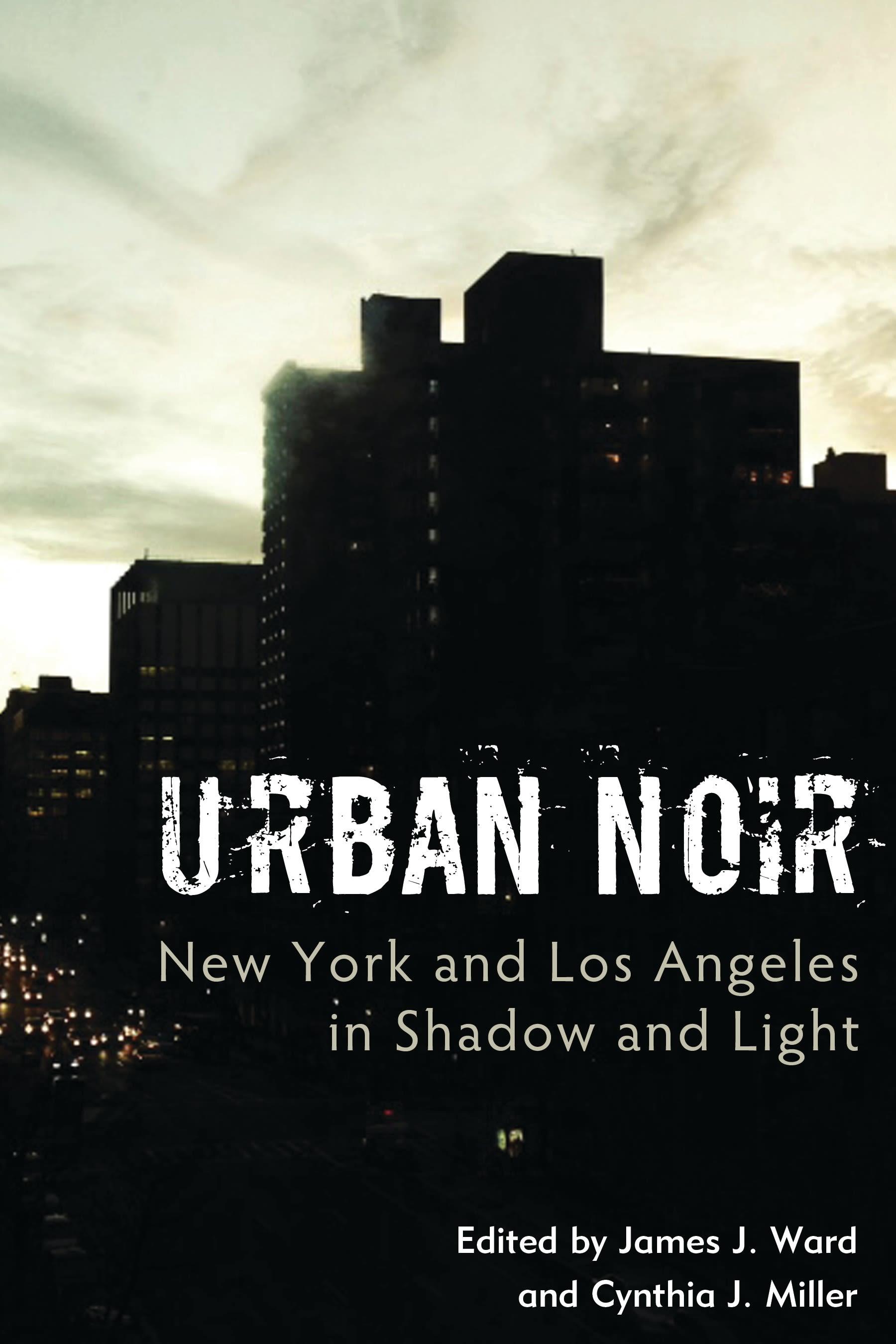
Film noir has always been associated with urban landscapes, and no two cities have been represented more prominently in these films than New York and Los Angeles. In noir and neo-noir films since the 1940s, both cities are ominous locales where ruthless ambition, destructive impulses, and dashed hopes are played out against backdrops indifferent to human dramas.
In Urban Noir: New York and Los Angeles in Shadow and Light, James J. Ward and Cynthia J. Miller have brought together essays by an international group of scholars that examine the dark appeal of these two cities. The essays in this volume explore aspects of the noir and neo-noir cityscape that have been relatively unexamined, including the role of sound and movement through space, the distinctive character of certain neighborhoods and locales, and the importance of individual moments in time. Among the films discussed in this book are classic noirs Double Indemnity (1944), He Walked by Night (1948), and Criss Cross (1949), as well as neo-noirs such as Cotton Comes to Harlem (1970), Klute (1971), Taxi Driver (1976), Eyes of Laura Mars (1978), Cruising (1980), Alphabet City (1984), Devil in a Blue Dress (1995), Drive (2011), Rampart (2011), and Nightcrawler (2014).
Uniting these essays is a thematic orientation toward darkness, whether interpreted in atmospheric and architectural terms, in social and psychological terms, or in terms of disruptive change, economic dislocation, and real or perceived existential threats. Offering multiple new perspectives on a wide range of films, Urban Noir will be of interest to scholars of film, media, politics, sociology, history, and popular culture.
In Urban Noir: New York and Los Angeles in Shadow and Light, James J. Ward and Cynthia J. Miller have brought together essays by an international group of scholars that examine the dark appeal of these two cities. The essays in this volume explore aspects of the noir and neo-noir cityscape that have been relatively unexamined, including the role of sound and movement through space, the distinctive character of certain neighborhoods and locales, and the importance of individual moments in time. Among the films discussed in this book are classic noirs Double Indemnity (1944), He Walked by Night (1948), and Criss Cross (1949), as well as neo-noirs such as Cotton Comes to Harlem (1970), Klute (1971), Taxi Driver (1976), Eyes of Laura Mars (1978), Cruising (1980), Alphabet City (1984), Devil in a Blue Dress (1995), Drive (2011), Rampart (2011), and Nightcrawler (2014).
Uniting these essays is a thematic orientation toward darkness, whether interpreted in atmospheric and architectural terms, in social and psychological terms, or in terms of disruptive change, economic dislocation, and real or perceived existential threats. Offering multiple new perspectives on a wide range of films, Urban Noir will be of interest to scholars of film, media, politics, sociology, history, and popular culture.
Sider: 254
Kategori: Film- & Medievetenskap
e-ISBN: 9781442278332
Fraktvekt: 1.2 kg
Sendes innen: 1-2 dager
Betal enkelt med kort, Klarna, Apple Pay eller Google Pay. Ikke fornøyd? Du har alltid 14 dagers angrerett. Les mer i våre vilkår. Har du spørsmål, send oss en e-post på hello@memmo.org.
Memmo gjør det enklere å studere – uansett hvor du er i verden. Hos oss samler du pensumbøker og smarte studieverktøy på ett og samme sted: sammendrag, quizer, podkaster og flashcards. Og så Ted, din studiekompis som svarer på alt du lurer på. Over 50 000 studenter studerer allerede her – bygget for at du skal lære raskere og stresse mindre.