
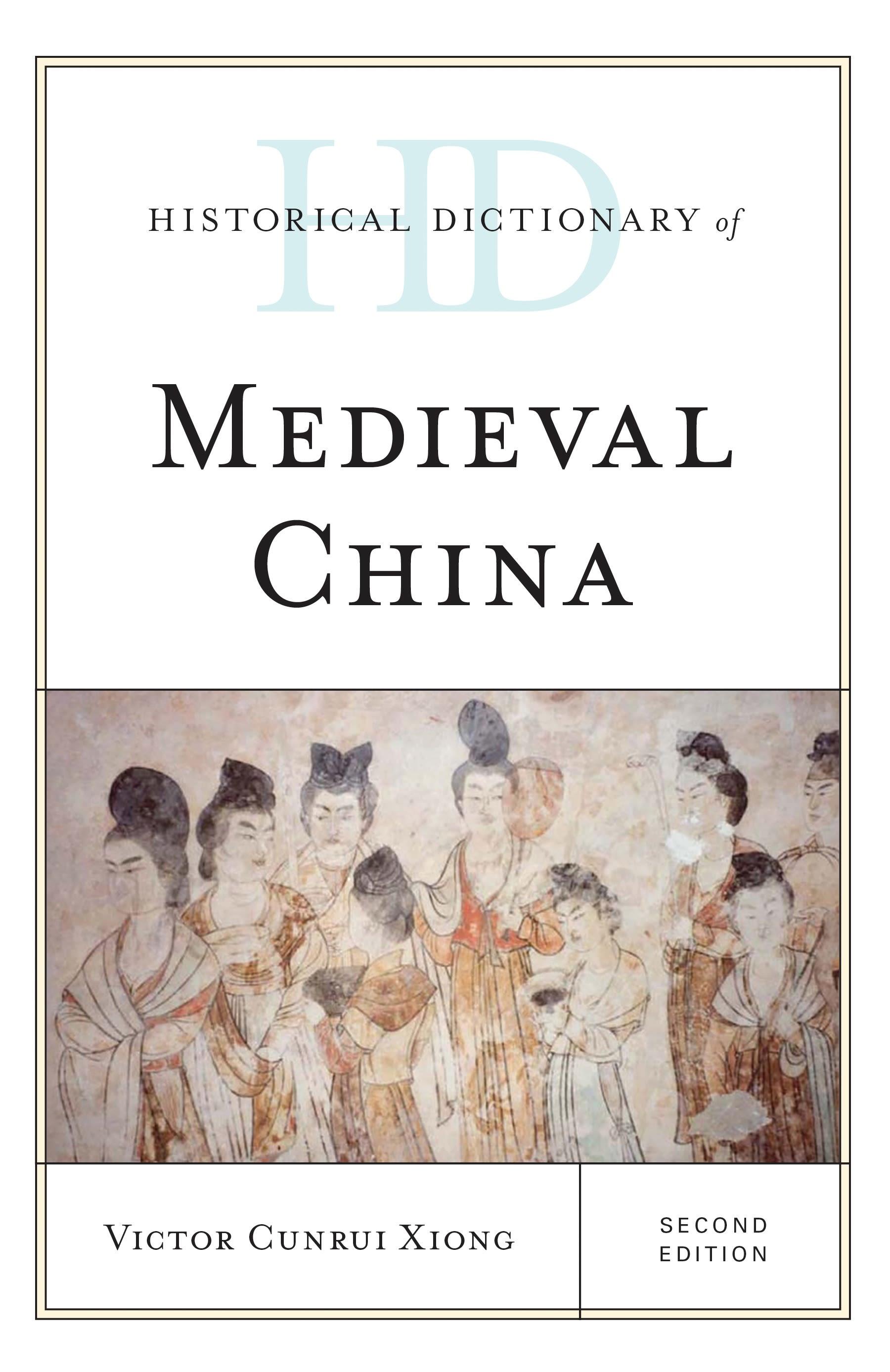
The crucial period of Chinese history, 168-979, falls naturally into contrasting phases. The first phase, also known as that of 'early medieval China,' is an age of political decentralization. Following the breakup of the Han empire, China was plunged into civil war and fragmentation and stayed divided for nearly four centuries. The second phase started in 589, during the Sui dynasty, when China was once again brought under a single government. Under the Sui, the bureaucracy was revitalized, the military strengthened, and the taxation system reformed. The fall of the Sui in 618 gave way to the even stronger Tang dynasty, which represents an apogee of traditional Chinese civilization. Inheriting all the great institutions developed under the Sui, the Tang made great achievements in poetry, painting, music, and architecture. The An Lushan rebellion, which also took place during Tang rule, brought about far-reaching changes in the socioeconomic, political, and military arenas. What transpired in the second half of the Tang and the ensuing Five Dynasties provided the foundation for the next age of late imperial China.
This second edition of Historical Dictionary of Medieval China contains a chronology, an introduction, and an extensive bibliography. The dictionary section has over 1000 cross-referenced entries on historical figure. It expands on existing thematic entries, and adds a number of new ones with substantial content, including those on nobility, art, architecture, archaeology, economy, agriculture, money, population, cities, literature, historiography, military, religion, Persia, India, Japan, Korea, Arabs, and Byzantium, among others. This book is an excellent access point for students, researchers, and anyone wanting to know more about medieval China.
This second edition of Historical Dictionary of Medieval China contains a chronology, an introduction, and an extensive bibliography. The dictionary section has over 1000 cross-referenced entries on historical figure. It expands on existing thematic entries, and adds a number of new ones with substantial content, including those on nobility, art, architecture, archaeology, economy, agriculture, money, population, cities, literature, historiography, military, religion, Persia, India, Japan, Korea, Arabs, and Byzantium, among others. This book is an excellent access point for students, researchers, and anyone wanting to know more about medieval China.
Betal enkelt med kort, Klarna, Apple Pay eller Google Pay. Ikke fornøyd? Du har alltid 14 dagers angrerett. Les mer i våre vilkår. Har du spørsmål, send oss en e-post på hello@memmo.org.
Memmo gjør det enklere å studere – uansett hvor du er i verden. Hos oss samler du pensumbøker og smarte studieverktøy på ett og samme sted: sammendrag, quizer, podkaster og flashcards. Og så Ted, din studiekompis som svarer på alt du lurer på. Over 50 000 studenter studerer allerede her – bygget for at du skal lære raskere og stresse mindre.