
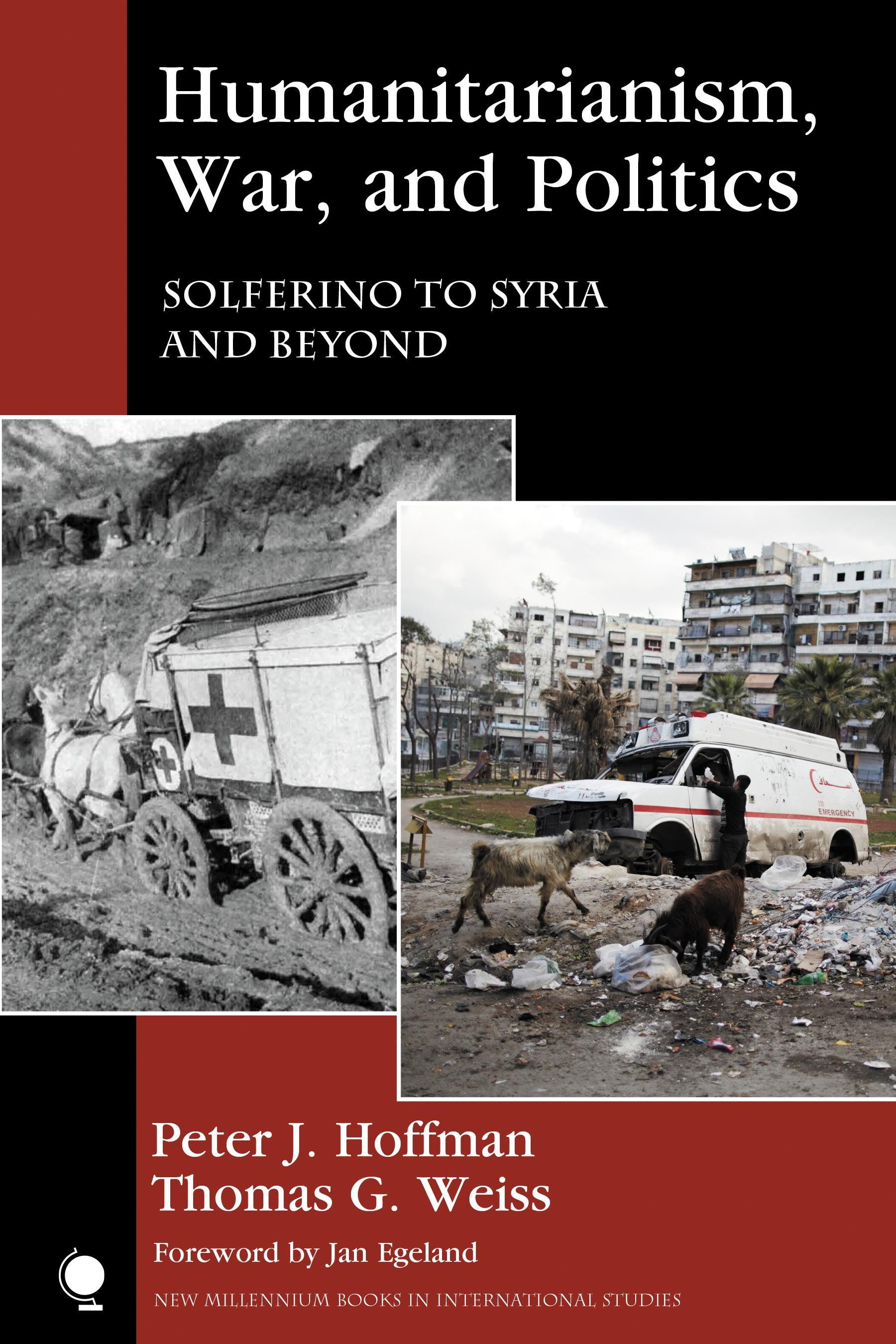
What is humanitarianism? This authoritative book provides a comprehensive analysis of the original idea and its evolution, exploring its triangulation with war and politics. Peter J. Hoffman and Thomas G. Weiss trace the origins of humanitarianism, its social movement, and the institutions (international humanitarian law) and organizations (providers of assistance and protection) that comprise it. They consider the international humanitarian system’s ability to regulate the conduct of war, to improve the wellbeing of its victims, and to prosecute war criminals. Probing the profound changes in the culture and capacities that underpin the sector and alter the meaning of humanitarianism, they assess the reinventions that constitute “revolutions in humanitarian affairs.”
The book begins with traditions and perspectives—ranging from classic international relations approaches to “Critical Humanitarian Studies” —and reviews seminal wartime emergencies and the creation and development of humanitarian agencies in the late nineteenth and twentieth centuries. The authors then examine the rise of “new humanitarianisms” after the Cold War’s end and contemporary cases after 9/11. The authors continue by unpacking the most recent “revolutions”—the International Criminal Court and the “Responsibility to Protect”—as well as such core challenges as displacement camps, infectious diseases, eco-refugees, and marketization. They conclude by evaluating the contemporary system and the prospects for further transformations, identifying scholarly puzzles and the acute operational problems faced by practitioners.
The book begins with traditions and perspectives—ranging from classic international relations approaches to “Critical Humanitarian Studies” —and reviews seminal wartime emergencies and the creation and development of humanitarian agencies in the late nineteenth and twentieth centuries. The authors then examine the rise of “new humanitarianisms” after the Cold War’s end and contemporary cases after 9/11. The authors continue by unpacking the most recent “revolutions”—the International Criminal Court and the “Responsibility to Protect”—as well as such core challenges as displacement camps, infectious diseases, eco-refugees, and marketization. They conclude by evaluating the contemporary system and the prospects for further transformations, identifying scholarly puzzles and the acute operational problems faced by practitioners.
Sider: 344
Kategori: Statsvetenskap & Politik
e-ISBN: 9781442266148
Fraktvekt: 1.2 kg
Sendes innen: 1-2 dager
Betal enkelt med kort, Klarna, Apple Pay eller Google Pay. Ikke fornøyd? Du har alltid 14 dagers angrerett. Les mer i våre vilkår. Har du spørsmål, send oss en e-post på hello@memmo.org.
Memmo gjør det enklere å studere – uansett hvor du er i verden. Hos oss samler du pensumbøker og smarte studieverktøy på ett og samme sted: sammendrag, quizer, podkaster og flashcards. Og så Ted, din studiekompis som svarer på alt du lurer på. Over 50 000 studenter studerer allerede her – bygget for at du skal lære raskere og stresse mindre.