
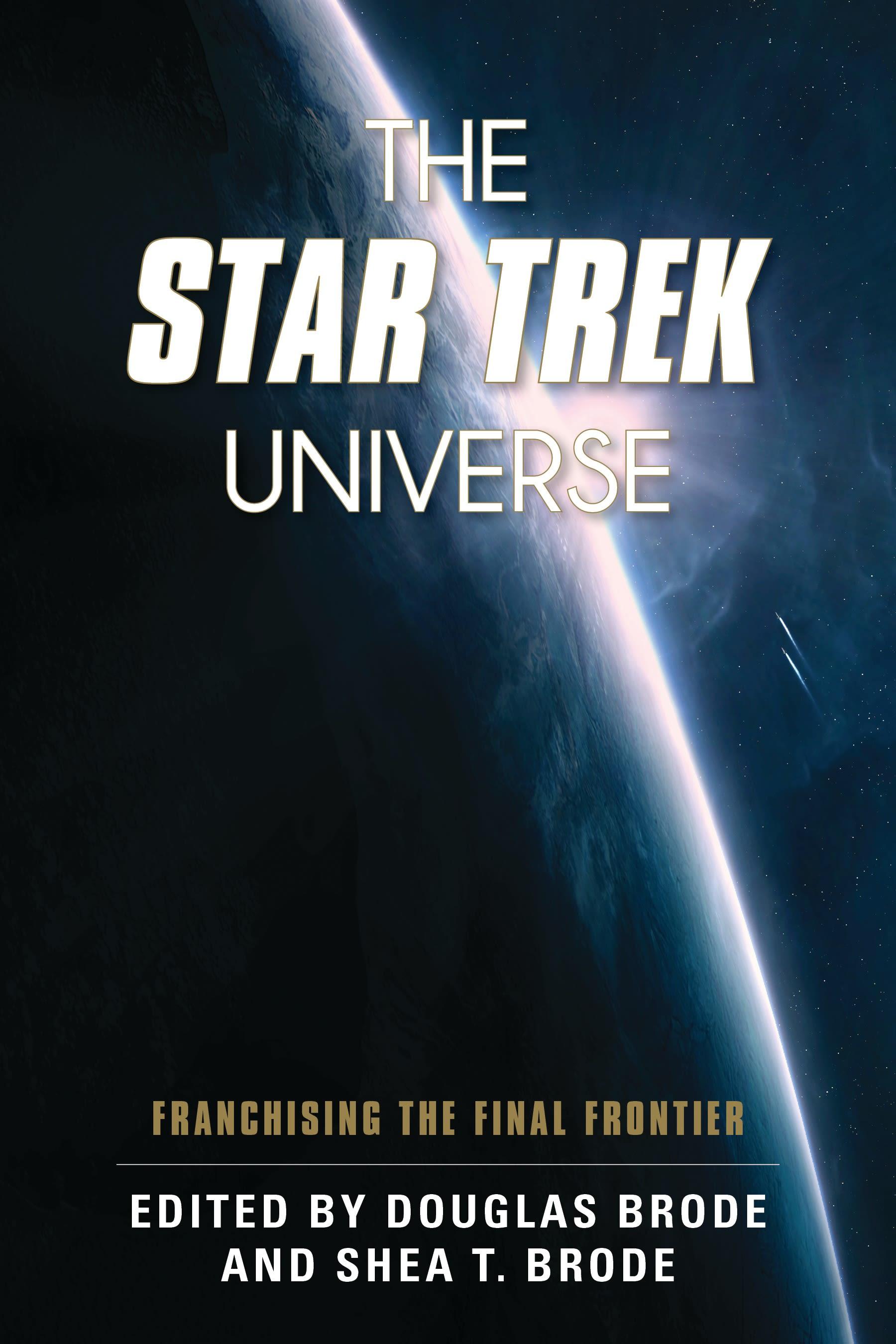
As one of the most influential shows of all time, Star Trek continues to engage fans around the world. But its cultural impact has grown far beyond the scope of the original seventy-nine episodes. The show spawned an unprecedented progeny, beginning with Star Trek: The Next Generation, followed by three additional series of space exploration. Film versions featuring Captain Kirk, Mr. Spock, and other original crew members first appeared in 1979, followed by a number of successful sequels and ultimately a reboot of the original show. From the modest ambitions of the show’s creator, Gene Roddenberry, Star Trek gradually transformed into a true franchise, an expanded universe that continues to grow.
In The Star Trek Universe: Franchising the Final Frontier, Douglas and Shea T. Brode have collected several essays that examine the many incarnations that have arisen since the original program concluded its run in 1969. Every aspect of media into which Star Trek has penetrated is covered in this collection: the four television shows, literature, toys, games, and the big screen reboot of the original series featuring the Enterprise and her crew. Essays address a number of elements, particularly how the franchise has had an impact on gaming, fandom, and even technology. Other essays consider how race, gender, and sexuality have been addressed by the various shows and films.
After a half century of boldly exploring topical issues that concern all of humanity, Star Trek warrants serious attention—now more than ever. Looking beyond the entertainment value of its many versions, The Star Trek Universe—a companion volume to Gene Roddenberry’s Star Trek—offers provocative essays that will engage scholars of gender studies, race studies, religion, history, and popular culture, not to mention the show’s legions of fans around the planet.
In The Star Trek Universe: Franchising the Final Frontier, Douglas and Shea T. Brode have collected several essays that examine the many incarnations that have arisen since the original program concluded its run in 1969. Every aspect of media into which Star Trek has penetrated is covered in this collection: the four television shows, literature, toys, games, and the big screen reboot of the original series featuring the Enterprise and her crew. Essays address a number of elements, particularly how the franchise has had an impact on gaming, fandom, and even technology. Other essays consider how race, gender, and sexuality have been addressed by the various shows and films.
After a half century of boldly exploring topical issues that concern all of humanity, Star Trek warrants serious attention—now more than ever. Looking beyond the entertainment value of its many versions, The Star Trek Universe—a companion volume to Gene Roddenberry’s Star Trek—offers provocative essays that will engage scholars of gender studies, race studies, religion, history, and popular culture, not to mention the show’s legions of fans around the planet.
Betal enkelt med kort, Klarna, Apple Pay eller Google Pay. Ikke fornøyd? Du har alltid 14 dagers angrerett. Les mer i våre vilkår. Har du spørsmål, send oss en e-post på hello@memmo.org.
Memmo gjør det enklere å studere – uansett hvor du er i verden. Hos oss samler du pensumbøker og smarte studieverktøy på ett og samme sted: sammendrag, quizer, podkaster og flashcards. Og så Ted, din studiekompis som svarer på alt du lurer på. Over 50 000 studenter studerer allerede her – bygget for at du skal lære raskere og stresse mindre.