
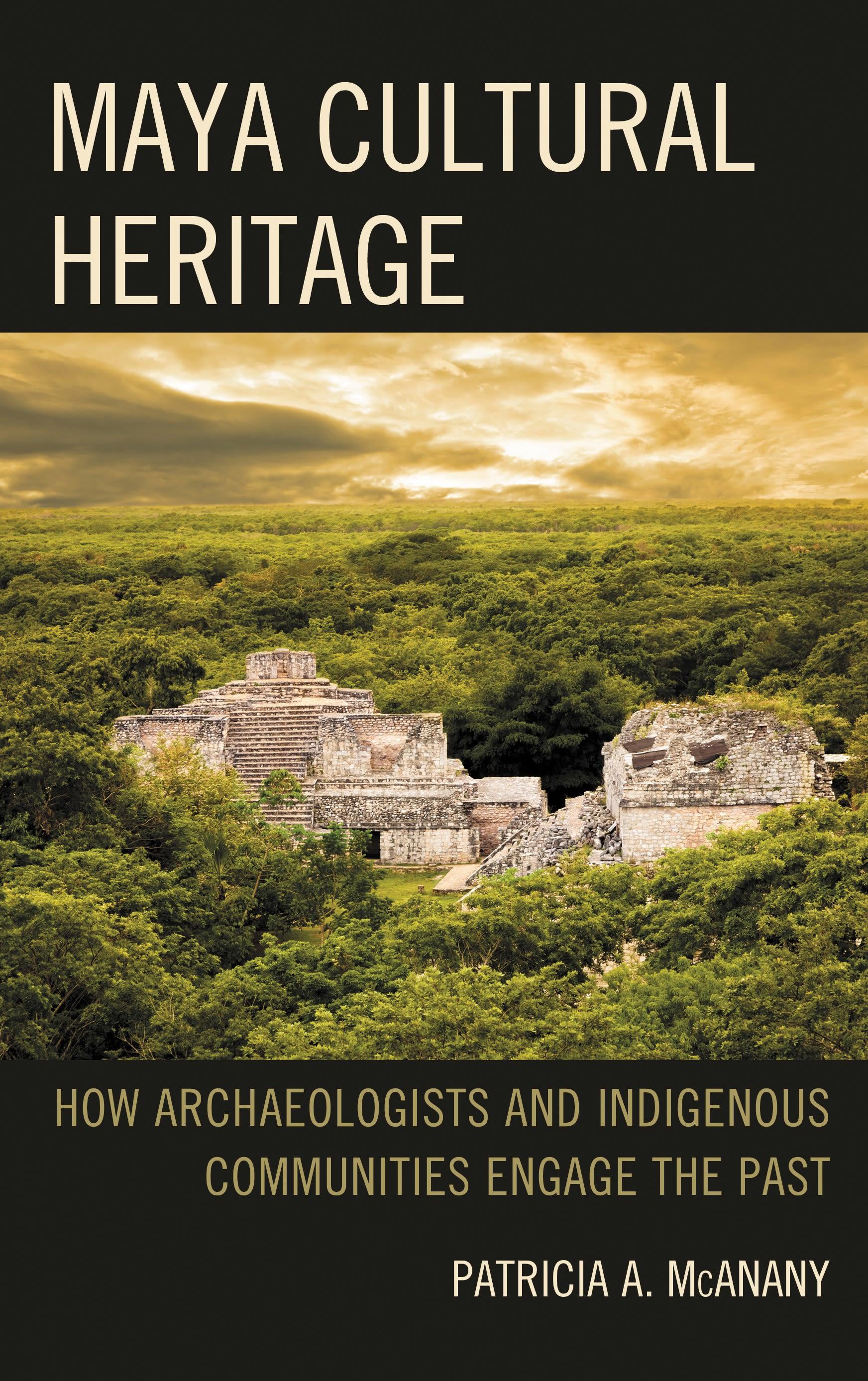
Situated at the intersection of cultural heritage and local community, this book enlarges our understanding of the Indigenous peoples of southern México and northern Central America who became detached from “the ancient Maya” through colonialism, government actions, and early twentieth-century anthropological and archaeological research. Through grass-roots heritage programs, local communities are reconnecting with a much valorized but distant past.
Maya Cultural Heritage explores how community programs conceived and implemented in a collaborative style are changing the relationship among, archaeological practice, the objects of archaeological study, and contemporary ethnolinguistic Mayan communities. Rather than simply describing Maya sites, McAnany concentrates on the dialogue nurtured by these participatory heritage programs, the new “heritage-scapes” they foster, and how the diverse Maya communities of today relate to those of the past.
Maya Cultural Heritage explores how community programs conceived and implemented in a collaborative style are changing the relationship among, archaeological practice, the objects of archaeological study, and contemporary ethnolinguistic Mayan communities. Rather than simply describing Maya sites, McAnany concentrates on the dialogue nurtured by these participatory heritage programs, the new “heritage-scapes” they foster, and how the diverse Maya communities of today relate to those of the past.
Betal enkelt med kort, Klarna, Apple Pay eller Google Pay. Ikke fornøyd? Du har alltid 14 dagers angrerett. Les mer i våre vilkår. Har du spørsmål, send oss en e-post på hello@memmo.org.
Memmo gjør det enklere å studere – uansett hvor du er i verden. Hos oss samler du pensumbøker og smarte studieverktøy på ett og samme sted: sammendrag, quizer, podkaster og flashcards. Og så Ted, din studiekompis som svarer på alt du lurer på. Over 50 000 studenter studerer allerede her – bygget for at du skal lære raskere og stresse mindre.