
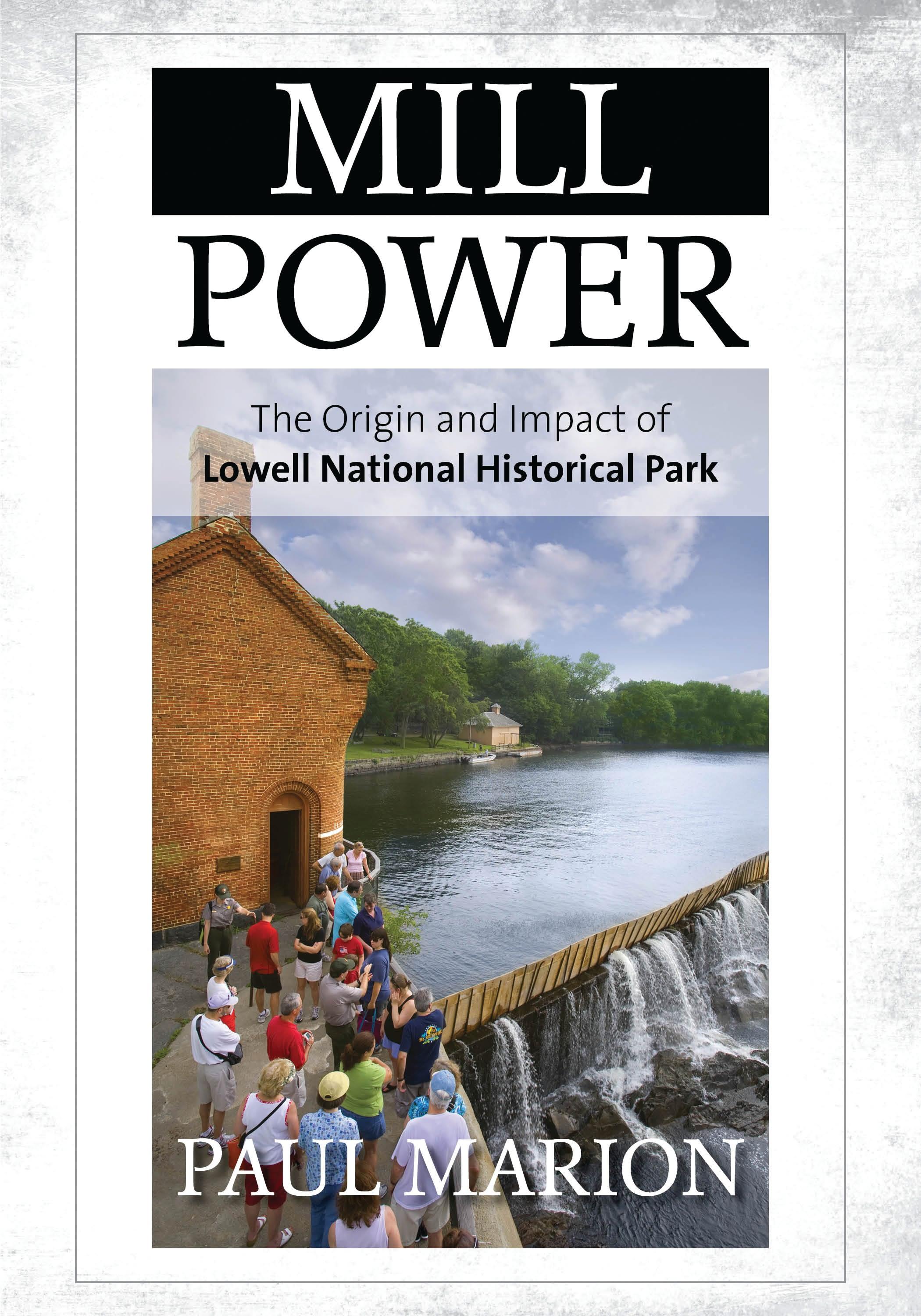
Mill Power documents the making of a national park that changed the concept of what a national historical park could be.
For a time in the 1800s, Lowell was Massachusetts’s cosmopolitan, must-see second city. The city’s industrial model was as high-tech then as Silicon Valley is today. It drew the attention of luminaries like Charles Dickens, Congressmen Davy Crockett and Abraham Lincoln, feminist sociologist Harriet Martineau, and abolitionist Frederick Douglass.
This insider’s account of the creative, bold community-driven process to establish the park explains why today Lowell National Historical Park is renowned as “the partnership park.” The park’s establishment was an integral piece of an urban revival strategy that has made Lowell the subject of scores of newspaper articles, magazine profiles, TV and radio reports, scholarly papers, and book chapters.
Historic Preservation magazine has hailed the park as “the premier rehabilitation model for gritty cities worldwide.” The Lowell story has much to teach the mid-sized cities of the nation and the world.
Mill Power frames the Lowell comeback in its historical context and brings together the people who dreamed, wrote, designed, pushed, and cheered a new national park into existence along with those who came after with the charges of shaping the ideas into material form. The volume features 100 photos, many of them showing the before-and-after story of this revitalization.
For a time in the 1800s, Lowell was Massachusetts’s cosmopolitan, must-see second city. The city’s industrial model was as high-tech then as Silicon Valley is today. It drew the attention of luminaries like Charles Dickens, Congressmen Davy Crockett and Abraham Lincoln, feminist sociologist Harriet Martineau, and abolitionist Frederick Douglass.
This insider’s account of the creative, bold community-driven process to establish the park explains why today Lowell National Historical Park is renowned as “the partnership park.” The park’s establishment was an integral piece of an urban revival strategy that has made Lowell the subject of scores of newspaper articles, magazine profiles, TV and radio reports, scholarly papers, and book chapters.
Historic Preservation magazine has hailed the park as “the premier rehabilitation model for gritty cities worldwide.” The Lowell story has much to teach the mid-sized cities of the nation and the world.
Mill Power frames the Lowell comeback in its historical context and brings together the people who dreamed, wrote, designed, pushed, and cheered a new national park into existence along with those who came after with the charges of shaping the ideas into material form. The volume features 100 photos, many of them showing the before-and-after story of this revitalization.
Betal enkelt med kort, Klarna, Apple Pay eller Google Pay. Ikke fornøyd? Du har alltid 14 dagers angrerett. Les mer i våre vilkår. Har du spørsmål, send oss en e-post på hello@memmo.org.
Memmo gjør det enklere å studere – uansett hvor du er i verden. Hos oss samler du pensumbøker og smarte studieverktøy på ett og samme sted: sammendrag, quizer, podkaster og flashcards. Og så Ted, din studiekompis som svarer på alt du lurer på. Over 50 000 studenter studerer allerede her – bygget for at du skal lære raskere og stresse mindre.