
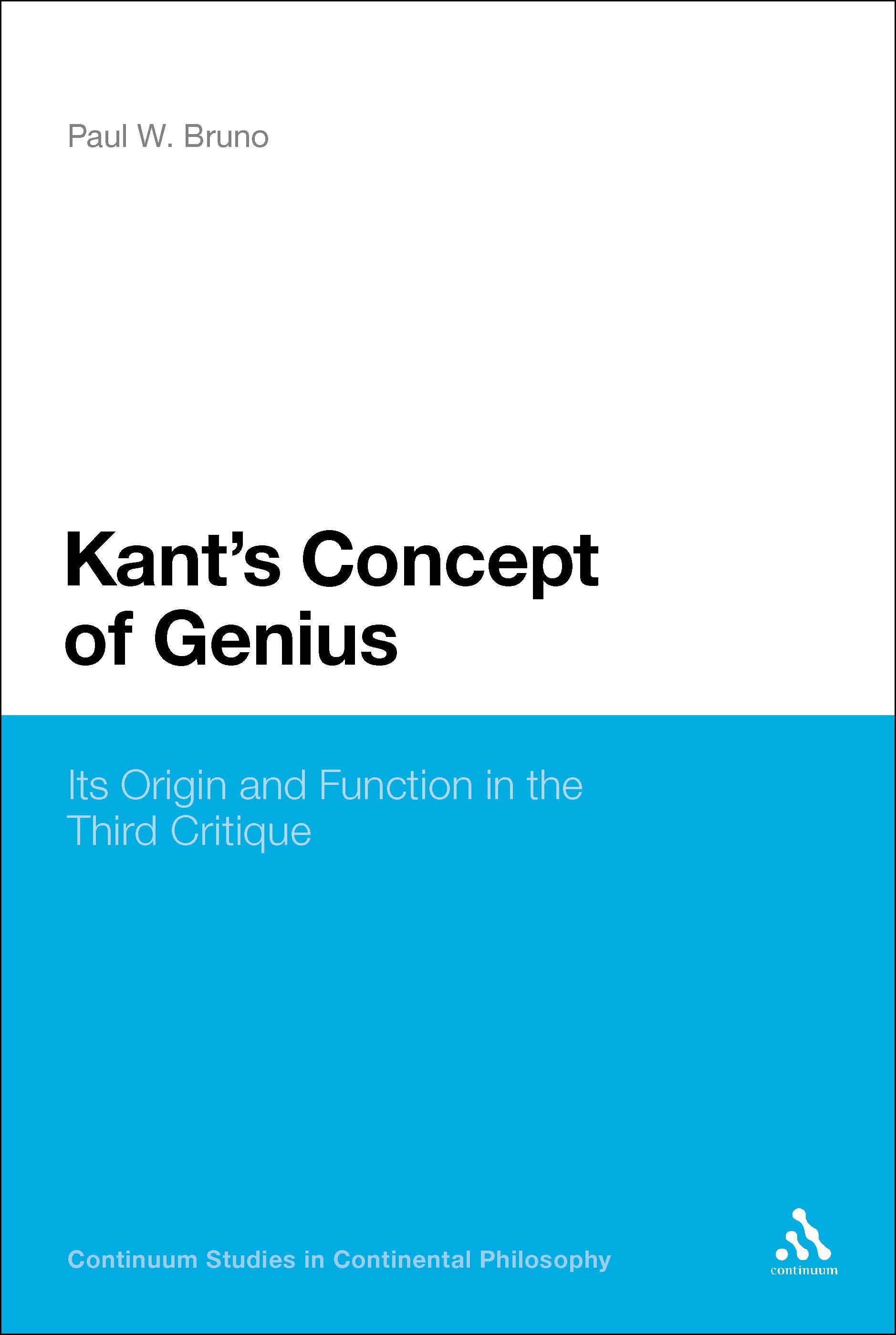
While many studies have chronicled the Romantic legacy of artistic genius, this book uncovers the roots of the concept of genius in Kant's third Critique, alongside the development of his understanding of nature. Paul Bruno addresses a genuine gap in the existing scholarship by exploring the origins of Kant's thought on aesthetic judgment and particularly the artist.
The development of the word 'genius' and its intimate association with the artist played itself out in a rich cultural context, a context that is inescapably significant in Western thought. Bruno shows how in many ways we are still interrogating the ways in which a nature governed by physical laws can be reconciled with a spirit of human creativity and freedom. This book leads us to a better understanding of the centrality of understanding the modern artistic enterprise, characterized as it is by creativity, for modern conceptions of the self.
The development of the word 'genius' and its intimate association with the artist played itself out in a rich cultural context, a context that is inescapably significant in Western thought. Bruno shows how in many ways we are still interrogating the ways in which a nature governed by physical laws can be reconciled with a spirit of human creativity and freedom. This book leads us to a better understanding of the centrality of understanding the modern artistic enterprise, characterized as it is by creativity, for modern conceptions of the self.
Betal enkelt med kort, Klarna, Apple Pay eller Google Pay. Ikke fornøyd? Du har alltid 14 dagers angrerett. Les mer i våre vilkår. Har du spørsmål, send oss en e-post på hello@memmo.org.
Memmo gjør det enklere å studere – uansett hvor du er i verden. Hos oss samler du pensumbøker og smarte studieverktøy på ett og samme sted: sammendrag, quizer, podkaster og flashcards. Og så Ted, din studiekompis som svarer på alt du lurer på. Over 50 000 studenter studerer allerede her – bygget for at du skal lære raskere og stresse mindre.