
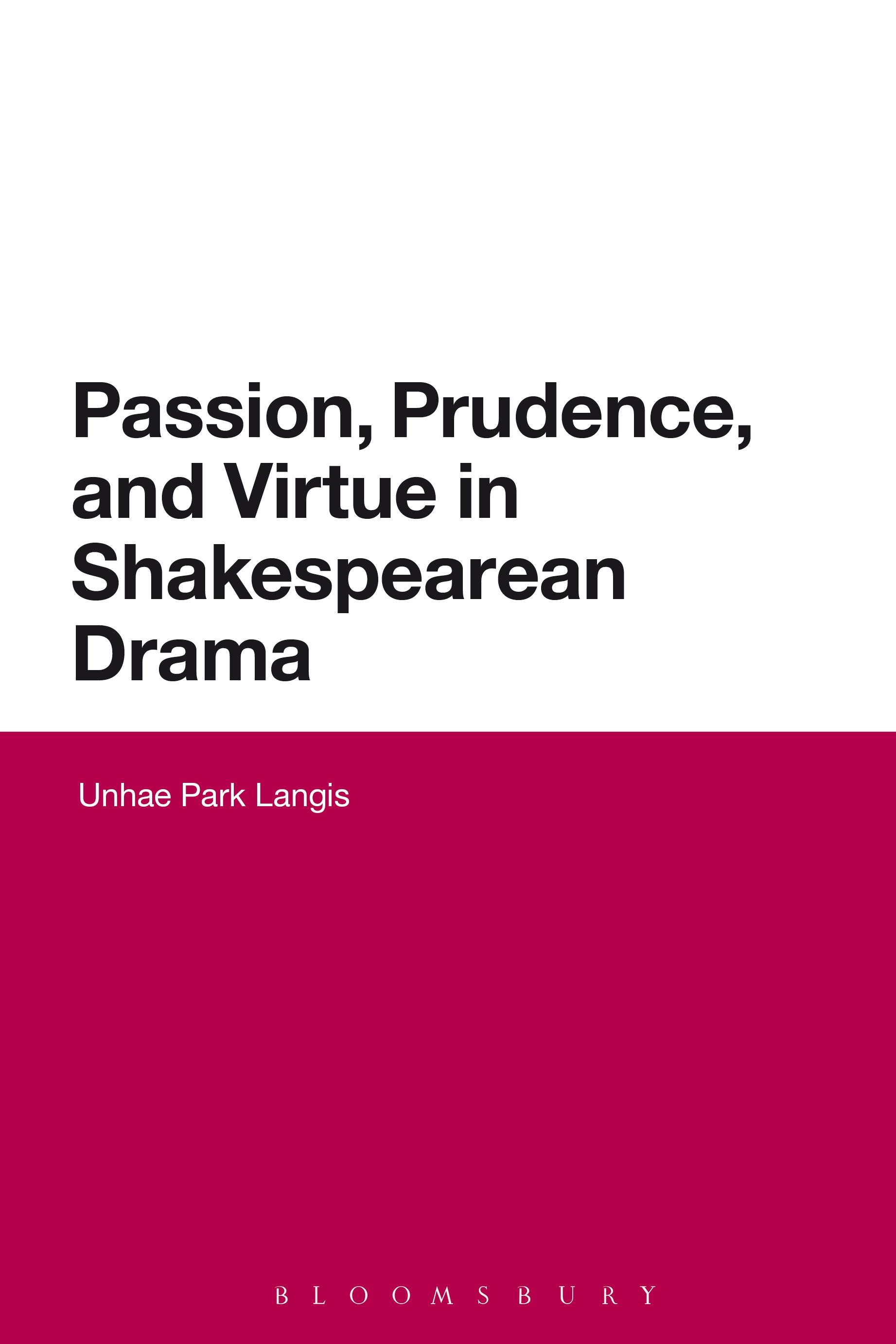
Virtue, as a Renaissance ideal, was largely conceived as a rational governing of unruly passions. Revising this early modern commonplace, this study shows how Shakespeare dramatizes a discerning Aristotelian conception of virtue as a touchstone of excellence: executing just action at the best time, in the best way, and for the best end within the contingent world. Not only situational, Aristotelian virtue is, moreover, integrative, harmonizing passion and reason, will and understanding, towards personal and civil good. Yet as a surprising backfire on the misogynist streak in Aristotle, the resistant female characters in Shakespeare emerge as the exemplars of ethical action, appropriating traditionally male-inflected virtue. At the junction of ethical, psycho-physiological, cultural and gender studies, this approach of prudential psychology bridges an apparent but needless divergence of critical focus between affect and cognition, ethics and prudential action. Firmly situated in new historicist practices, prudential psychology goes beyond narrow discourses of power into the all-encompassing arena of virtue as the complete life, which recommends an interdisciplinary approach for a fuller understanding of Shakespeare's works.
Sider: 192
Kategori: Drama, Teater & Scenkonst
e-ISBN: 9781441187451
Fraktvekt: 1.2 kg
Sendes innen: 1-2 dager
Betal enkelt med kort, Klarna, Apple Pay eller Google Pay. Ikke fornøyd? Du har alltid 14 dagers angrerett. Les mer i våre vilkår. Har du spørsmål, send oss en e-post på hello@memmo.org.
Memmo gjør det enklere å studere – uansett hvor du er i verden. Hos oss samler du pensumbøker og smarte studieverktøy på ett og samme sted: sammendrag, quizer, podkaster og flashcards. Og så Ted, din studiekompis som svarer på alt du lurer på. Over 50 000 studenter studerer allerede her – bygget for at du skal lære raskere og stresse mindre.