
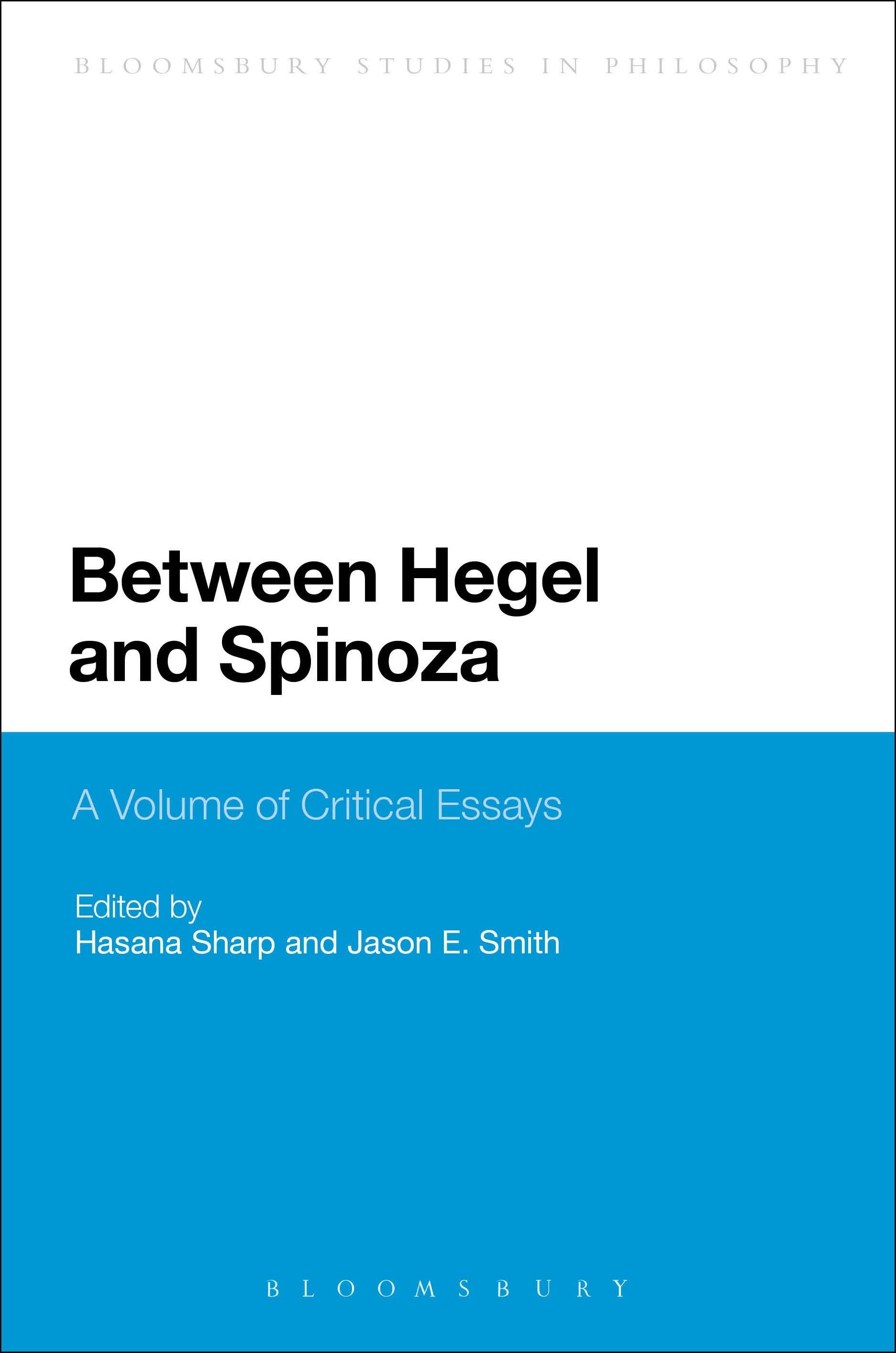
Recent
work in political philosophy and the history of ideas presents Spinoza and
Hegel as the most powerful living alternatives to mainstream Enlightenment
thought. Yet, for many philosophers and political theorists today, one must
choose between Hegel or Spinoza. As Deleuze's influential interpretation
maintains, Hegel exemplifies and promotes the modern "cults of death," while
Spinoza embodies an irrepressible "appetite for living." Hegel is the figure of
negation, while Spinoza is the thinker of "pure affirmation". Yet, between
Hegel and Spinoza there is not only opposition. This collection of essays seeks
to find the suppressed kinship between Hegel and Spinoza. Both philosophers
offer vigorous and profound alternatives to the methodological individualism of
classical liberalism. Likewise, they sketch portraits of reason that are
context-responsive and emotionally contoured, offering an especially rich appreciation
of our embodied and historical existence. The authors of this collection
carefully lay the groundwork for a complex and delicate alliance between these
two great iconoclasts, both within and against the Enlightenment tradition.
work in political philosophy and the history of ideas presents Spinoza and
Hegel as the most powerful living alternatives to mainstream Enlightenment
thought. Yet, for many philosophers and political theorists today, one must
choose between Hegel or Spinoza. As Deleuze's influential interpretation
maintains, Hegel exemplifies and promotes the modern "cults of death," while
Spinoza embodies an irrepressible "appetite for living." Hegel is the figure of
negation, while Spinoza is the thinker of "pure affirmation". Yet, between
Hegel and Spinoza there is not only opposition. This collection of essays seeks
to find the suppressed kinship between Hegel and Spinoza. Both philosophers
offer vigorous and profound alternatives to the methodological individualism of
classical liberalism. Likewise, they sketch portraits of reason that are
context-responsive and emotionally contoured, offering an especially rich appreciation
of our embodied and historical existence. The authors of this collection
carefully lay the groundwork for a complex and delicate alliance between these
two great iconoclasts, both within and against the Enlightenment tradition.
Betal enkelt med kort, Klarna, Apple Pay eller Google Pay. Ikke fornøyd? Du har alltid 14 dagers angrerett. Les mer i våre vilkår. Har du spørsmål, send oss en e-post på hello@memmo.org.
Memmo gjør det enklere å studere – uansett hvor du er i verden. Hos oss samler du pensumbøker og smarte studieverktøy på ett og samme sted: sammendrag, quizer, podkaster og flashcards. Og så Ted, din studiekompis som svarer på alt du lurer på. Over 50 000 studenter studerer allerede her – bygget for at du skal lære raskere og stresse mindre.