
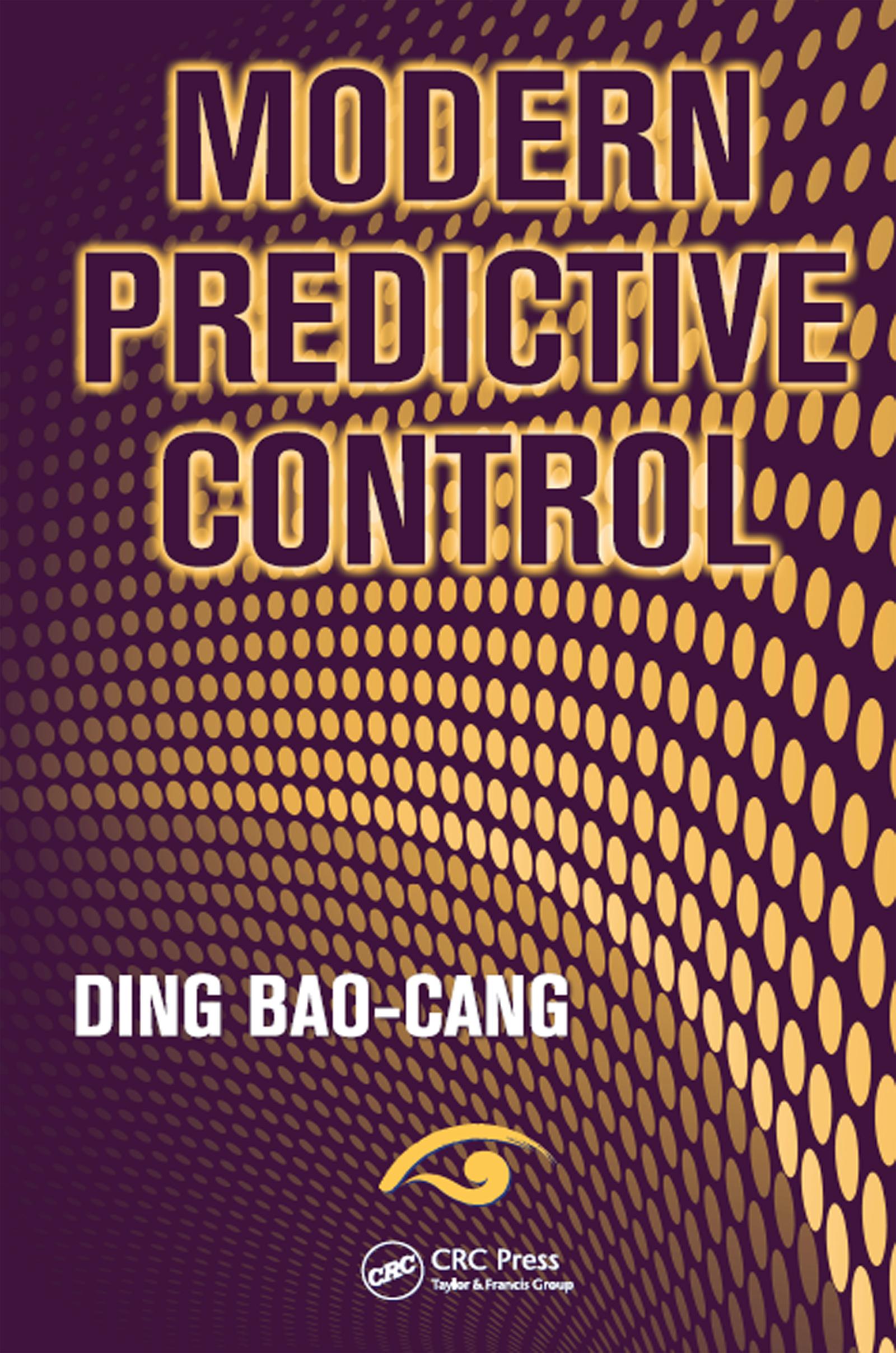
Modern Predictive Control explains how MPC differs from other control methods in its implementation of a control action. Most importantly, MPC provides the flexibility to act while optimizing—which is essential to the solution of many engineering problems in complex plants, where exact modeling is impossible.
The superiority of MPC is in its numerical solution. Usually, MPC is employed to solve a finite-horizon optimal control problem at each sampling instant and obtain control actions for both the present time and a future period. However, only the current control move is applied to the plant.
This complete, step-by-step exploration of various approaches to MPC:
- Introduces basic concepts of systems, modeling, and predictive control, detailing development from classical MPC to synthesis approaches
- Explores use of Model Algorithmic Control (MAC), Dynamic Matrix Control (DMC), Generalized Predictive Control (GPC), and Two-Step Model Predictive Control
- Identifies important general approaches to synthesis
- Discusses open-loop and closed-loop optimization in synthesis approaches
- Covers output feedback synthesis approaches with and without a finite switching horizon
This book gives researchers a variety of models for use with one- and two-step control. The author clearly explains the variations between predictive control methods—and the root of these differences—to illustrate that there is no one ideal MPC and that one should remain open to selecting the best possible model in each unique circumstance.
Betal enkelt med kort, Klarna, Apple Pay eller Google Pay. Ikke fornøyd? Du har alltid 14 dagers angrerett. Les mer i våre vilkår. Har du spørsmål, send oss en e-post på hello@memmo.org.
Memmo gjør det enklere å studere – uansett hvor du er i verden. Hos oss samler du pensumbøker og smarte studieverktøy på ett og samme sted: sammendrag, quizer, podkaster og flashcards. Og så Ted, din studiekompis som svarer på alt du lurer på. Over 50 000 studenter studerer allerede her – bygget for at du skal lære raskere og stresse mindre.