
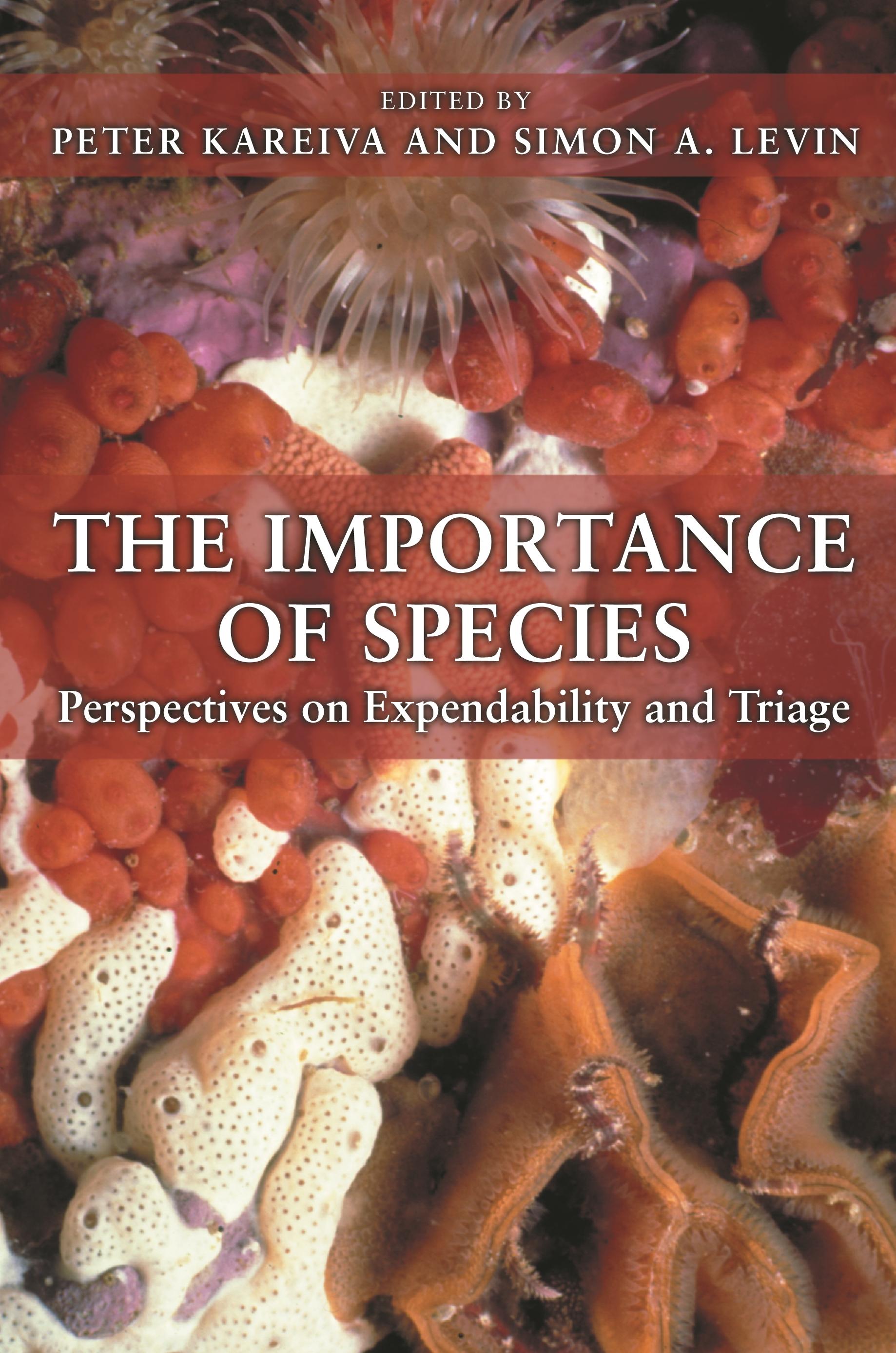
A great many species are threatened by the expanding human population. Though the public generally favors environmental protection, conservation does not come without sacrifice and cost. Many decision makers wonder if every species is worth the trouble. Of what consequence would the extinction of, say, spotted owls or snail darters be? Are some species expendable?
Given the reality of limited money for conservation efforts, there is a compelling need for scientists to help conservation practitioners set priorities and identify species most in need of urgent attention. Ecology should be capable of providing guidance that goes beyond the obvious impulse to protect economically valuable species (salmon) or aesthetically appealing ones (snow leopards). Although some recent books have considered the ecosystem services provided by biodiversity as an aggregate property, this is the first to focus on the value of particular species. It provides the scientific approaches and analyses available for asking what we can expect from losing (or gaining) species.
The contributors are outstanding ecologists, theoreticians, and evolutionary biologists who gathered for a symposium honoring Robert T. Paine, the community ecologist who experimentally demonstrated that a single predator species can act as a keystone species whose removal dramatically alters entire ecosystem communities. They build on Paine's work here by exploring whether we can identify species that play key roles in ecosystems before they are lost forever. These are some of our finest ecologists asking some of our hardest questions.
They are, in addition to the editors, S.E.B. Abella, G. C. Chang, D. Doak, A. L. Downing, W. T. Edmondson, A. S. Flecker, M. J. Ford, C.D.G. Harley, E. G. Leigh Jr., S. Lubetkin, S. M. Louda, M. Marvier, P. McElhany, B. A. Menge, W. F. Morris, S. Naeem, S. R. Palumbi, A. G. Power, T. A. Rand, R. B. Root, M. Ruckelshaus, J. Ruesink, D. E. Schindler, T. W. Schoener, D. Simberloff, D. A. Spiller, M. J. Wonham, and J. T. Wootton.
Betal enkelt med kort, Klarna, Apple Pay eller Google Pay. Ikke fornøyd? Du har alltid 14 dagers angrerett. Les mer i våre vilkår. Har du spørsmål, send oss en e-post på hello@memmo.org.
Memmo gjør det enklere å studere – uansett hvor du er i verden. Hos oss samler du pensumbøker og smarte studieverktøy på ett og samme sted: sammendrag, quizer, podkaster og flashcards. Og så Ted, din studiekompis som svarer på alt du lurer på. Over 50 000 studenter studerer allerede her – bygget for at du skal lære raskere og stresse mindre.