
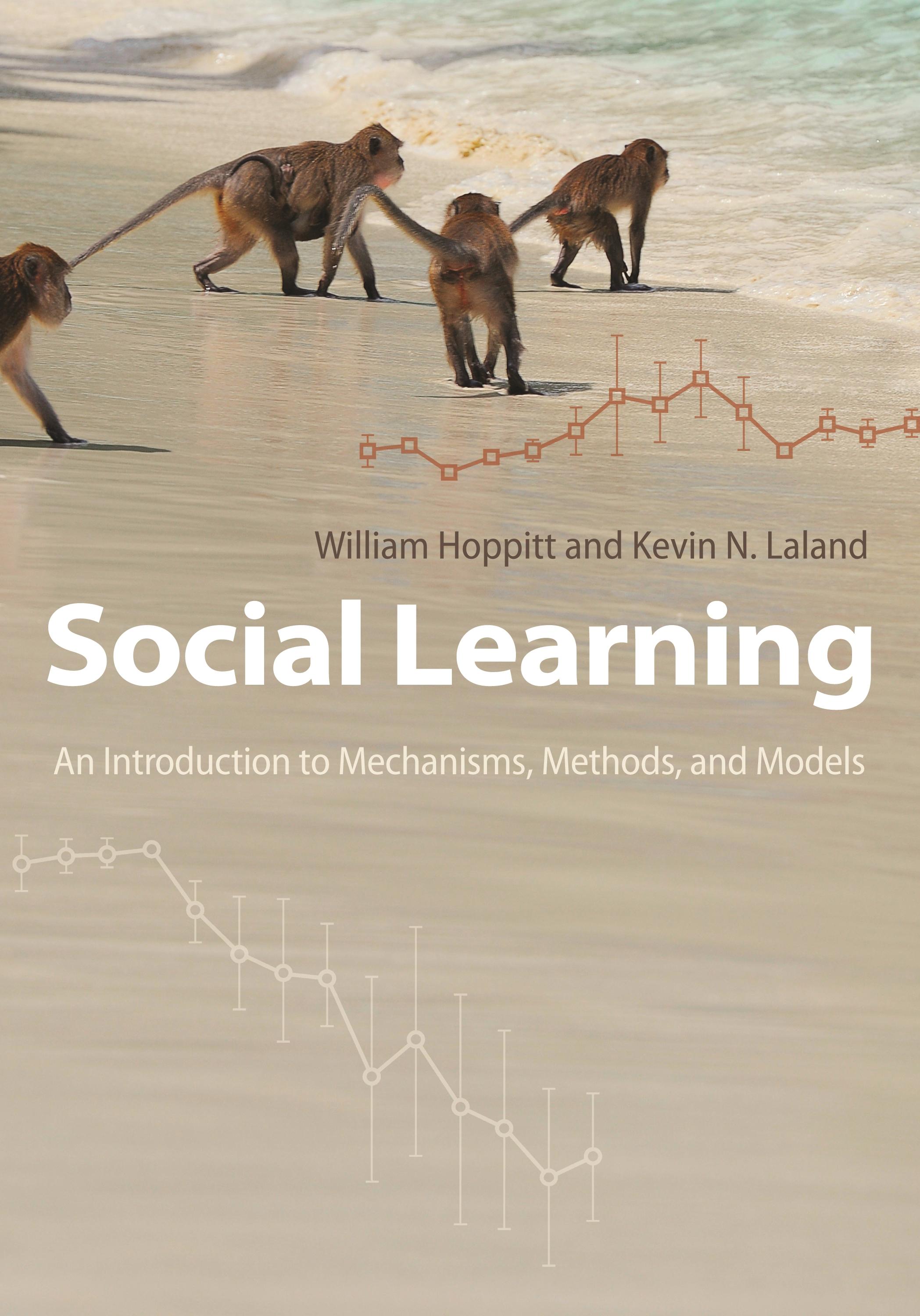
Many animals, including humans, acquire valuable skills and knowledge by copying others. Scientists refer to this as social learning. It is one of the most exciting and rapidly developing areas of behavioral research and sits at the interface of many academic disciplines, including biology, experimental psychology, economics, and cognitive neuroscience. Social Learning provides a comprehensive, practical guide to the research methods of this important emerging field. William Hoppitt and Kevin N. Lala define the mechanisms thought to underlie social learning and demonstrate how to distinguish them experimentally in the laboratory. They present techniques for detecting and quantifying social learning in nature, including statistical modeling of the spatial distribution of behavior traits. They also describe the latest theory and empirical findings on social learning strategies, and introduce readers to mathematical methods and models used in the study of cultural evolution. This book is an indispensable tool for researchers and an essential primer for students.
- Provides a comprehensive, practical guide to social learning research
- Combines theoretical and empirical approaches
- Describes techniques for the laboratory and the field
- Covers social learning mechanisms and strategies, statistical modeling techniques for field data, mathematical modeling of cultural evolution, and more
Betal enkelt med kort, Klarna, Apple Pay eller Google Pay. Ikke fornøyd? Du har alltid 14 dagers angrerett. Les mer i våre vilkår. Har du spørsmål, send oss en e-post på hello@memmo.org.
Memmo gjør det enklere å studere – uansett hvor du er i verden. Hos oss samler du pensumbøker og smarte studieverktøy på ett og samme sted: sammendrag, quizer, podkaster og flashcards. Og så Ted, din studiekompis som svarer på alt du lurer på. Over 50 000 studenter studerer allerede her – bygget for at du skal lære raskere og stresse mindre.