
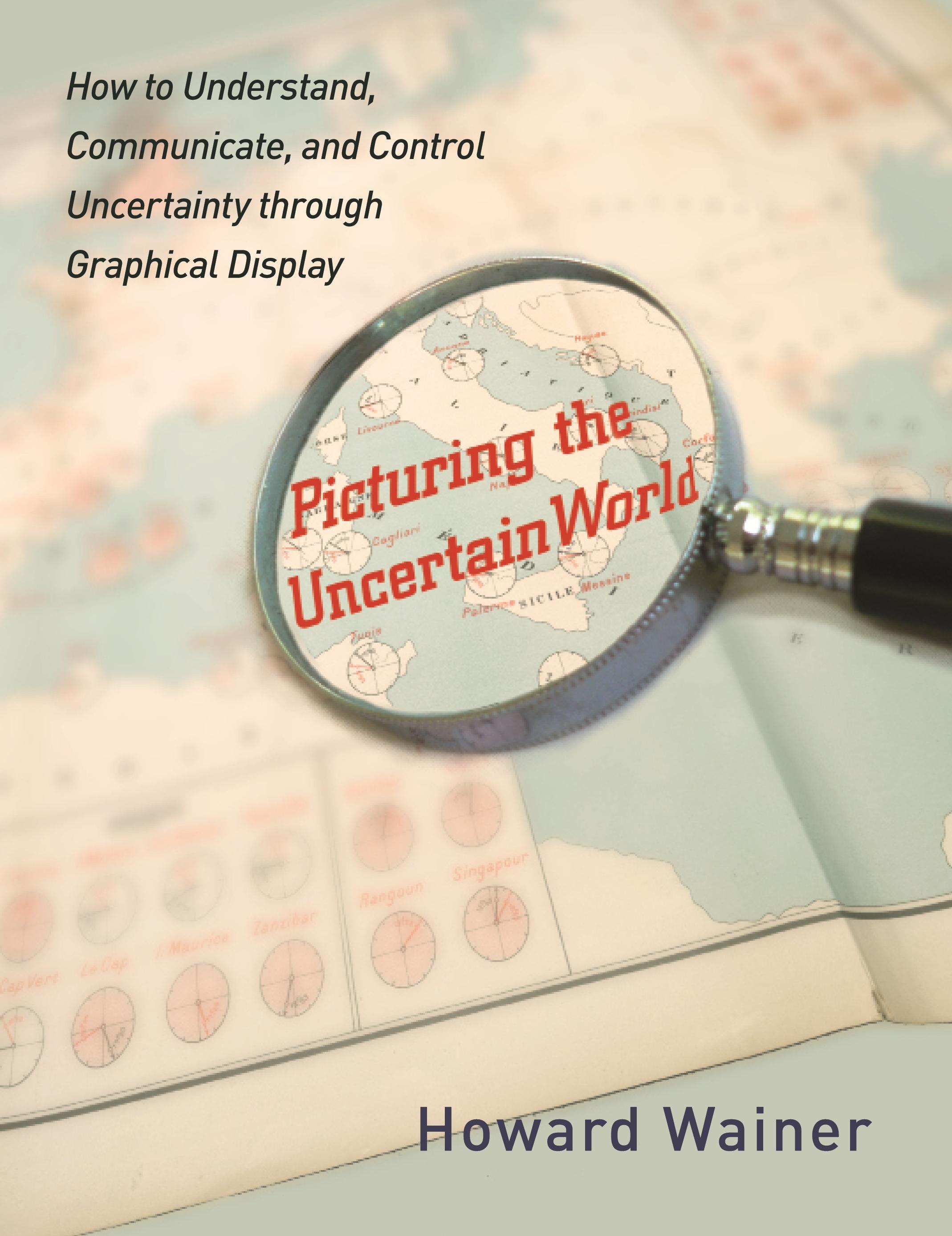
In his entertaining and informative book Graphic Discovery, Howard Wainer unlocked the power of graphical display to make complex problems clear. Now he's back with Picturing the Uncertain World, a book that explores how graphs can serve as maps to guide us when the information we have is ambiguous or incomplete. Using a visually diverse sampling of graphical display, from heartrending autobiographical displays of genocide in the Kovno ghetto to the "Pie Chart of Mystery" in a New Yorker cartoon, Wainer illustrates the many ways graphs can be used--and misused--as we try to make sense of an uncertain world.
Picturing the Uncertain World takes readers on an extraordinary graphical adventure, revealing how the visual communication of data offers answers to vexing questions yet also highlights the measure of uncertainty in almost everything we do. Are cancer rates higher or lower in rural communities? How can you know how much money to sock away for retirement when you don't know when you'll die? And where exactly did nineteenth-century novelists get their ideas? These are some of the fascinating questions Wainer invites readers to consider. Along the way he traces the origins and development of graphical display, from William Playfair, who pioneered the use of graphs in the eighteenth century, to instances today where the public has been misled through poorly designed graphs.
We live in a world full of uncertainty, yet it is within our grasp to take its measure. Read Picturing the Uncertain World and learn how.
Betal enkelt med kort, Klarna, Apple Pay eller Google Pay. Ikke fornøyd? Du har alltid 14 dagers angrerett. Les mer i våre vilkår. Har du spørsmål, send oss en e-post på hello@memmo.org.
Memmo gjør det enklere å studere – uansett hvor du er i verden. Hos oss samler du pensumbøker og smarte studieverktøy på ett og samme sted: sammendrag, quizer, podkaster og flashcards. Og så Ted, din studiekompis som svarer på alt du lurer på. Over 50 000 studenter studerer allerede her – bygget for at du skal lære raskere og stresse mindre.