
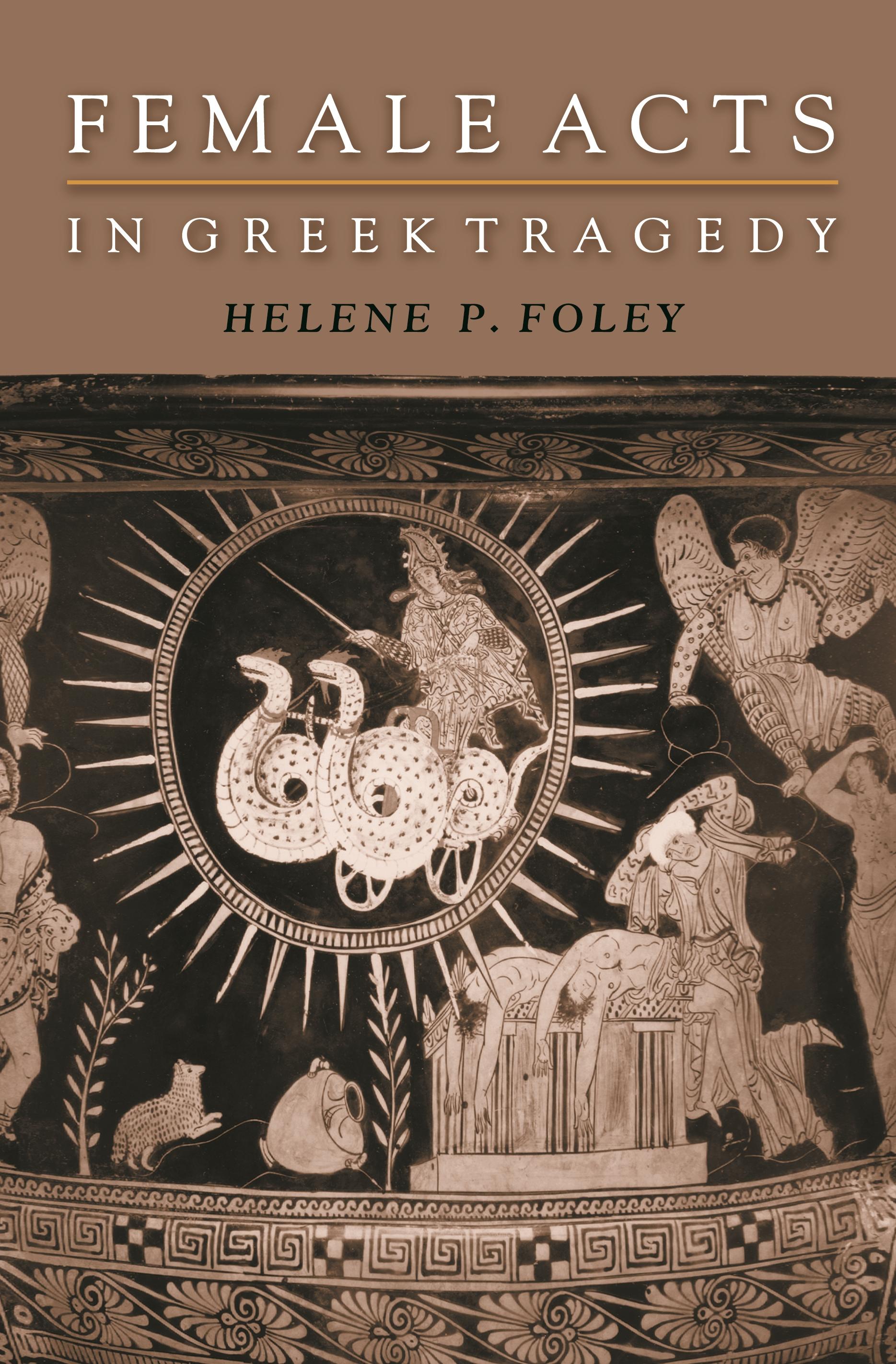
Although Classical Athenian ideology did not permit women to exercise legal, economic, and social autonomy, the tragedies of Aeschylus, Sophocles, and Euripides often represent them as influential social and moral forces in their own right. Scholars have struggled to explain this seeming contradiction. Helene Foley shows how Greek tragedy uses gender relations to explore specific issues in the development of the social, political, and intellectual life in the polis. She investigates three central and problematic areas in which tragic heroines act independently of men: death ritual and lamentation, marriage, and the making of significant ethical choices. Her anthropological approach, together with her literary analysis, allows for an unusually rich context in which to understand gender relations in ancient Greece.
This book examines, for example, the tragic response to legislation regulating family life that may have begun as early as the sixth century. It also draws upon contemporary studies of virtue ethics and upon feminist reconsiderations of the Western ethical tradition. Foley maintains that by viewing public issues through the lens of the family, tragedy asks whether public and private morality can operate on the same terms. Moreover, the plays use women to represent significant moral alternatives. Tragedy thus exploits, reinforces, and questions cultural clichés about women and gender in a fashion that resonates with contemporary Athenian social and political issues.
Betal enkelt med kort, Klarna, Apple Pay eller Google Pay. Ikke fornøyd? Du har alltid 14 dagers angrerett. Les mer i våre vilkår. Har du spørsmål, send oss en e-post på hello@memmo.org.
Memmo gjør det enklere å studere – uansett hvor du er i verden. Hos oss samler du pensumbøker og smarte studieverktøy på ett og samme sted: sammendrag, quizer, podkaster og flashcards. Og så Ted, din studiekompis som svarer på alt du lurer på. Over 50 000 studenter studerer allerede her – bygget for at du skal lære raskere og stresse mindre.