
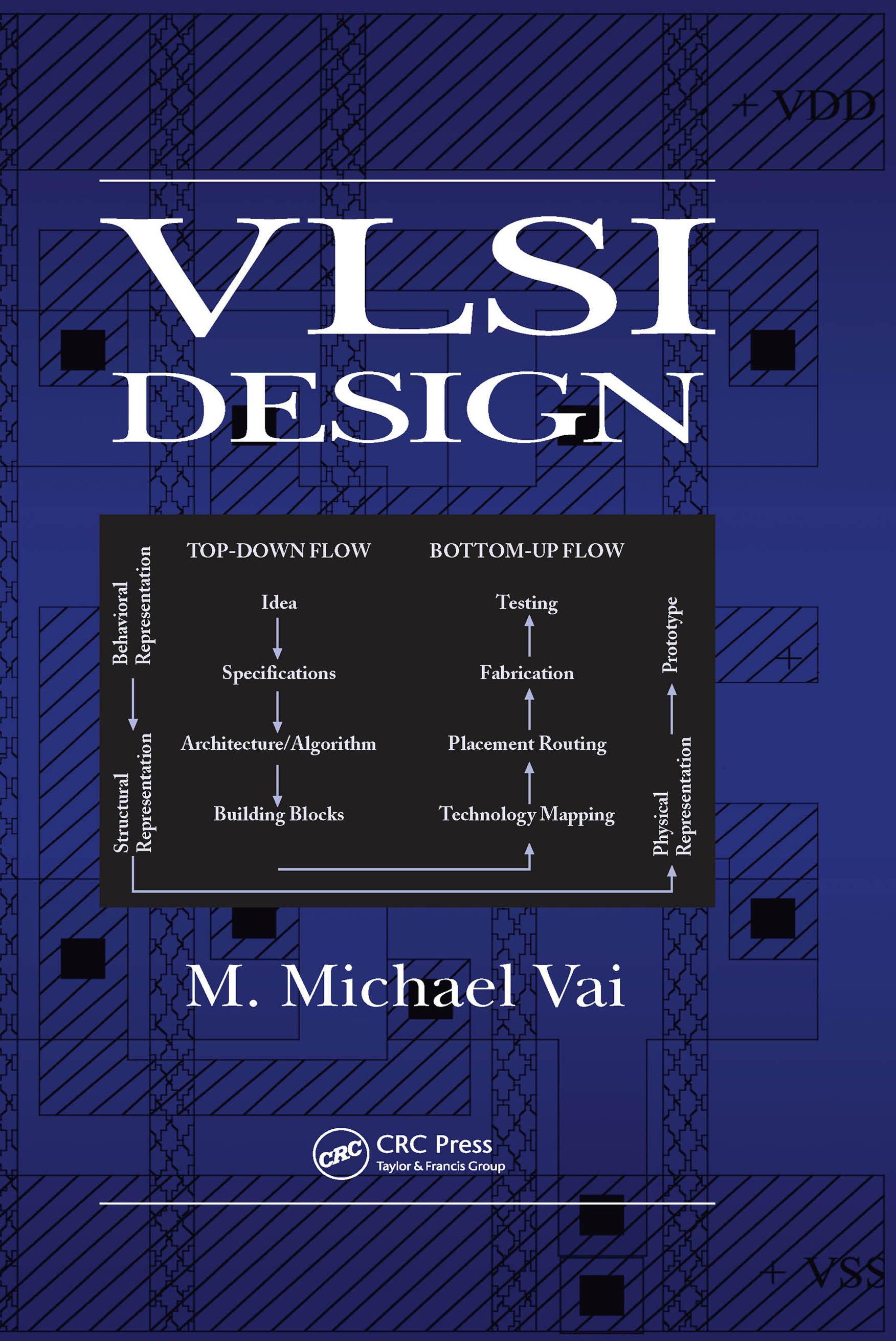
Very Large Scale Integration (VLSI) has become a necessity rather than a specialization for electrical and computer engineers. This unique text provides Engineering and Computer Science students with a comprehensive study of the subject, covering VLSI from basic design techniques to working principles of physical design automation tools to leading edge application-specific array processors.
Beginning with CMOS design, the author describes VLSI design from the viewpoint of a digital circuit engineer. He develops physical pictures for CMOS circuits and demonstrates the top-down design methodology using two design projects - a microprocessor and a field programmable gate array. The author then discusses VLSI testing and dedicates an entire chapter to the working principles, strengths, and weaknesses of ubiquitous physical design tools. Finally, he unveils the frontiers of VLSI. He emphasizes its use as a tool to develop innovative algorithms and architecture to solve previously intractable problems.
VLSI Design answers not only the question of "what is VLSI," but also shows how to use VLSI. It provides graduate and upper level undergraduate students with a complete and congregated view of VLSI engineering.
Betal enkelt med kort, Klarna, Apple Pay eller Google Pay. Ikke fornøyd? Du har alltid 14 dagers angrerett. Les mer i våre vilkår. Har du spørsmål, send oss en e-post på hello@memmo.org.
Memmo gjør det enklere å studere – uansett hvor du er i verden. Hos oss samler du pensumbøker og smarte studieverktøy på ett og samme sted: sammendrag, quizer, podkaster og flashcards. Og så Ted, din studiekompis som svarer på alt du lurer på. Over 50 000 studenter studerer allerede her – bygget for at du skal lære raskere og stresse mindre.
Du vil kanskje også like
Kjøp boken0