
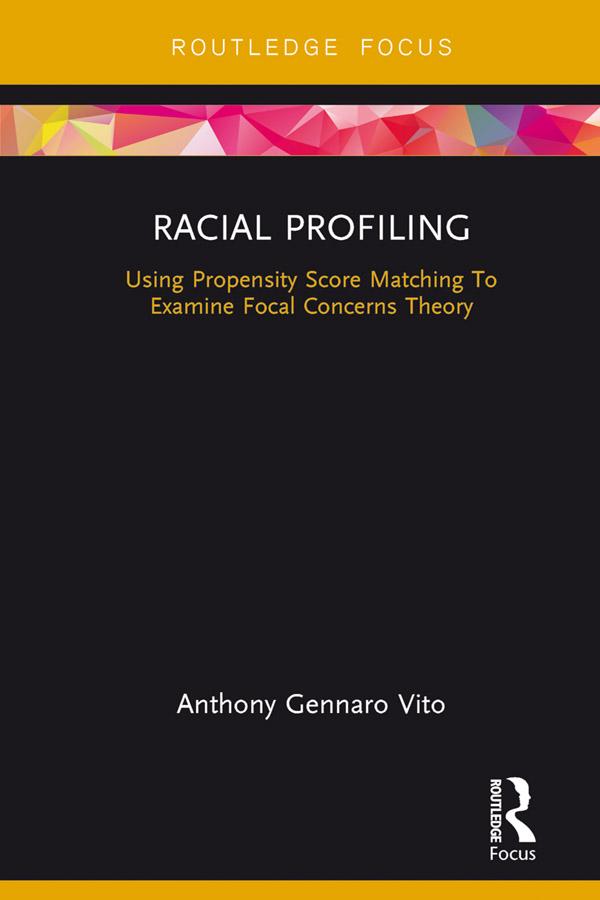
Racial Profiling: Using Propensity Score Matching to Examine Focal Concerns Theory combines theory and propensity score matching to offer readers a better understanding of racial profiling through traffic stop data concerning the race and gender of the driver. The book examines the likelihood of a citation, search, or consent search for similarly situated African-American and Caucasian drivers in general, similarly situated African-American and Caucasian male drivers, and similarly situated African-American and Caucasian female drivers.
Whether and why police exercise racial profiling in their decisionmaking is one of the most hotly debated topics in criminal justice. In this work, Anthony Vito uses Focal Concerns Theory to explain police officer decisionmaking in traffic stop outcomes via propensity score matching, revealing the intersectional dynamics of racial profiling and gender bias by the Louisville Police Department. The unique approach of looking at the Focal Concerns Theory components of blameworthiness, protection of the community, and practical constraints and consequences together with propensity score matching provides a theoretical lens for analysis and a model for future studies. This book is an original and timely resource for researchers, scholars, practitioners, and other stakeholders focusing on the problem of racial profiling in policing.
Betal enkelt med kort, Klarna, Apple Pay eller Google Pay. Ikke fornøyd? Du har alltid 14 dagers angrerett. Les mer i våre vilkår. Har du spørsmål, send oss en e-post på hello@memmo.org.
Memmo gjør det enklere å studere – uansett hvor du er i verden. Hos oss samler du pensumbøker og smarte studieverktøy på ett og samme sted: sammendrag, quizer, podkaster og flashcards. Og så Ted, din studiekompis som svarer på alt du lurer på. Over 50 000 studenter studerer allerede her – bygget for at du skal lære raskere og stresse mindre.