
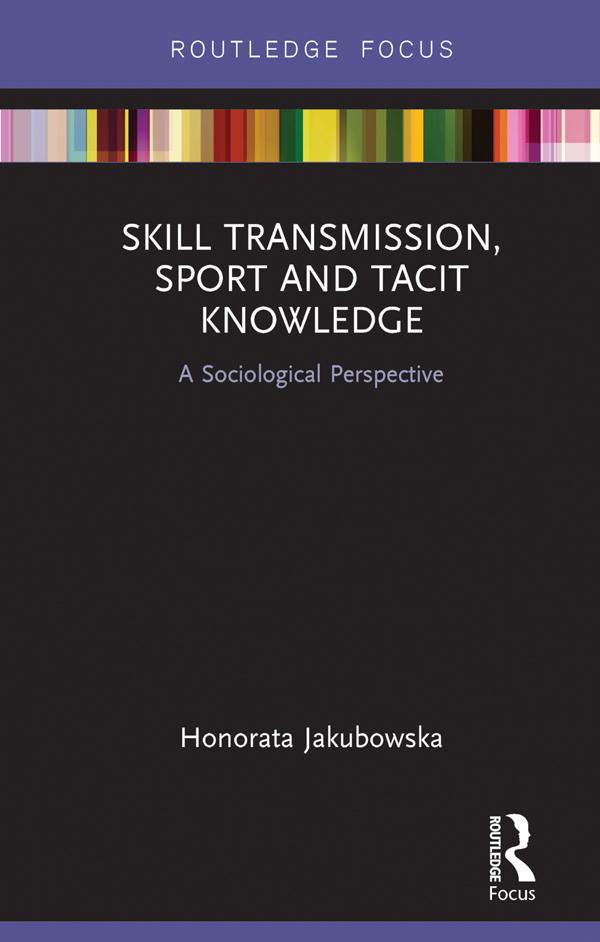
Teaching the skills necessary to play sport depends partly on transmitting knowledge verbally, yet non-verbal or tacit knowledge also has an important role. A coach may tell a young athlete to 'move more dynamically', but it is undoubtedly easier to demonstrate with the body itself how this should be done. Skills such as developing a 'feel for the water' cannot simply be transmitted verbally; they are embodied in the tacit knowledge acquired from practice, repetition and experience.
This is the first sociological study of the transmission of skills through tacit knowledge in sport. Drawing on philosophy, sociology and theories of embodiment, it presents original research gathered from qualitative empirical studies of young athletes. It discusses the concept of tacit knowledge in relation to motor skills transmission in a variety of sports, including athletics, swimming and judo, and examines the methodological possibilities of studying tacit knowledge, as well as its challenges and limitations.
This is fascinating reading for all those with an interest in the sociology of sport, theories of embodiment, or skill acquisition and transmission.
Betal enkelt med kort, Klarna, Apple Pay eller Google Pay. Ikke fornøyd? Du har alltid 14 dagers angrerett. Les mer i våre vilkår. Har du spørsmål, send oss en e-post på hello@memmo.org.
Memmo gjør det enklere å studere – uansett hvor du er i verden. Hos oss samler du pensumbøker og smarte studieverktøy på ett og samme sted: sammendrag, quizer, podkaster og flashcards. Og så Ted, din studiekompis som svarer på alt du lurer på. Over 50 000 studenter studerer allerede her – bygget for at du skal lære raskere og stresse mindre.