
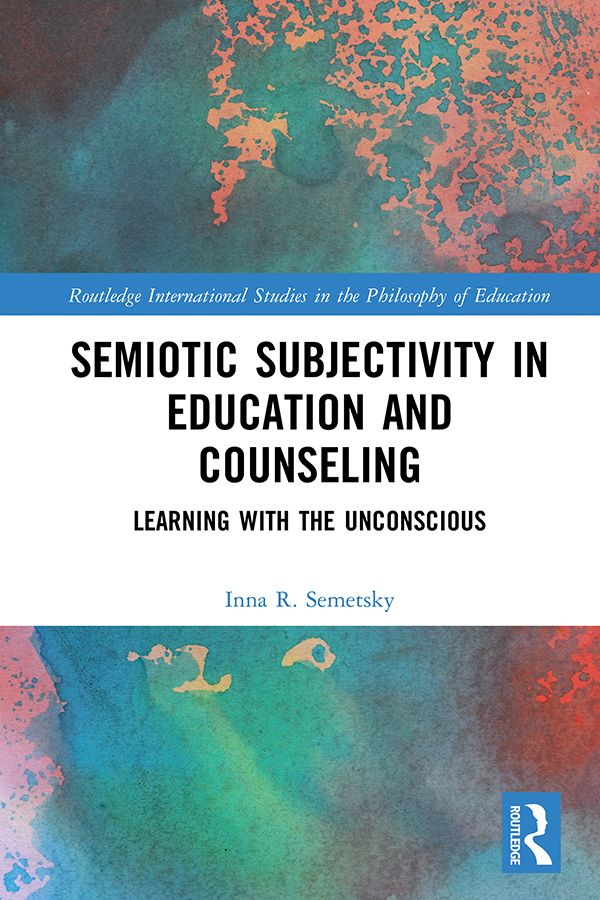
Semiotic Subjectivity in Education and Counseling demonstrates the importance of addressing the concept of the unconscious in learning. Exploring the innovative concept of edusemiotics, it challenges the received notion of learning as solely academic and linguistic, instead offering an ethico-aesthetic paradigm that draws on transdisciplinary research in the context of this new direction in educational theory.
The chapters explore the production of subjectivity within the process of semiosis as the action and transformation of signs. An unorthodox pedagogy of the unconscious blends with the therapeutic dimension and produces subjectivities that emerge in the midst of the relational dynamics of experience. The book argues for holistic education that rejects the schism between matter and spirit pervading Western thinking and represents a shift in rethinking spirituality while never separating it from logic and reason. Giving voice to the unconscious contributes to learning and changing our habits as an important objective in educative and counseling practices.
The book critically examines the legacy of Charles S. Peirce, Lev S. Vygotsky and other forerunners of edusemiotics. It will be essential reading for academics, researchers and postgraduate students across the fields of educational philosophy, educational psychology and counseling as well as science studies.
Betal enkelt med kort, Klarna, Apple Pay eller Google Pay. Ikke fornøyd? Du har alltid 14 dagers angrerett. Les mer i våre vilkår. Har du spørsmål, send oss en e-post på hello@memmo.org.
Memmo gjør det enklere å studere – uansett hvor du er i verden. Hos oss samler du pensumbøker og smarte studieverktøy på ett og samme sted: sammendrag, quizer, podkaster og flashcards. Og så Ted, din studiekompis som svarer på alt du lurer på. Over 50 000 studenter studerer allerede her – bygget for at du skal lære raskere og stresse mindre.