
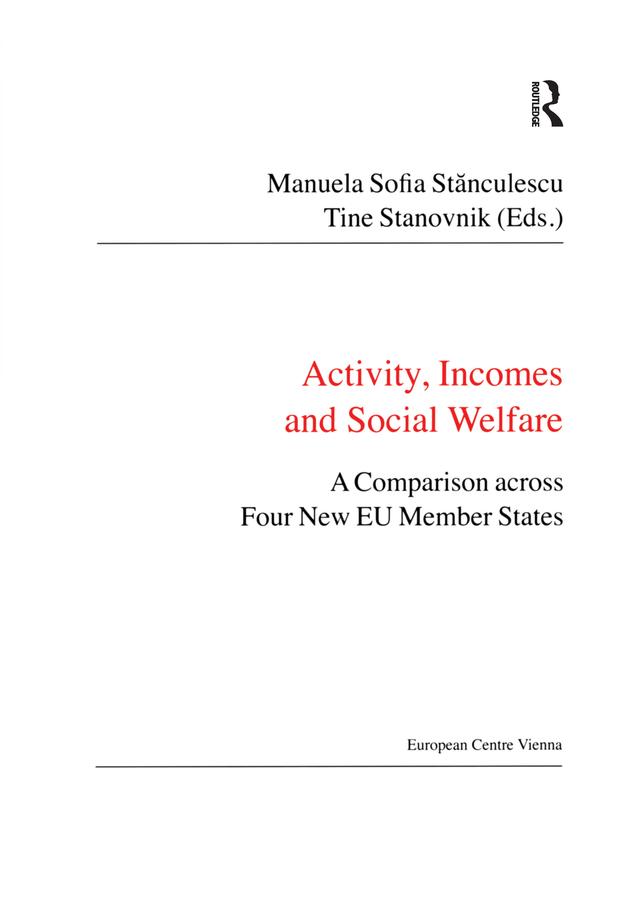
This book describes and quantifies the major socioeconomic changes that have occurred in four new member states of the EU (Slovenia, Hungary, Romania and Bulgaria) since the early 1990s. The period covered was a particularly turbulent one, not only because of the transition process which was well underway but becase of the stablization packages and other economic, monetary and social policy measures, which have had a strong impact at individual and household levels. While previous comparable studies have been carried out, they cover the period only to the mid 1990s, thus this book contains unique and very valuable statistical and micro data. Within the broad framework of socioeconomic change, a number of topics are explored in greater detail. These include changes in activity, occupational status and educational attainment, household income sources and income inequality, and risk of income poverty. The analysis is based on household budget surveys and complemented with other statistical sources, enabling a coherent analysis of the impact of large changes in social policy at household level. The country chapters are all based on common methodological guidelines enabling comparisons to be drawn. This will be an invaluable book for researchers in comparative social policy, poverty and social stratification and economic sociology, and for specialists on Central and Eastern Europe.
Betal enkelt med kort, Klarna, Apple Pay eller Google Pay. Ikke fornøyd? Du har alltid 14 dagers angrerett. Les mer i våre vilkår. Har du spørsmål, send oss en e-post på hello@memmo.org.
Memmo gjør det enklere å studere – uansett hvor du er i verden. Hos oss samler du pensumbøker og smarte studieverktøy på ett og samme sted: sammendrag, quizer, podkaster og flashcards. Og så Ted, din studiekompis som svarer på alt du lurer på. Over 50 000 studenter studerer allerede her – bygget for at du skal lære raskere og stresse mindre.
Du vil kanskje også like
Kjøp boken0