
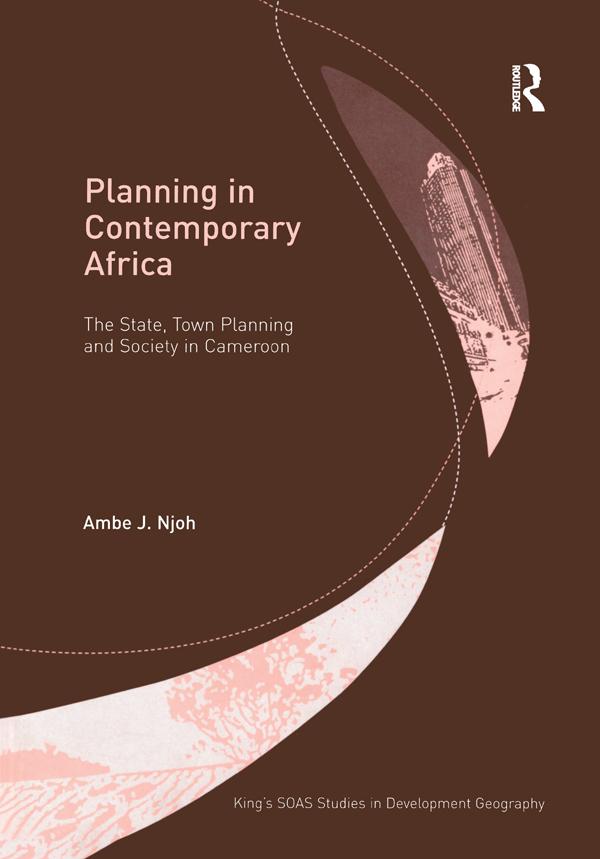
Why do authorities in post-colonial African states continue to employ European or Western planning models? What are the implications for different societal groups of adopting such models? Several decades following independence, this outstanding volume provides in-depth empirical research to uncover the answers to such questions. The book focuses in particular on Cameroon, the only African country to have been colonized by three different European powers: Germany, Britain and France. It discusses the nature of the state in peripheral capitalist countries and sets current planning and land use policies in their historical, colonial and post-colonial contexts. The author then proceeds to examine key planning issues such as housing, land ownership, sustainable development, environmental and waste management, transportation, infrastructure and gender. In addition to analyzing the impact of colonialism and imperialism on the built environment in Cameroon in particular and sub-Saharan Africa in general, the book also addresses global issues about urbanism and will be particularly relevant to those interested in planning, regional studies and development, and development geography.
Sider: 324
Kategori: Arkitektur & Stadsplanering
e-ISBN: 9781351910842
Fraktvekt: 1.2 kg
Sendes innen: 1-2 dager
Betal enkelt med kort, Klarna, Apple Pay eller Google Pay. Ikke fornøyd? Du har alltid 14 dagers angrerett. Les mer i våre vilkår. Har du spørsmål, send oss en e-post på hello@memmo.org.
Memmo gjør det enklere å studere – uansett hvor du er i verden. Hos oss samler du pensumbøker og smarte studieverktøy på ett og samme sted: sammendrag, quizer, podkaster og flashcards. Og så Ted, din studiekompis som svarer på alt du lurer på. Over 50 000 studenter studerer allerede her – bygget for at du skal lære raskere og stresse mindre.
Du vil kanskje også like
Kjøp boken0