
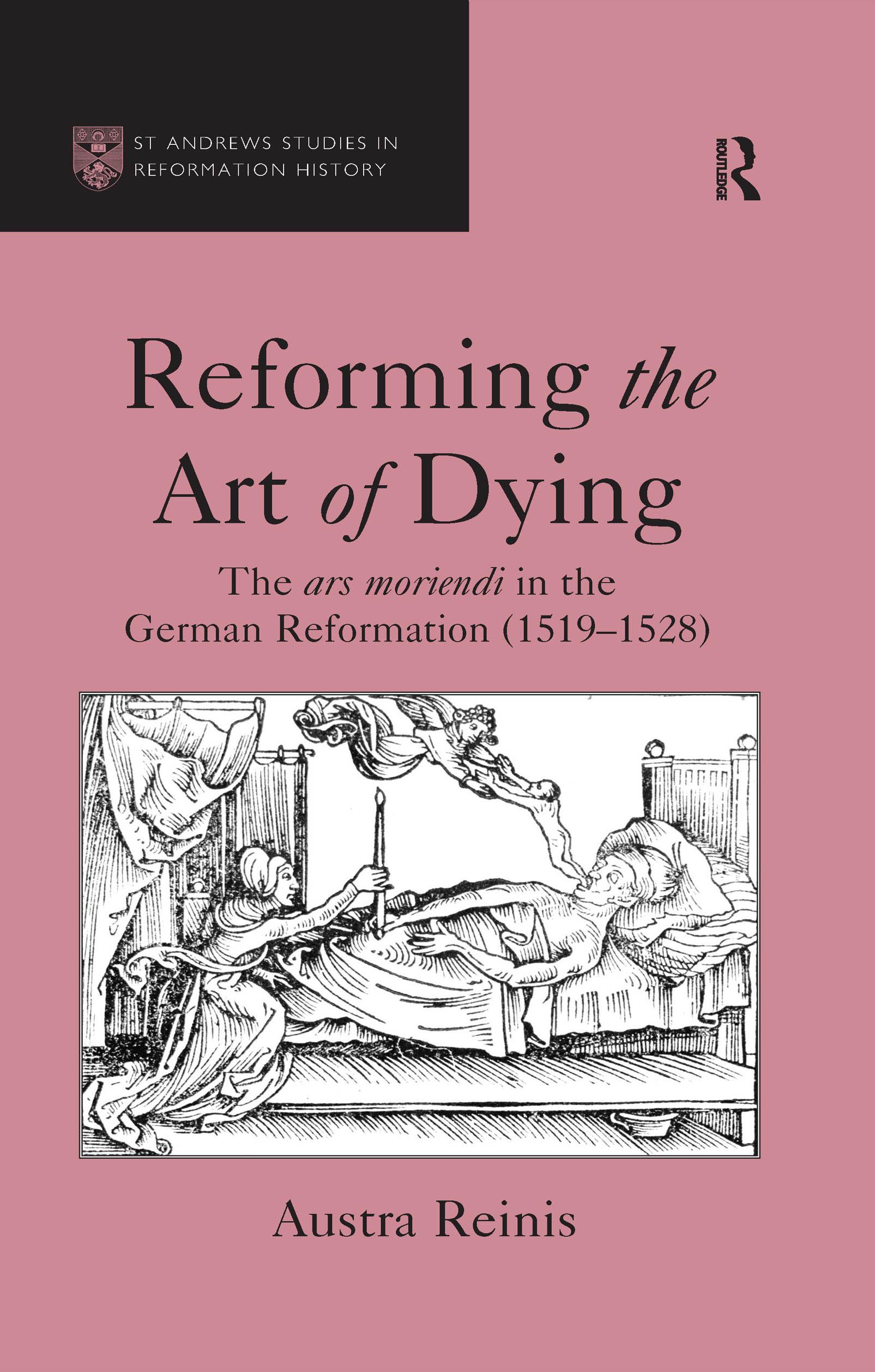
The Reformation led those who embraced Martin Luther's teachings to revise virtually every aspect of their faith and to reorder their daily lives in view of their new beliefs. Nowhere was this more true than with death. By the beginning of the sixteenth century the Medieval Church had established a sophisticated mechanism for dealing with death and its consequences. The Protestant reformers rejected this new mechanism. To fill the resulting gap and to offer comfort to the dying, they produced new liturgies, new church orders, and new handbooks on dying. This study focuses on the earliest of the Protestant handbooks, beginning with Luther's Sermon on Preparing to Die in 1519 and ending with Jakob Otter's Christlich leben vnd sterben in 1528. It explores how Luther and his colleagues adopted traditional themes and motifs even as they transformed them to accord with their conviction that Christians could be certain of their salvation. It further shows how Luther's colleagues drew not only on his teaching on dying, but also on other writings including his sermons on the sacraments. The study concludes that the assurance of salvation offered in the Protestant handbooks represented a significant departure from traditional teaching on death. By examining the ways in which the themes and teachings of the reformers differed from the late medieval ars moriendi, the book highlights both breaks with tradition and continuities that marked the early Reformation.
Betal enkelt med kort, Klarna, Apple Pay eller Google Pay. Ikke fornøyd? Du har alltid 14 dagers angrerett. Les mer i våre vilkår. Har du spørsmål, send oss en e-post på hello@memmo.org.
Memmo gjør det enklere å studere – uansett hvor du er i verden. Hos oss samler du pensumbøker og smarte studieverktøy på ett og samme sted: sammendrag, quizer, podkaster og flashcards. Og så Ted, din studiekompis som svarer på alt du lurer på. Over 50 000 studenter studerer allerede her – bygget for at du skal lære raskere og stresse mindre.
Du vil kanskje også like
Kjøp boken0