
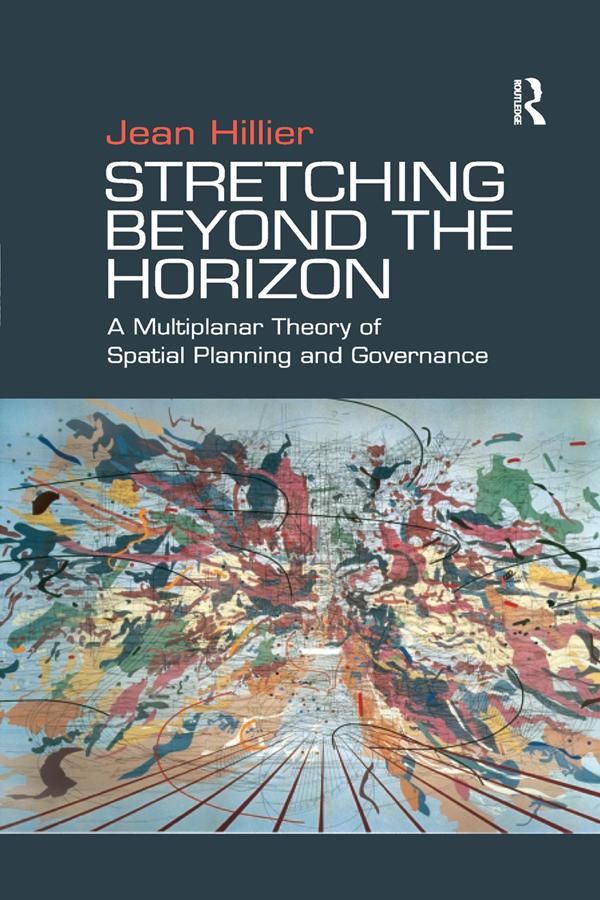
In this innovative work Jean Hillier develops a new theory for students and researchers of spatial planning and governance which is grounded primarily in the work of Gilles Deleuze. The theory recognizes the complex interrelation between place qualities and the multiple space-time relational dynamics of spatial governance. Using empirical examples from England and Australia, Hillier identifies the power of networks and trajectories through which various actors territorialize space and explores the social and political responsibilities of spatial managers and decision-makers. She considers what spatial planning and urban management practices could look like if they were to be developed along Deleuzean lines, and suggests alternative framings for spatial practice: broad trajectories or 'visions' of the longer-term future and shorter-term, location-specific detailed plans and projects with collaboratively determined tangible goals.
Betal enkelt med kort, Klarna, Apple Pay eller Google Pay. Ikke fornøyd? Du har alltid 14 dagers angrerett. Les mer i våre vilkår. Har du spørsmål, send oss en e-post på hello@memmo.org.
Memmo gjør det enklere å studere – uansett hvor du er i verden. Hos oss samler du pensumbøker og smarte studieverktøy på ett og samme sted: sammendrag, quizer, podkaster og flashcards. Og så Ted, din studiekompis som svarer på alt du lurer på. Over 50 000 studenter studerer allerede her – bygget for at du skal lære raskere og stresse mindre.
Du vil kanskje også like
Kjøp boken0