
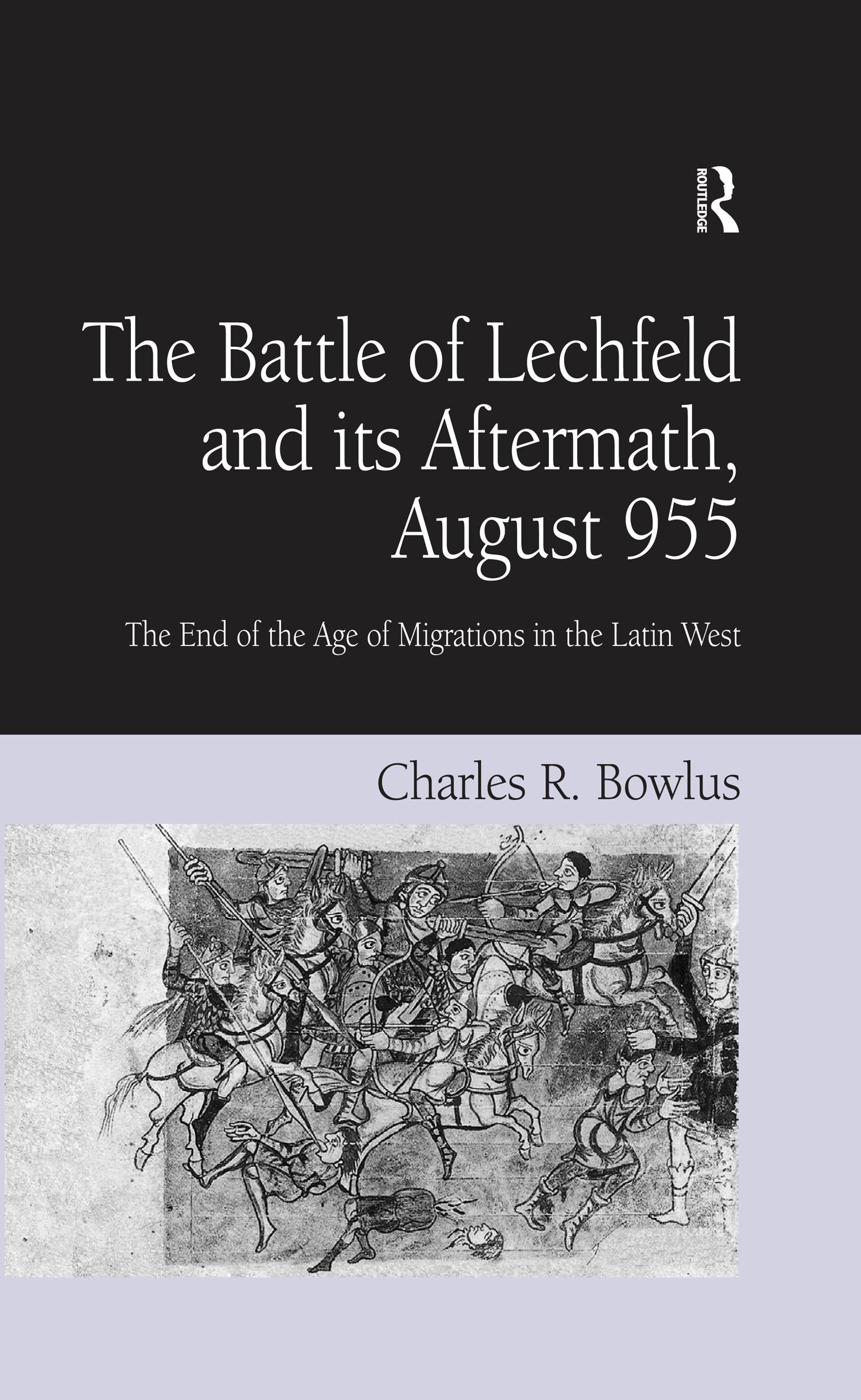
In August 955 a battle took place that effectively ended the incursions of steppe nomads into Western Europe. The forces of Otto the Great annihilated a huge army of Hungarian mounted archers in an encounter that is generally known as the battle of Lechfeld, a broad plain near Augsburg in southern Germany. Since even after a defeat these elusive warriors surely could have fled back to the Carpathian Basin to rebuild their strength and resume their raids, the total annihilation of the Hungarian army is mysterious. This book provides the first satisfactory explanation for the decisive nature of Otto's victory. Based on a detailed analysis of all contemporary, and often contradictory, sources, Bowlus provides a step-by-step reconstruction of the battle. This is preceded by chapters analysing the administrative and military reforms in tenth-century Germany, and the strengths and weaknesses of nomadic styles of warfare, in particular their archery, and setting out the historical context in which the battle occurred. A pioneering aspect of his research is the introduction of environmental factors, not only the limits they imposed on the expansion of the nomadic way of life into Europe, but also the impact the local environment had on the outcome of the battle.
Betal enkelt med kort, Klarna, Apple Pay eller Google Pay. Ikke fornøyd? Du har alltid 14 dagers angrerett. Les mer i våre vilkår. Har du spørsmål, send oss en e-post på hello@memmo.org.
Memmo gjør det enklere å studere – uansett hvor du er i verden. Hos oss samler du pensumbøker og smarte studieverktøy på ett og samme sted: sammendrag, quizer, podkaster og flashcards. Og så Ted, din studiekompis som svarer på alt du lurer på. Over 50 000 studenter studerer allerede her – bygget for at du skal lære raskere og stresse mindre.
Du vil kanskje også like
Kjøp boken0