
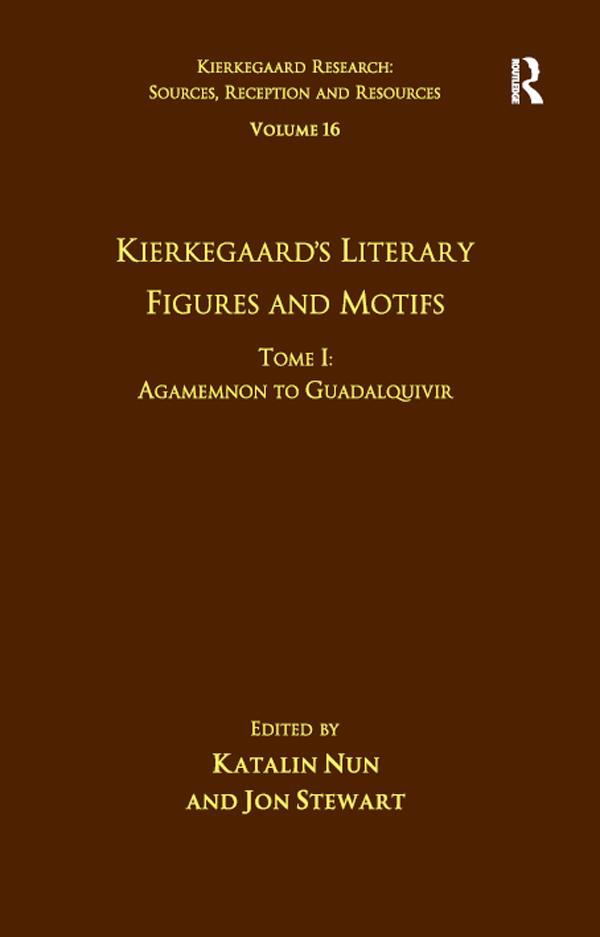
While Kierkegaard is perhaps known best as a religious thinker and philosopher, there is an unmistakable literary element in his writings. He often explains complex concepts and ideas by using literary figures and motifs that he could assume his readers would have some familiarity with. This dimension of his thought has served to make his writings far more popular than those of other philosophers and theologians, but at the same time it has made their interpretation more complex. Kierkegaard readers are generally aware of his interest in figures such as Faust or the Wandering Jew, but they rarely have a full appreciation of the vast extent of his use of characters from different literary periods and traditions. The present volume is dedicated to the treatment of the variety of literary figures and motifs used by Kierkegaard. The volume is arranged alphabetically by name, with Tome I covering figures and motifs from Agamemnon to Guadalquivir.
Betal enkelt med kort, Klarna, Apple Pay eller Google Pay. Ikke fornøyd? Du har alltid 14 dagers angrerett. Les mer i våre vilkår. Har du spørsmål, send oss en e-post på hello@memmo.org.
Memmo gjør det enklere å studere – uansett hvor du er i verden. Hos oss samler du pensumbøker og smarte studieverktøy på ett og samme sted: sammendrag, quizer, podkaster og flashcards. Og så Ted, din studiekompis som svarer på alt du lurer på. Over 50 000 studenter studerer allerede her – bygget for at du skal lære raskere og stresse mindre.
Du vil kanskje også like
Kjøp boken0