
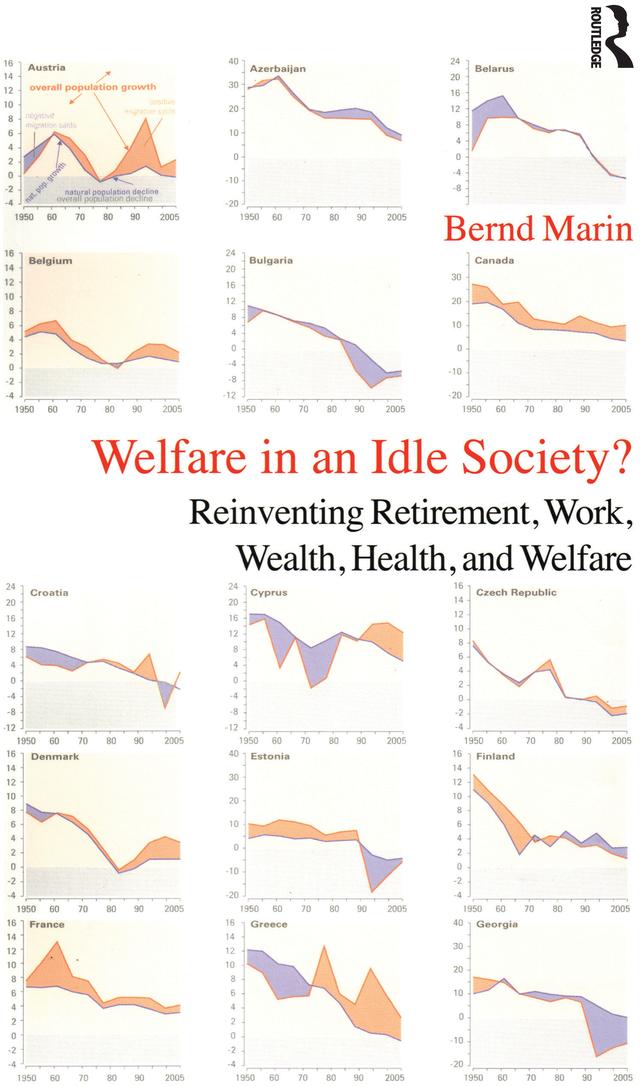
The modern welfare state is indeed one of the greatest achievements of the post-war 20th century. With its key aims of eradicating the five giant social ills of Want, Ignorance, Disease, Squalor and Idleness, it aimed to providing a minimum standard of living, with all people of working age paying a weekly contribution; in return, benefits would be paid to anyone who was sick, unemployed, retired or widowed. The modern welfare state, therefore, is about maintaining a delicate equilibrium between dependent social groups on the one hand and the active working classes on the other. In the case of old-age security, this balance is being achieved (or not) by the so-called Generation Contract. This social pact is more of an implicit, unwritten and unspecified social contract. This ground-breaking book demonstrates how countries are addressing population-ageing challenges in depth, using the case study of Austria to gain the required complexity and differentiation in a comparative European framework of empirical evidence. This is a broad social science study in political economy and sociology, not an economic analysis. Though focusing on pensions, it centres on the (im)balance between work and non-work, issues of health, work ability, employability, and benefit receipt from old-age security to disability allowance. It will be required reading for all sociologists and social policy experts and academics working within this area.
Betal enkelt med kort, Klarna, Apple Pay eller Google Pay. Ikke fornøyd? Du har alltid 14 dagers angrerett. Les mer i våre vilkår. Har du spørsmål, send oss en e-post på hello@memmo.org.
Memmo gjør det enklere å studere – uansett hvor du er i verden. Hos oss samler du pensumbøker og smarte studieverktøy på ett og samme sted: sammendrag, quizer, podkaster og flashcards. Og så Ted, din studiekompis som svarer på alt du lurer på. Over 50 000 studenter studerer allerede her – bygget for at du skal lære raskere og stresse mindre.
Du vil kanskje også like
Kjøp boken0