
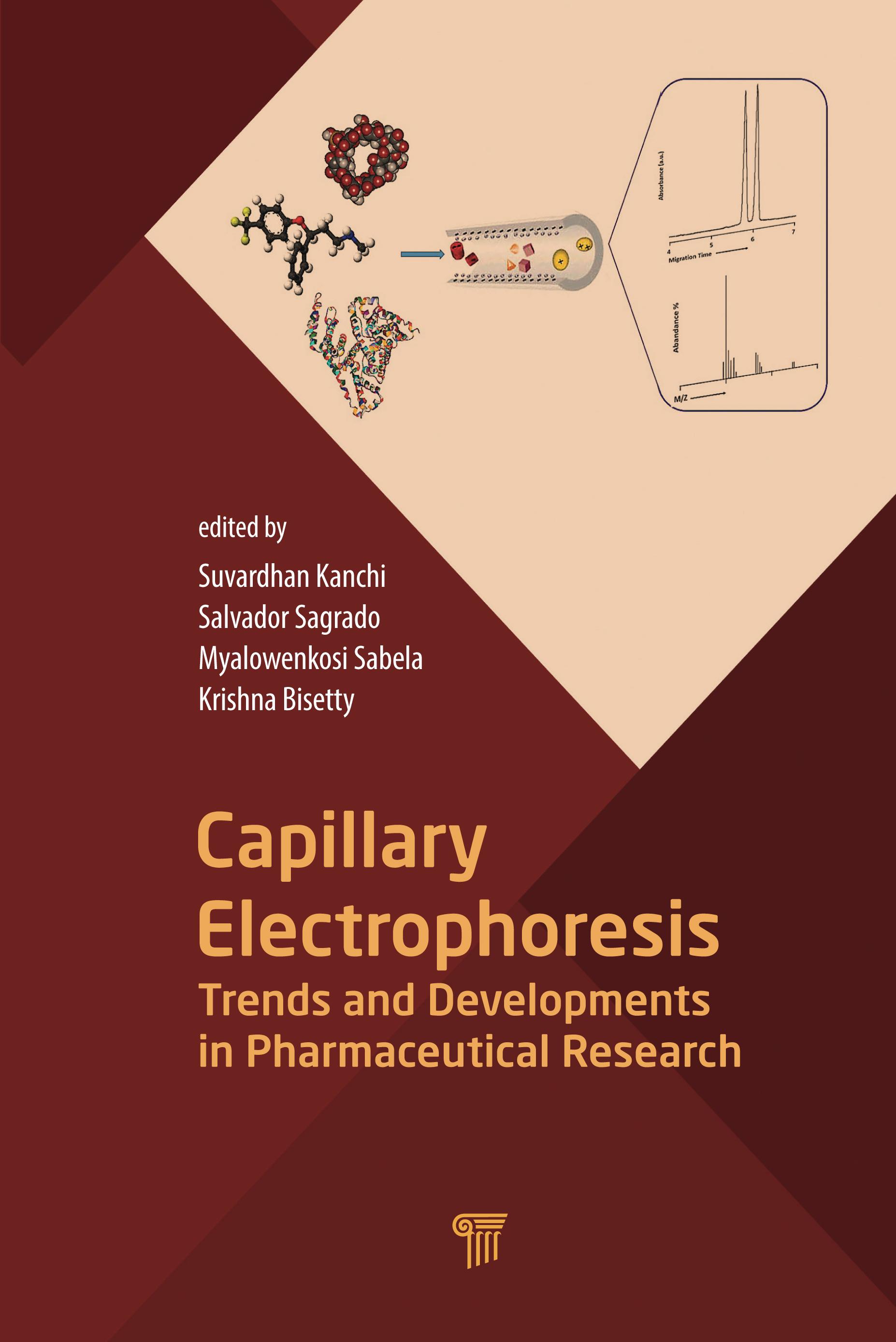
Capillary electrophoresis (CE) has become an established method with widespread recognition as an analytical technique of choice in numerous analytical laboratories, including industrial and academic sectors. Pharmaceutical and biochemical research and quality control are the most important CE applications. This book provides a comparative assessment of related techniques on mode selection, method development, detection, and quantitative analysis and estimation of pharmacokinetic parameters and broadens the understanding of modern CE applications, developments, and prospects. It introduces the fundamentals of CE and clearly outlines the procedures used to mitigate several barriers, such as detection limits, signal detection, changing capillary environment, resolution separation of analytes, and hyphenation of mass spectrometry with CE, for a range of analytical problems. Each chapter outlines a specific electrophoretic variant with detailed instructions and some standard operating procedures. In this respect, the book meets its desired goal of rendering assistance to lovers of electrophoresis.
Betal enkelt med kort, Klarna, Apple Pay eller Google Pay. Ikke fornøyd? Du har alltid 14 dagers angrerett. Les mer i våre vilkår. Har du spørsmål, send oss en e-post på hello@memmo.org.
Memmo gjør det enklere å studere – uansett hvor du er i verden. Hos oss samler du pensumbøker og smarte studieverktøy på ett og samme sted: sammendrag, quizer, podkaster og flashcards. Og så Ted, din studiekompis som svarer på alt du lurer på. Over 50 000 studenter studerer allerede her – bygget for at du skal lære raskere og stresse mindre.