
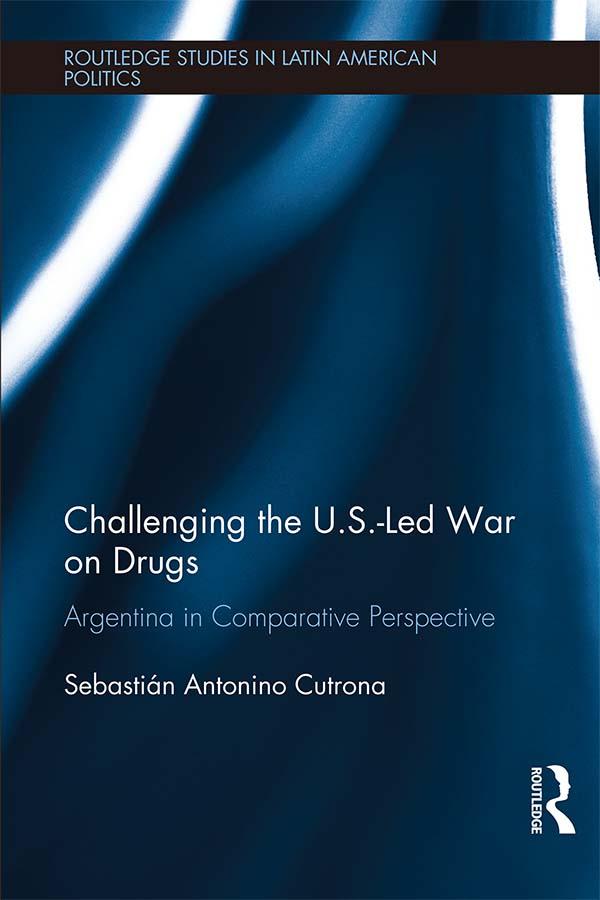
Challenging the U.S.-Led War on Drugs explores the cases that have resisted the U.S. pressure to adopt a militarized approach to fight against drug trafficking in Latin America and the Caribbean.
Through a sweeping narrative history from the recovery of democracy in 1983 to the present, Cutrona applies international relations and comparative politics theories to understand Argentina’s different trajectory vis-à-vis the rest of the region. The author demonstrates that in broad questions of vulnerability to U.S. pressure, external factors often play a secondary role in explaining either balancing/resistance or bandwagoning/acceptance of the U.S. security agenda in the Americas. Emphasizing the role of domestic-level politics, Cutrona identifies the subordination of the military to civilian oversight, the transition outcome, the system of check and balances, and the role of civil society actors such as social movements, epistemic communities, and norm entrepreneurs as Argentina’s most relevant sources explaining defection from Washington’s main dictates to combat drug trafficking.
Betal enkelt med kort, Klarna, Apple Pay eller Google Pay. Ikke fornøyd? Du har alltid 14 dagers angrerett. Les mer i våre vilkår. Har du spørsmål, send oss en e-post på hello@memmo.org.
Memmo gjør det enklere å studere – uansett hvor du er i verden. Hos oss samler du pensumbøker og smarte studieverktøy på ett og samme sted: sammendrag, quizer, podkaster og flashcards. Og så Ted, din studiekompis som svarer på alt du lurer på. Over 50 000 studenter studerer allerede her – bygget for at du skal lære raskere og stresse mindre.