
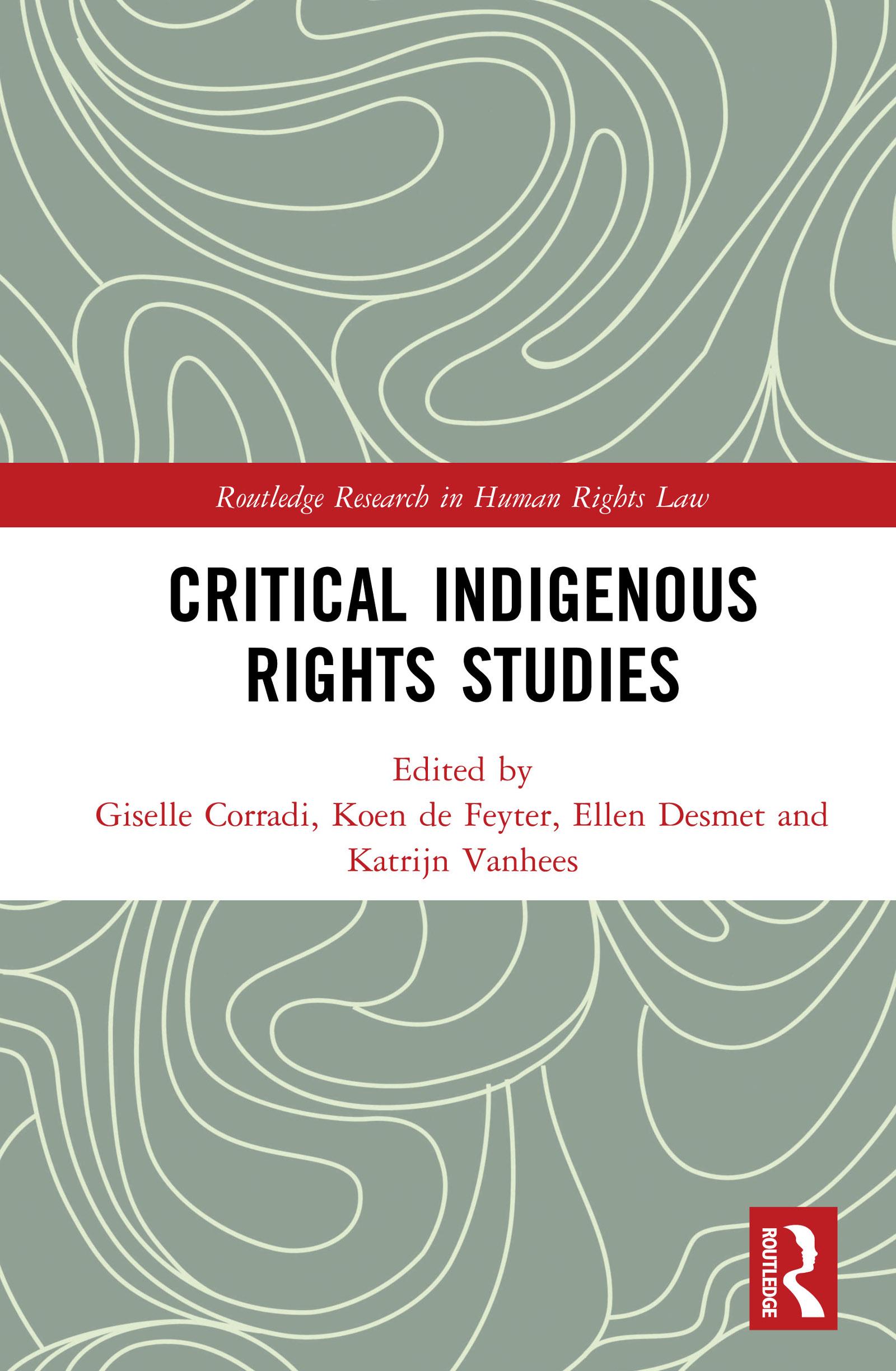
The field of ‘critical indigenous rights studies’ is a complex one that benefits from an interdisciplinary perspective and a realist (as opposed to an idealised) approach to indigenous peoples. This book draws on sociology of law, anthropology, political sciences and legal sciences in order to address emerging issues in the study of indigenous rights and identify directions for future research.
The first part of the volume investigates how changing identities and cultures impact rights protection, analysing how policies on development and land, and processes such as migration, interrelate with the mobilisation of identities and the realisation of rights. In the second part, new approaches related to indigenous peoples’ rights are scrutinised as to their potential and relevance. They include addressing legal tensions from an indigenous peoples’ rights perspective, creating space for counter-narratives on international law and designing new instruments.
Throughout the text, case studies with wide geographical scope are presented, ranging from Latin America (the book’s focus) to Egypt, Rwanda and Scandinavia.
Betal enkelt med kort, Klarna, Apple Pay eller Google Pay. Ikke fornøyd? Du har alltid 14 dagers angrerett. Les mer i våre vilkår. Har du spørsmål, send oss en e-post på hello@memmo.org.
Memmo gjør det enklere å studere – uansett hvor du er i verden. Hos oss samler du pensumbøker og smarte studieverktøy på ett og samme sted: sammendrag, quizer, podkaster og flashcards. Og så Ted, din studiekompis som svarer på alt du lurer på. Over 50 000 studenter studerer allerede her – bygget for at du skal lære raskere og stresse mindre.