
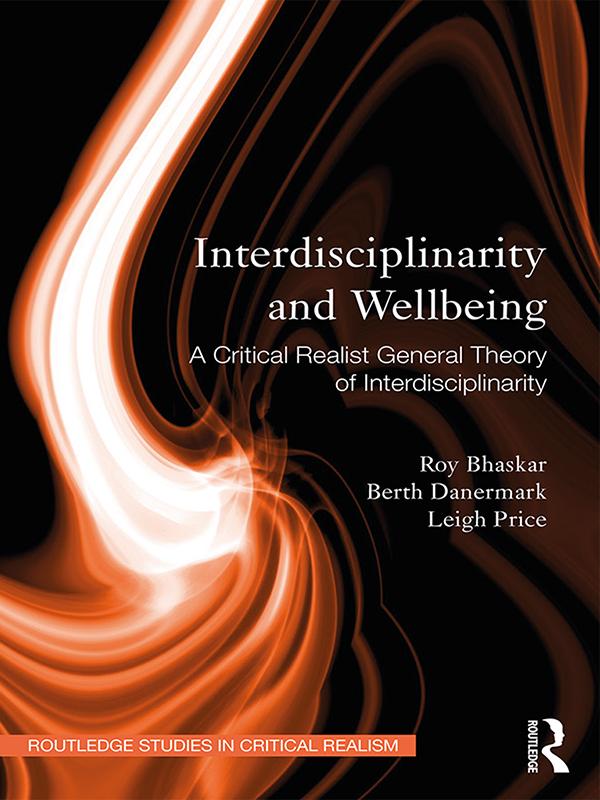
In this book, the authors provide a much-needed general theory of interdisciplinarity and relate it to health/wellbeing research and professional practice. In so doing they make it possible for practitioners of the different disciplines to communicate without contradiction or compromise, resolving the tensions that beset much interdisciplinary work.
Such a general theory is only possible if we assume that there is more to being (ontology) than empirical being (what we can measure directly). Therefore, the unique approach to interdisciplinarity applied in this book starts from ontology, namely that there is a multimechanismicity (a multiplicity of mechanisms) in open systems, and then moves to epistemology. By contrast, the mainstream approach, which fails to acknowledge ontology, is “unserious” and tends to result in a methodological hierarchy, unconducive of interdisciplinarity, in which empiricist science is overtly or tacitly assumed to be the superior version of science.
This book is primarily aimed at those people interested in improving health and wellbeing – such as researchers, policy-makers, educators, and general practitioners. However, it will also be useful to academics engaged in the broader academic debate on interdisciplinary metatheory.
Betal enkelt med kort, Klarna, Apple Pay eller Google Pay. Ikke fornøyd? Du har alltid 14 dagers angrerett. Les mer i våre vilkår. Har du spørsmål, send oss en e-post på hello@memmo.org.
Memmo gjør det enklere å studere – uansett hvor du er i verden. Hos oss samler du pensumbøker og smarte studieverktøy på ett og samme sted: sammendrag, quizer, podkaster og flashcards. Og så Ted, din studiekompis som svarer på alt du lurer på. Over 50 000 studenter studerer allerede her – bygget for at du skal lære raskere og stresse mindre.