
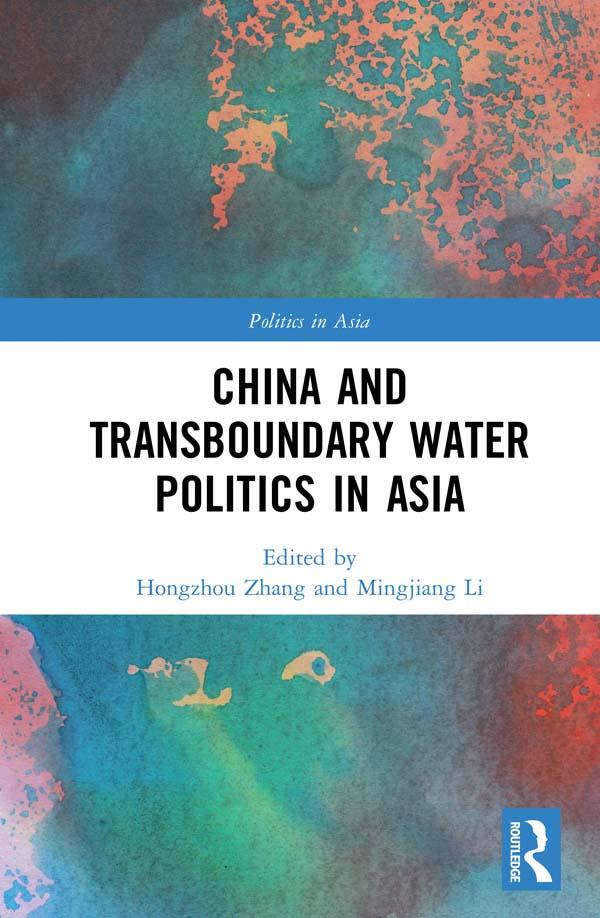
Water-related conflicts have a long history and will continue to be a global and regional problem. Asia, with 1.5 billion of its people living in shared river basins, and with very few transboundary rivers governed by treaties, is especially prone to such conflicts. The key to mitigating transboundary water conflicts and advancing cooperation in Asia is largely in the hands of China, the upstream country for most of Asia’s major transboundary rivers. To avert the looming water crisis, apart from spending billions of dollars on domestic water transfer projects such as the South–North Water Diversion Megaproject, as well as on water conservancy and pollution abatement, China has sought to utilize the water resources of the major rivers that run across borders with neighbouring countries. On these transboundary rivers, China has built or plans to build large dams for hydroelectricity and major water diversion facilities, which has triggered anxiety and complaints from downstream countries and criticism from the international society.
This book aims to systematically examine the complex reality of water contestations between China and its neighbouring countries. It provides a discussion on transboundary hydropolitics beyond the state-centric geopolitical perspective to dig into various political, institutional, legal, historical, geographical, and demographic factors that affect China’s policies and practices towards transboundary water issues. This book also provides a collection of comparative case studies on China’s water resources management on the Mekong River with other five riparian states in the Lower Mekong region: the Salween River with Myanmar, the Brahmaputra River with India, the Amur River with Russia and Mongolia, the Illy and Irtysh Rivers with Kazakhstann, and the Yalu and Tumen Rivers with North Korea. Furthermore, this book sheds light on China’s future role in global water governance.
Betal enkelt med kort, Klarna, Apple Pay eller Google Pay. Ikke fornøyd? Du har alltid 14 dagers angrerett. Les mer i våre vilkår. Har du spørsmål, send oss en e-post på hello@memmo.org.
Memmo gjør det enklere å studere – uansett hvor du er i verden. Hos oss samler du pensumbøker og smarte studieverktøy på ett og samme sted: sammendrag, quizer, podkaster og flashcards. Og så Ted, din studiekompis som svarer på alt du lurer på. Over 50 000 studenter studerer allerede her – bygget for at du skal lære raskere og stresse mindre.