
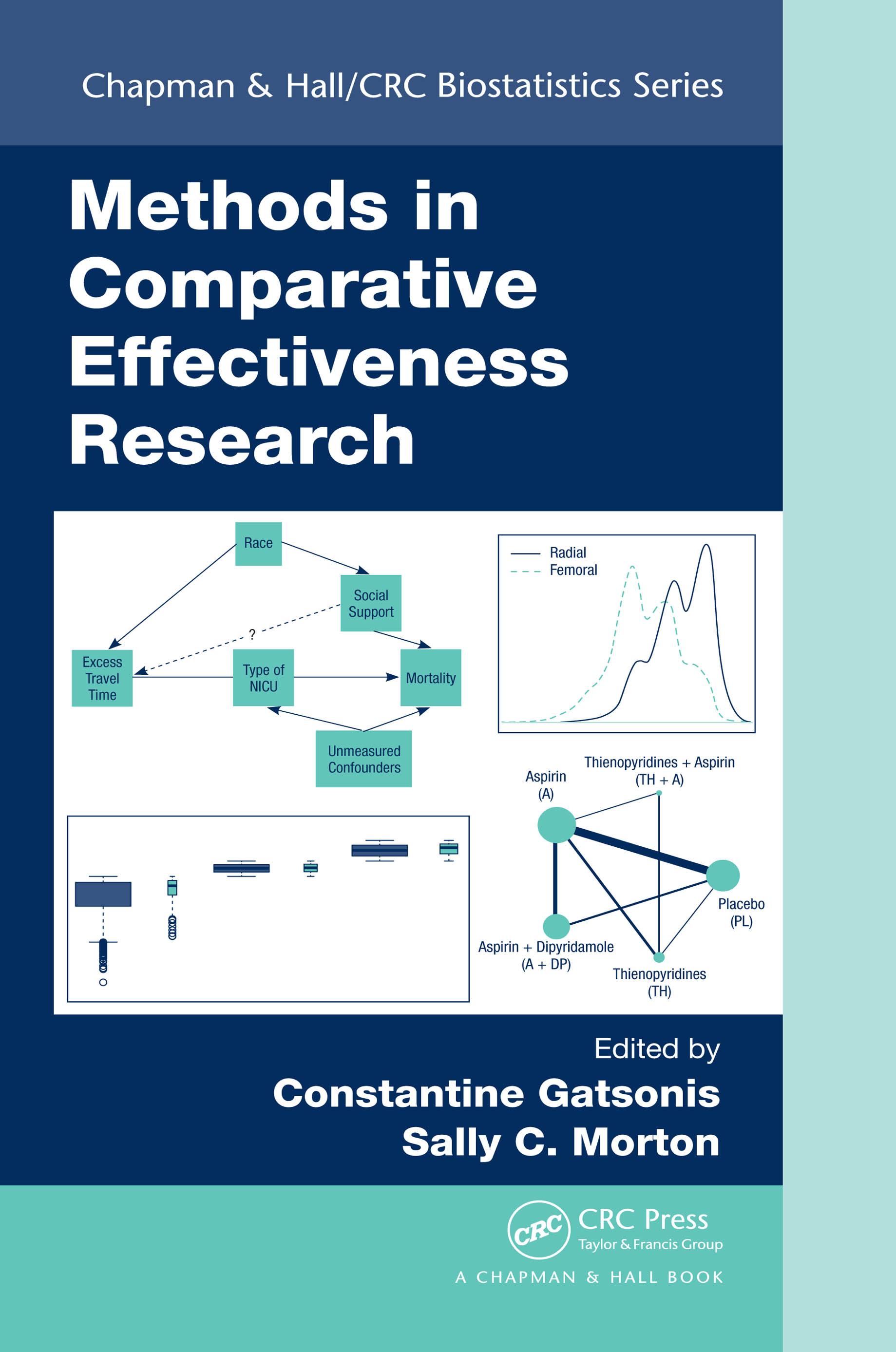
Comparative effectiveness research (CER) is the generation and synthesis of evidence that compares the benefits and harms of alternative methods to prevent, diagnose, treat, and monitor a clinical condition or to improve the delivery of care (IOM 2009). CER is conducted to develop evidence that will aid patients, clinicians, purchasers, and health policy makers in making informed decisions at both the individual and population levels. CER encompasses a very broad range of types of studies—experimental, observational, prospective, retrospective, and research synthesis.
This volume covers the main areas of quantitative methodology for the design and analysis of CER studies. The volume has four major sections—causal inference; clinical trials; research synthesis; and specialized topics. The audience includes CER methodologists, quantitative-trained researchers interested in CER, and graduate students in statistics, epidemiology, and health services and outcomes research. The book assumes a masters-level course in regression analysis and familiarity with clinical research.
Betal enkelt med kort, Klarna, Apple Pay eller Google Pay. Ikke fornøyd? Du har alltid 14 dagers angrerett. Les mer i våre vilkår. Har du spørsmål, send oss en e-post på hello@memmo.org.
Memmo gjør det enklere å studere – uansett hvor du er i verden. Hos oss samler du pensumbøker og smarte studieverktøy på ett og samme sted: sammendrag, quizer, podkaster og flashcards. Og så Ted, din studiekompis som svarer på alt du lurer på. Over 50 000 studenter studerer allerede her – bygget for at du skal lære raskere og stresse mindre.