
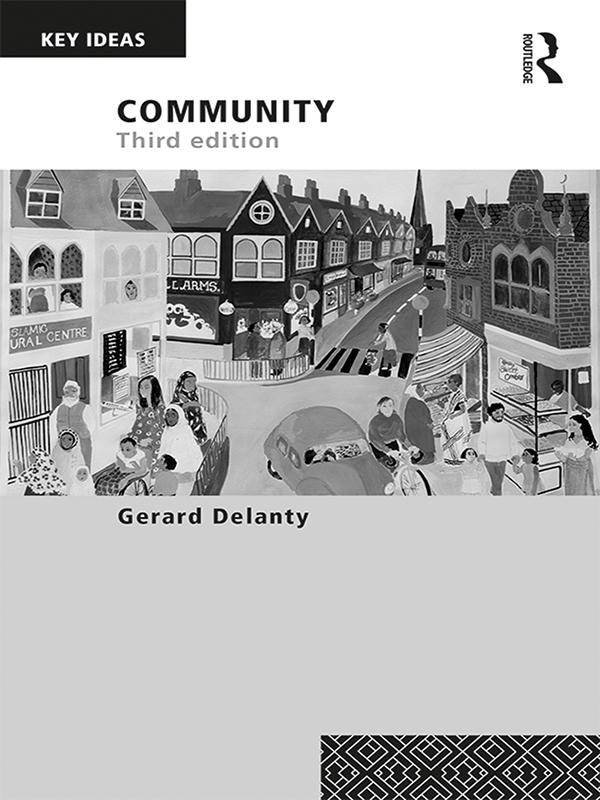
The increasing atomization of modern society has been accompanied by an enduring nostalgia for the idea of community as a source of security and belonging in an increasingly insecure world. Far from disappearing, community has been revived by transnationalism and by new kinds of individualism. Gerard Delanty begins this stimulating critical introduction to the concept with an analysis of the origins of the idea of community in Western utopian thought, and as a theme in classical sociology and anthropology. He goes on to chart the resurgence of the idea within communitarian thought and postmodern philosophies, the complications and critiques of multiculturalism, and new manifestations of community within a society where changing modes of communication produce both fragmentation and possibilities of new social bonds. Contemporary community, he argues, is essentially a communication community based on belonging and sharing, and can be a powerful voice of political opposition. The communities of today are less spatially bounded than those of the past, but they cannot dispense with the need for a sense of belonging. The communicative ties and cultural structures of contemporary societies have opened up numerous possibilities for belonging based on religion, nationalism, ethnicity, lifestyle and gender.
Betal enkelt med kort, Klarna, Apple Pay eller Google Pay. Ikke fornøyd? Du har alltid 14 dagers angrerett. Les mer i våre vilkår. Har du spørsmål, send oss en e-post på hello@memmo.org.
Memmo gjør det enklere å studere – uansett hvor du er i verden. Hos oss samler du pensumbøker og smarte studieverktøy på ett og samme sted: sammendrag, quizer, podkaster og flashcards. Og så Ted, din studiekompis som svarer på alt du lurer på. Over 50 000 studenter studerer allerede her – bygget for at du skal lære raskere og stresse mindre.