
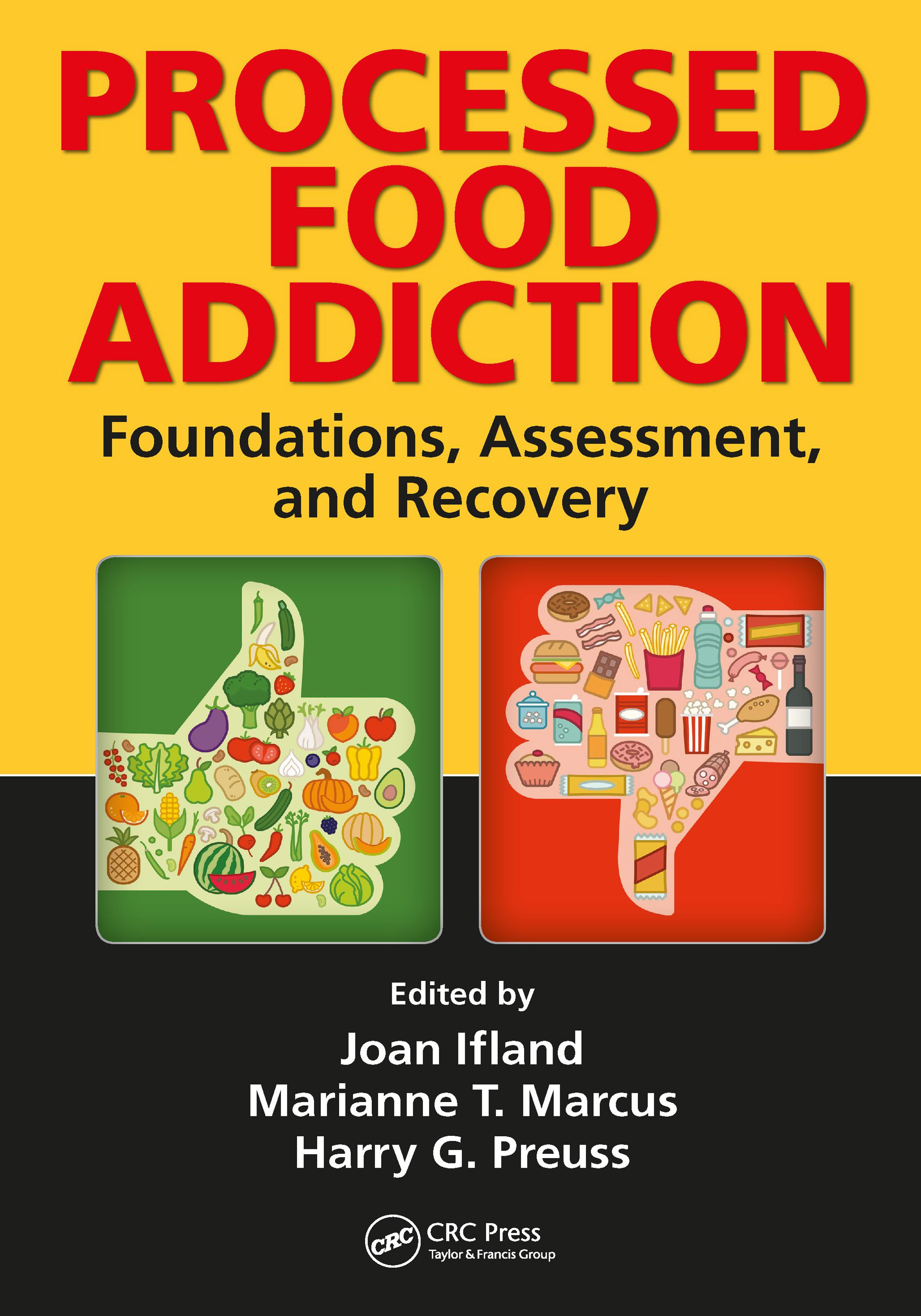
Obesity and eating disorders have stubbornly refused to respond to treatment since the 1990’s. This book organizes the evidence for a possible answer, i.e., that the problem could be one of addiction to processed foods. In a Processed Food Addiction (PFA) model, concepts of abstinence, cue-avoidance, acceptance of lapses, and consequences all play a role in long-term recovery. Application of these concepts could provide new tools to health professionals and significantly improve outcomes.
This book describes PFA recovery concepts in detail. The material bridges the research into practical steps that health professionals can employ in their practices. It contains an evidence-based chapter on concepts of abstinence from processed foods. It rigorously describes PFA pathology according to the DSM 5 Addiction Diagnostic Criteria. It applies the Addiction Severity Index to PFA so that health practitioners can orient themselves to diagnosing and assessing PFA. It contains ground-breaking insight into how to approach PFA in children.
Because the book is evidence-based, practitioners can gain the confidence to put the controversy about food addiction to rest. Practitioners can begin to identify and effectively help their clients who are addicted to processed foods. This is a breakthrough volume in a field that could benefit from new approaches.
Betal enkelt med kort, Klarna, Apple Pay eller Google Pay. Ikke fornøyd? Du har alltid 14 dagers angrerett. Les mer i våre vilkår. Har du spørsmål, send oss en e-post på hello@memmo.org.
Memmo gjør det enklere å studere – uansett hvor du er i verden. Hos oss samler du pensumbøker og smarte studieverktøy på ett og samme sted: sammendrag, quizer, podkaster og flashcards. Og så Ted, din studiekompis som svarer på alt du lurer på. Over 50 000 studenter studerer allerede her – bygget for at du skal lære raskere og stresse mindre.