
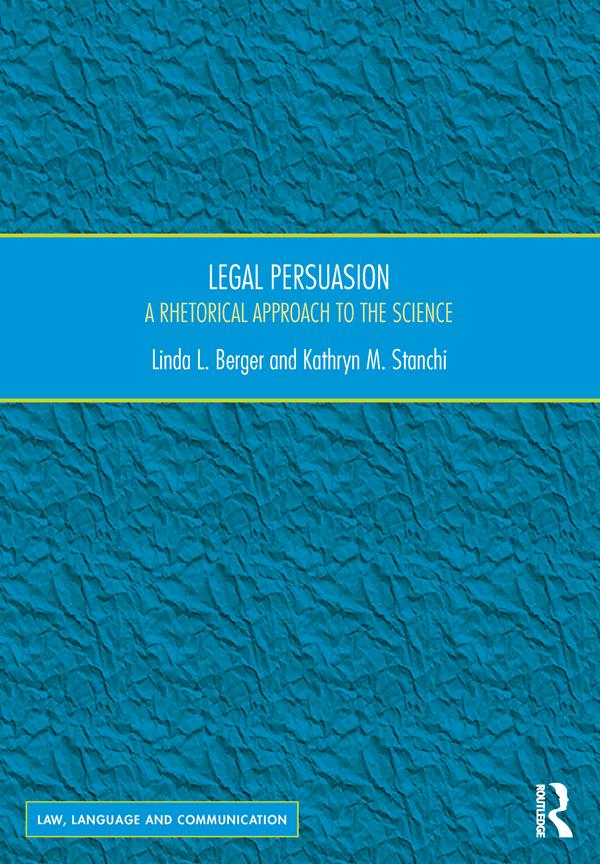
This book develops a central theme: legal persuasion results from making and breaking mental connections. This concept of making connections inspired the authors to take a rhetorical approach to the science of legal persuasion. That singular approach resulted in the integration of research from cognitive science with classical and contemporary rhetorical theory, and the application of these two disciplines to the real-life practice of persuasion. The combination of rhetorical analysis and cognitive science yields a new way of seeing and understanding legal persuasion, one that promises theoretical and practical gains. The work has three main functions. First, it brings together the leading models of persuasion from cognitive science and rhetorical theory, blurring boundaries and leveraging connections between the often-separate spheres of science and rhetoric. Second, it illustrates this persuasive synthesis by working through concrete examples of persuasion, demonstrating how to apply this new approach to the taking apart and the putting together of effective legal arguments. In this way, the book demonstrates the advantages of a deeper and more nuanced understanding of persuasion. Third, the volume assesses and explains why, how, and when certain persuasive methods and techniques are more effective than others. The book is designed to appeal to scholars in law, rhetoric, persuasion science, and psychology; to students learning the practice of law; and to judges and practicing lawyers who engage in persuasion.
Betal enkelt med kort, Klarna, Apple Pay eller Google Pay. Ikke fornøyd? Du har alltid 14 dagers angrerett. Les mer i våre vilkår. Har du spørsmål, send oss en e-post på hello@memmo.org.
Memmo gjør det enklere å studere – uansett hvor du er i verden. Hos oss samler du pensumbøker og smarte studieverktøy på ett og samme sted: sammendrag, quizer, podkaster og flashcards. Og så Ted, din studiekompis som svarer på alt du lurer på. Over 50 000 studenter studerer allerede her – bygget for at du skal lære raskere og stresse mindre.