
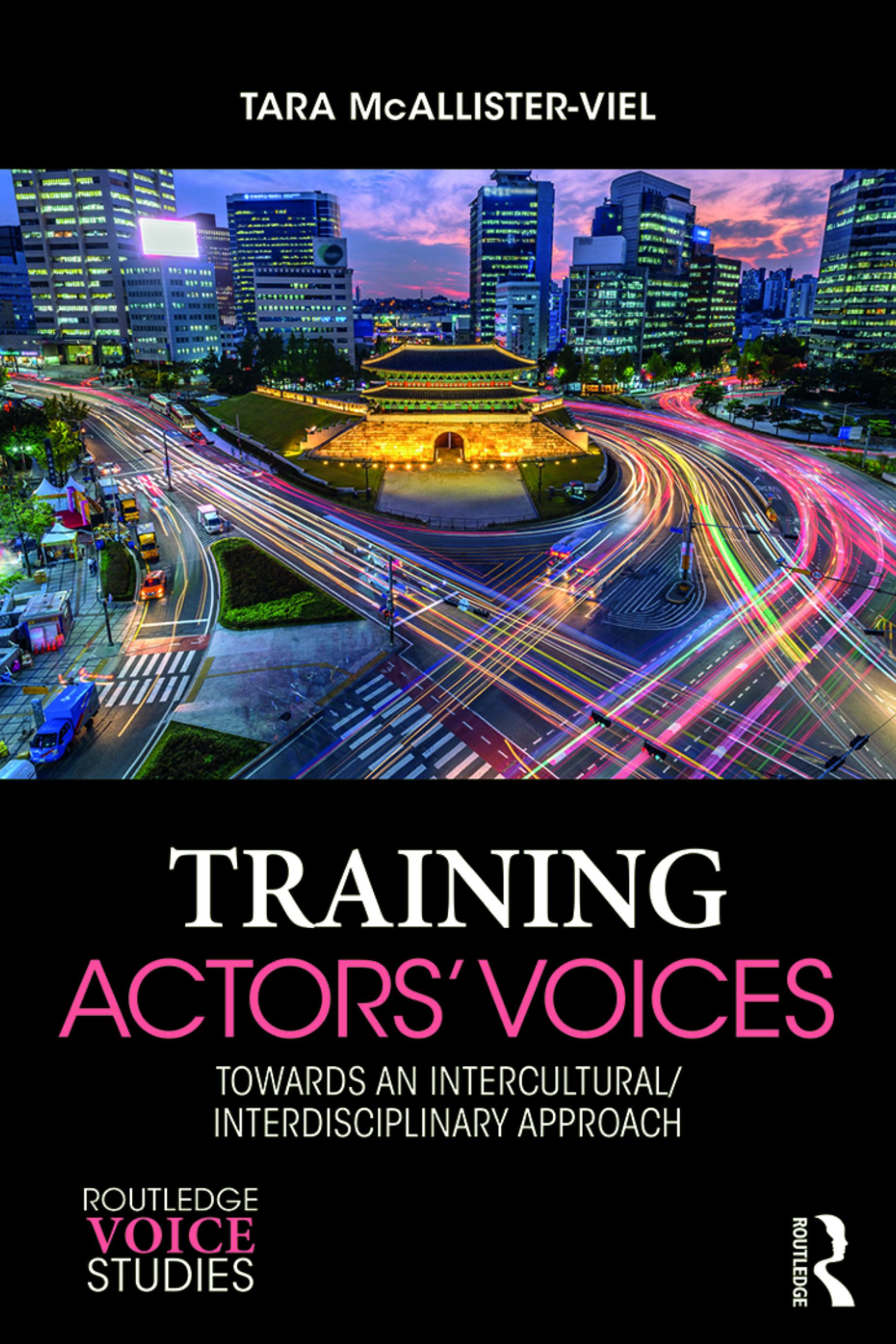
Contemporary actor training in the US and UK has become increasingly multicultural and multilinguistic. Border-crossing, cross-cultural exchange in contemporary theatre practices, and the rise of the intercultural actor has meant that actor training today has been shaped by multiple modes of training and differing worldviews. How might mainstream Anglo-American voice training for actors address the needs of students who bring multiple worldviews into the training studio? When several vocal training traditions are learned simultaneously, how does this shift the way actors think, talk, and perform? How does this change the way actors understand what a voice is? What it can/should do? How it can/should do it?
Using adaptations of a traditional Korean vocal art, p’ansori, with adaptations of the "natural" or "free" voice approach, Tara McAllister-Viel offers an alternative approach to training actors’ voices by (re)considering the materials of training: breath, sound, "presence," and text. This work contributes to ongoing discussions about the future of voice pedagogy in theatre, for those practitioners and scholars interested in performance studies, ethnomusicology, voice studies, and intercultural theories and practices.
Betal enkelt med kort, Klarna, Apple Pay eller Google Pay. Ikke fornøyd? Du har alltid 14 dagers angrerett. Les mer i våre vilkår. Har du spørsmål, send oss en e-post på hello@memmo.org.
Memmo gjør det enklere å studere – uansett hvor du er i verden. Hos oss samler du pensumbøker og smarte studieverktøy på ett og samme sted: sammendrag, quizer, podkaster og flashcards. Og så Ted, din studiekompis som svarer på alt du lurer på. Over 50 000 studenter studerer allerede her – bygget for at du skal lære raskere og stresse mindre.