
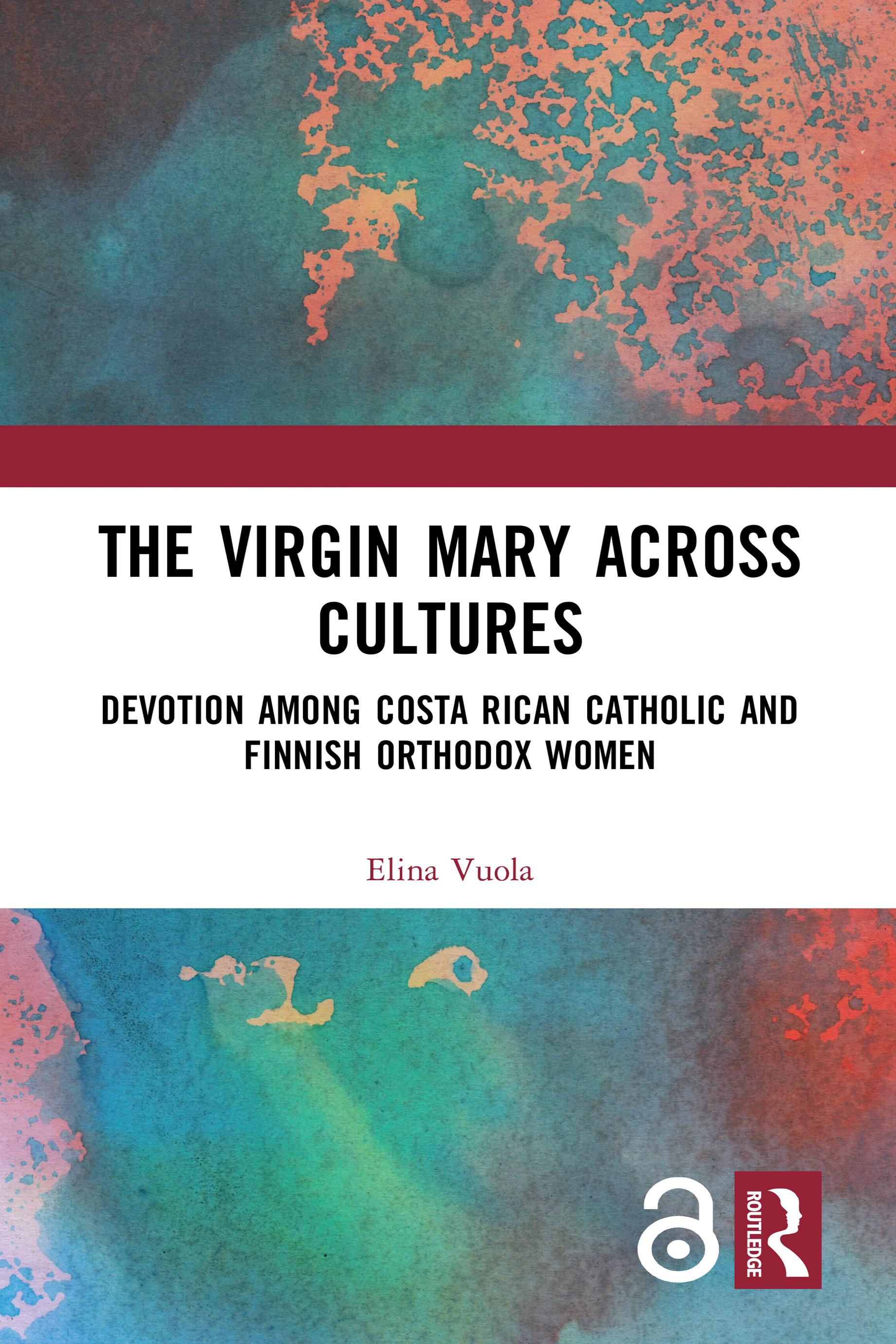
This book examines women’s relationship to the Virgin Mary in two different cultural and religious contexts, and compares how these relationships have been analyzed and explained on a theological and a sociological level. The figure of the Virgin Mary is a divisive one in our modern culture. To some, she appears to be a symbol of religious oppression, while to others, she is a constant comfort and even an inspiration towards empowerment.
Drawing on the author’s own ethnographic research among Catholic Costa Rican women and Orthodox Finnish women, this study relates their experiences with Mary to the folklore and popular religion materials present in each culture. The book combines not only different social and religious frameworks but also takes a critical look at ways in which feminists have (mis)interpreted the meaning of Mary for women. It therefore combines theological and ethnographic methods in order to create a feminist Marian theology that is particularly attentive to women’s lived religious practices and theological thinking.
This study provides a unique ethnographically informed insight into women’s religious interactions with Mary. As such, it will be of great interest to those researching in religious studies and theology, gender studies, Latin American studies, anthropology of religion, and folklore studies.
Betal enkelt med kort, Klarna, Apple Pay eller Google Pay. Ikke fornøyd? Du har alltid 14 dagers angrerett. Les mer i våre vilkår. Har du spørsmål, send oss en e-post på hello@memmo.org.
Memmo gjør det enklere å studere – uansett hvor du er i verden. Hos oss samler du pensumbøker og smarte studieverktøy på ett og samme sted: sammendrag, quizer, podkaster og flashcards. Og så Ted, din studiekompis som svarer på alt du lurer på. Over 50 000 studenter studerer allerede her – bygget for at du skal lære raskere og stresse mindre.