
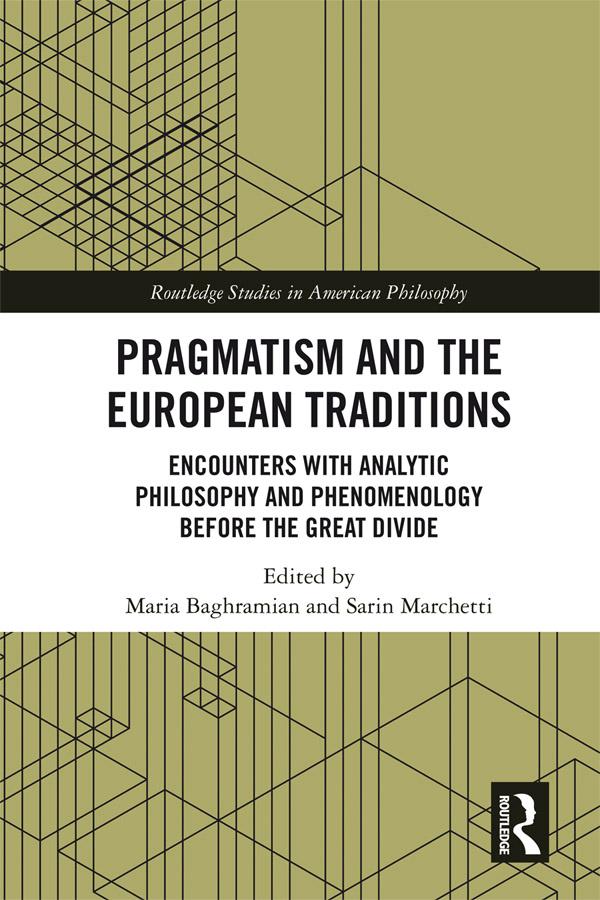
The turn of the twentieth century witnessed the birth of two distinct philosophical schools in Europe: analytic philosophy and phenomenology. The history of 20th-century philosophy is often written as an account of the development of one or both of these schools, as well as their overt or covert mutual hostility. What is often left out of this history, however, is the relationship between the two European schools and a third significant philosophical event: the birth and development of pragmatism, the indigenous philosophical movement of the United States. Through a careful analysis of seminal figures and central texts, this book explores the mutual intellectual influences, convergences, and differences between these three revolutionary philosophical traditions. The essays in this volume aim to show the central role that pragmatism played in the development of philosophical thought at the turn of the twentieth century, widen our understanding of a seminal point in the history of philosophy, and shed light on the ways in which these three schools of thought continue to shape the theoretical agenda of contemporary philosophy.
Betal enkelt med kort, Klarna, Apple Pay eller Google Pay. Ikke fornøyd? Du har alltid 14 dagers angrerett. Les mer i våre vilkår. Har du spørsmål, send oss en e-post på hello@memmo.org.
Memmo gjør det enklere å studere – uansett hvor du er i verden. Hos oss samler du pensumbøker og smarte studieverktøy på ett og samme sted: sammendrag, quizer, podkaster og flashcards. Og så Ted, din studiekompis som svarer på alt du lurer på. Over 50 000 studenter studerer allerede her – bygget for at du skal lære raskere og stresse mindre.