
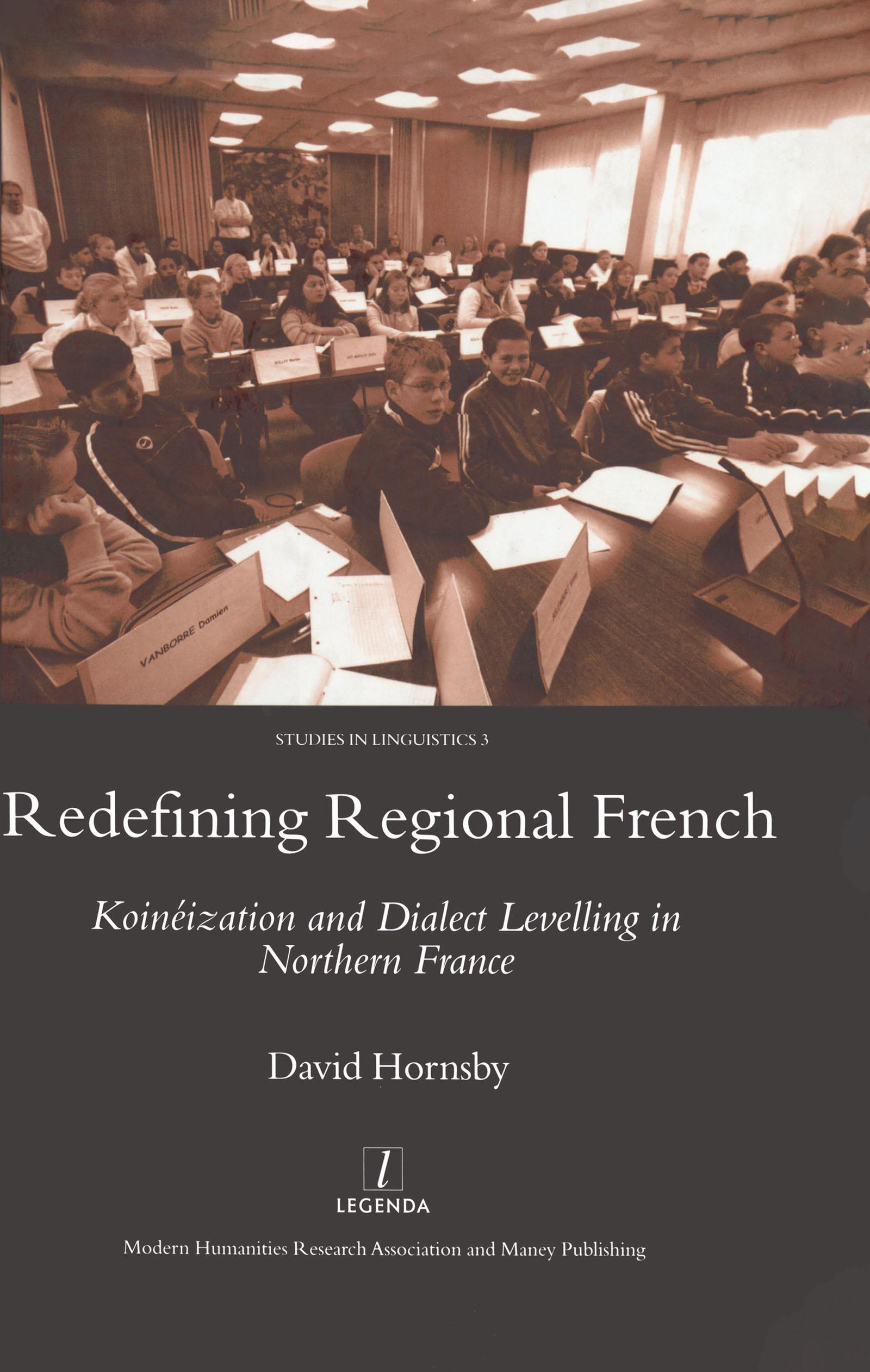
This study challenges the orthodox view that emergent regional varieties of French represent no more than an ephemeral dialect residue of little theoretical interest. It follows the life cycle of an obsolescent urban Picard variety, spoken in a mining town in the Pas-de-Calais, and attempts to unravel the complex reasons behind the survival of some local variants at the expense of others. Applying a sociolinguistic model developed by Peter Trudgill, it shows how the processes of levelling and simplification have driven change in a dialect contact situation, giving rise to a new, stable variety or koine. This is compared with other new urban varieties in Sweden and the UK, where different economic, social and demographic conditions have produced very different linguistic outcomes. The emergence of Regional French in the north, it is argued, may herald the start of a new diversification of French in Europe. This book will therefore interest both students of French and of language variation more generally.
Betal enkelt med kort, Klarna, Apple Pay eller Google Pay. Ikke fornøyd? Du har alltid 14 dagers angrerett. Les mer i våre vilkår. Har du spørsmål, send oss en e-post på hello@memmo.org.
Memmo gjør det enklere å studere – uansett hvor du er i verden. Hos oss samler du pensumbøker og smarte studieverktøy på ett og samme sted: sammendrag, quizer, podkaster og flashcards. Og så Ted, din studiekompis som svarer på alt du lurer på. Over 50 000 studenter studerer allerede her – bygget for at du skal lære raskere og stresse mindre.
Du vil kanskje også like
Kjøp boken0