
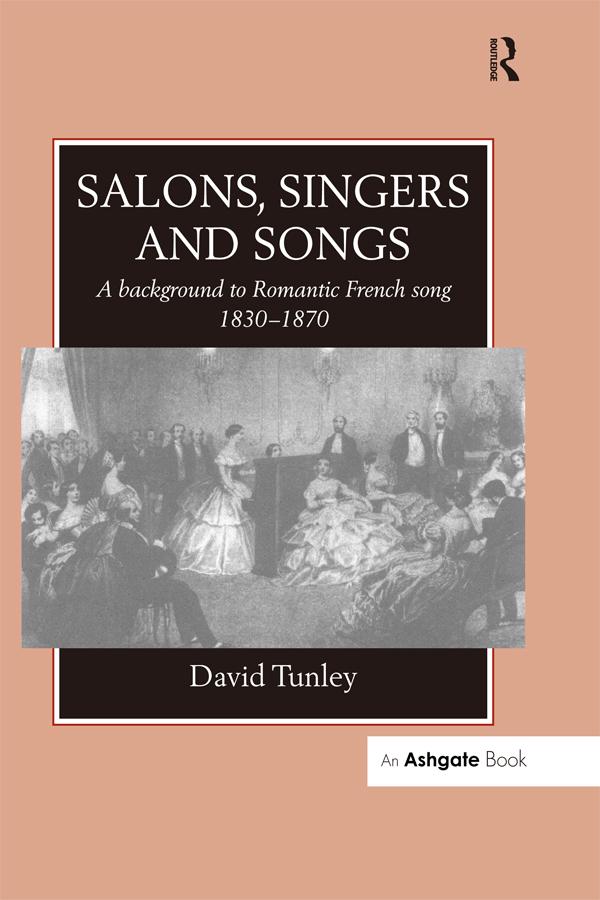
Music! It is the great pleasure of this city, the great occupation of the drawing-rooms, which have banished politics, and which have renounced literature, from ennui. Jules Janin, An American in Paris, 1843 Afternoon and evening entertainments in the drawing rooms of the aristocracy and upper middle classes were a staple of cultural life in nineteenth-century Paris. Music was often a feature of these occasions and private salons provided important opportunities for musicians, especially singers, to develop their careers. Such recitals included excerpts from favourite operas, but also the more traditional forms of French song, the romance and its successor the m die. Drawing on extensive research into the musical press of the period, David Tunley paints a vivid portrait of the nineteenth-century Parisien salons and the performers who sang in them. Against this colourful backdrop, he discusses the development of French romantic song, with its hallmarks of simplicity and clarity of diction. Combined with Italian influences and the impression made by Schubert's songs, the French romance developed into a form with greater complexity - the m die. Salons, Singers and Songs describes this transformation and the seeds it sowed for music by later composers such as Faur Duparc and Debussy.
Betal enkelt med kort, Klarna, Apple Pay eller Google Pay. Ikke fornøyd? Du har alltid 14 dagers angrerett. Les mer i våre vilkår. Har du spørsmål, send oss en e-post på hello@memmo.org.
Memmo gjør det enklere å studere – uansett hvor du er i verden. Hos oss samler du pensumbøker og smarte studieverktøy på ett og samme sted: sammendrag, quizer, podkaster og flashcards. Og så Ted, din studiekompis som svarer på alt du lurer på. Over 50 000 studenter studerer allerede her – bygget for at du skal lære raskere og stresse mindre.
Du vil kanskje også like
Kjøp boken0