
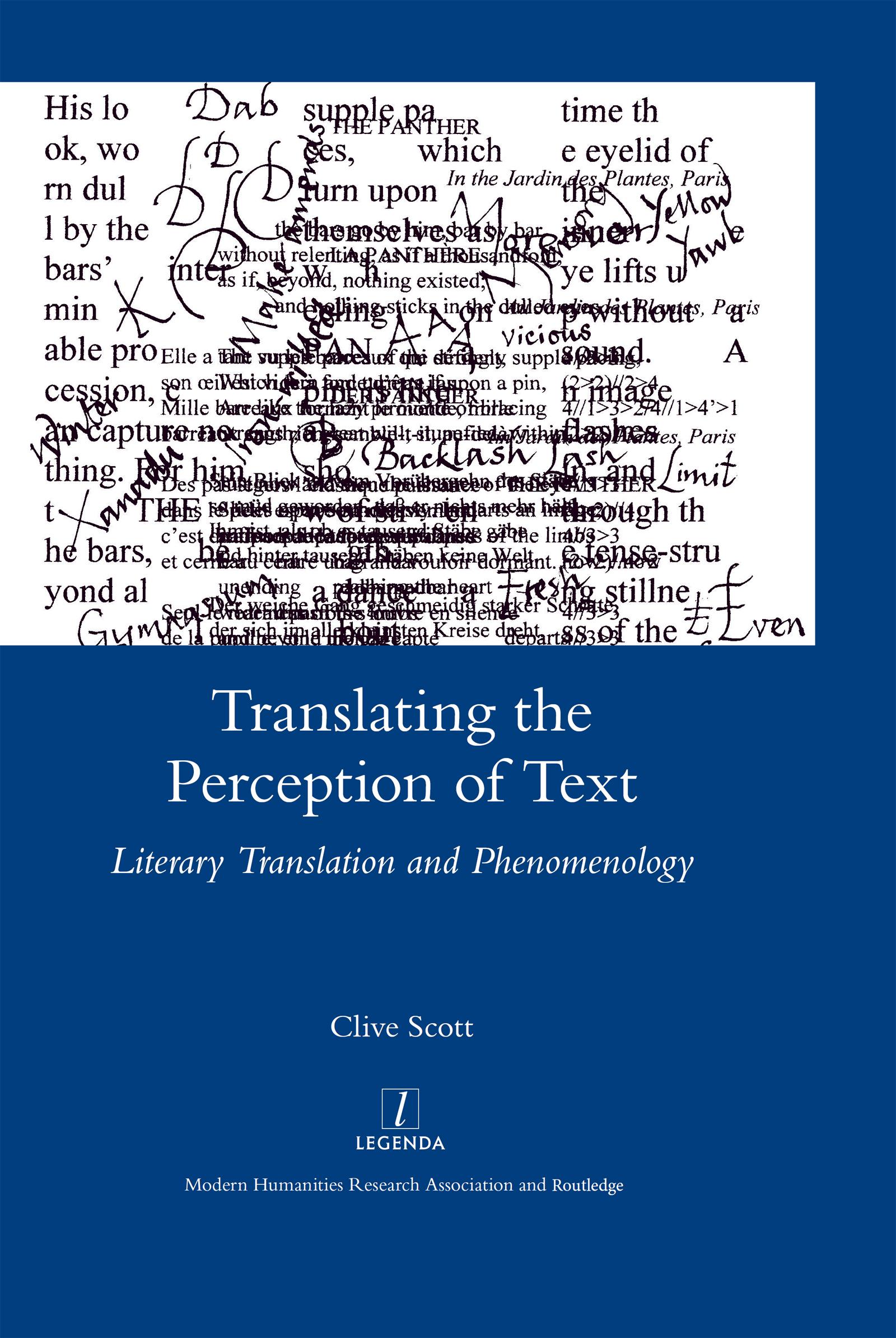
Translation often proceeds as if languages already existed, as if the task of the translator were to make an appropriate selection from available resources. Clive Scott challenges this tacit assumption. If the translator is to do justice to himself/herself as a reader, if the translator is to become the creative writer of his/her reading, then the language of translation must be equal to the translators perceptual experience of, and bodily responses to, source texts. Each renewal of perceptual and physiological contact with a text involves a renewal of the ways we think language and use our expressive faculties (listening, speaking, writing). Phenomenology and particularly the phenomenology of Merleau-Ponty underpins this new approach to translation. The task of the translator is tirelessly to develop new translational languages, ever to move beyond the bilingual into the multilingual, and always to remember that language is as much an active instrument of perception as an object of perception. Clive Scott is Professor Emeritus of European Literature at the University of East Anglia, and a Fellow of the British Academy.
Betal enkelt med kort, Klarna, Apple Pay eller Google Pay. Ikke fornøyd? Du har alltid 14 dagers angrerett. Les mer i våre vilkår. Har du spørsmål, send oss en e-post på hello@memmo.org.
Memmo gjør det enklere å studere – uansett hvor du er i verden. Hos oss samler du pensumbøker og smarte studieverktøy på ett og samme sted: sammendrag, quizer, podkaster og flashcards. Og så Ted, din studiekompis som svarer på alt du lurer på. Over 50 000 studenter studerer allerede her – bygget for at du skal lære raskere og stresse mindre.
Du vil kanskje også like
Kjøp boken0