
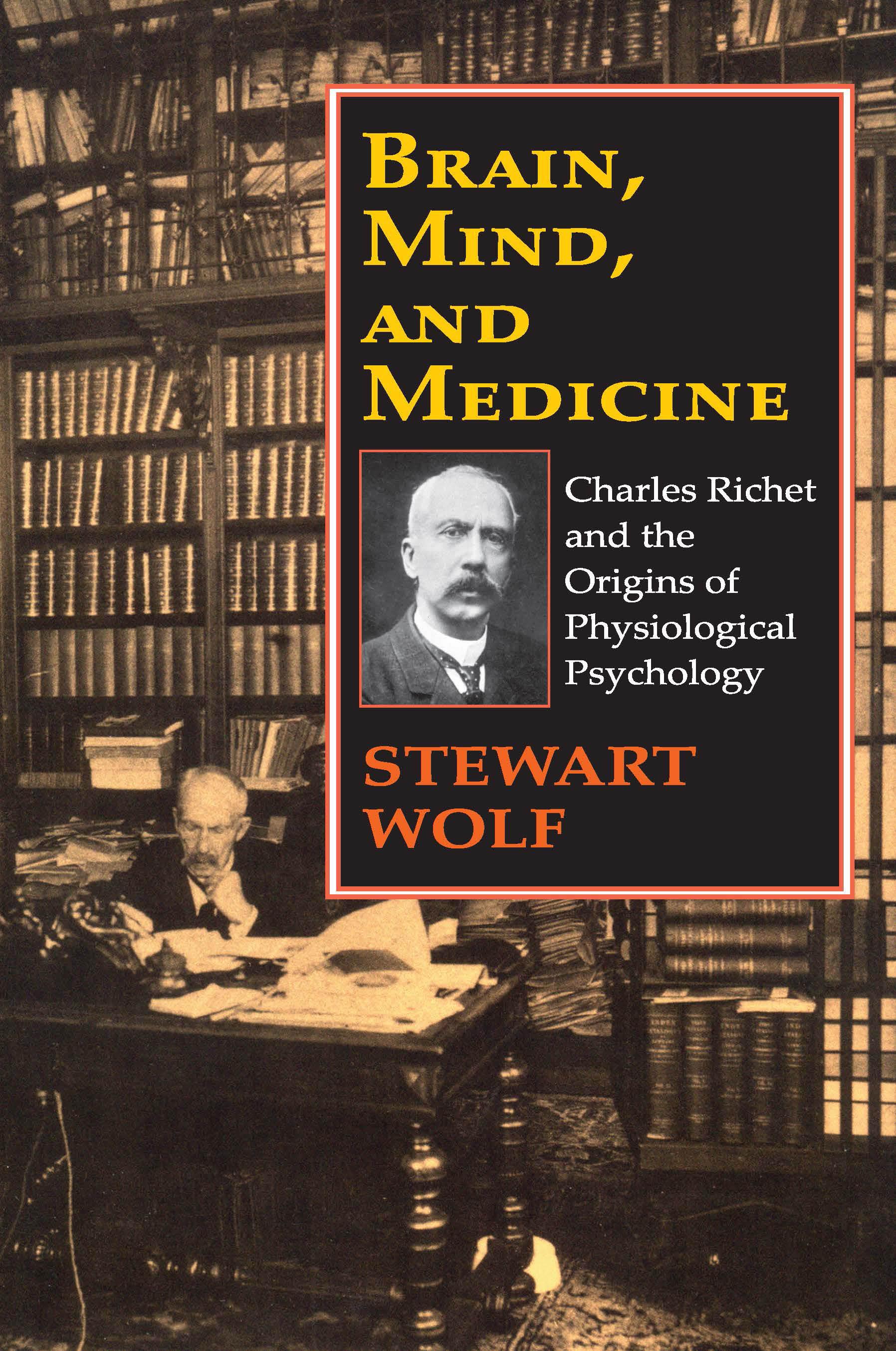
Charles Richet was one of the most remarkable figures in the history of medical science. He is best known for his work on the body's immune reactions to foreign substances for which he won the Nobel Prize in medicine in 1913. Richet was also a poet, playwright, historian, bibliographer, political activist, classical scholar, and pioneer in aircraft design.Brain, Mind, and Medicine is the first major biography of Richet in any language. Wolf brilliantly situates Richet's work in the intellectual currents of Europe during the latter half of the nineteenth and early twentieth century. Richet was a contemporary of Wilhelm Wundt and William James. All three considered psychology to be an aspect of physiology governed by biological laws. But while James and Wundt considered consciousness as a process influenced by experience without much reference to neural structures, Richet's focus was on the brain itself as shaped by genetics and experience and serving as the organ of the mind.Brain, Mind, and Medicine illuminates a significant chapter in scientific and cultural history. It should be read by medical scientists, historians, and individuals interested in medicine and psychology.
Betal enkelt med kort, Klarna, Apple Pay eller Google Pay. Ikke fornøyd? Du har alltid 14 dagers angrerett. Les mer i våre vilkår. Har du spørsmål, send oss en e-post på hello@memmo.org.
Memmo gjør det enklere å studere – uansett hvor du er i verden. Hos oss samler du pensumbøker og smarte studieverktøy på ett og samme sted: sammendrag, quizer, podkaster og flashcards. Og så Ted, din studiekompis som svarer på alt du lurer på. Over 50 000 studenter studerer allerede her – bygget for at du skal lære raskere og stresse mindre.
Du vil kanskje også like
Kjøp boken0