
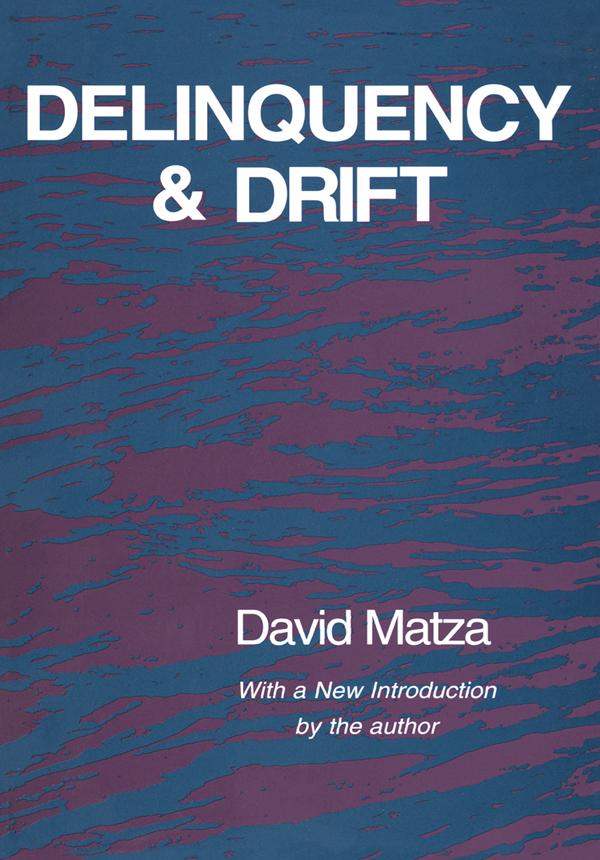
The first C. Wright Mills Award-winning book, Delinquency and Drift has become a recognized classic in the fields of criminology and social problems. In it, Matza argues persuasively that delinquent thought and delinquent action are distorted reflections of the ideas and practices that pervade contemporary juvenile law and its administration. His ideas are as persuasive today as when they were first published twenty-five years ago.
By example and illustration, Matza argues that the delinquent subculture is based on many of the same standards as the conventional social order, and that the delinquent's negation of the law is the result of his relations with an inconsistent and vulnerable legal code. Once the juvenile breaks his or her ties to the legal order, the drift to delinquency becomes relatively easy to justify.
The author also maintains that being liberated from legal constraint does not necessarily lead to delinquency; that event depends on the will to commit crime. Because delinquency remains one of our most serious social problems, it is important to consider Matza's thesis that the drift toward delinquency is frequently aided by the unwitting support of society and the guardians of social order.
Betal enkelt med kort, Klarna, Apple Pay eller Google Pay. Ikke fornøyd? Du har alltid 14 dagers angrerett. Les mer i våre vilkår. Har du spørsmål, send oss en e-post på hello@memmo.org.
Memmo gjør det enklere å studere – uansett hvor du er i verden. Hos oss samler du pensumbøker og smarte studieverktøy på ett og samme sted: sammendrag, quizer, podkaster og flashcards. Og så Ted, din studiekompis som svarer på alt du lurer på. Over 50 000 studenter studerer allerede her – bygget for at du skal lære raskere og stresse mindre.