
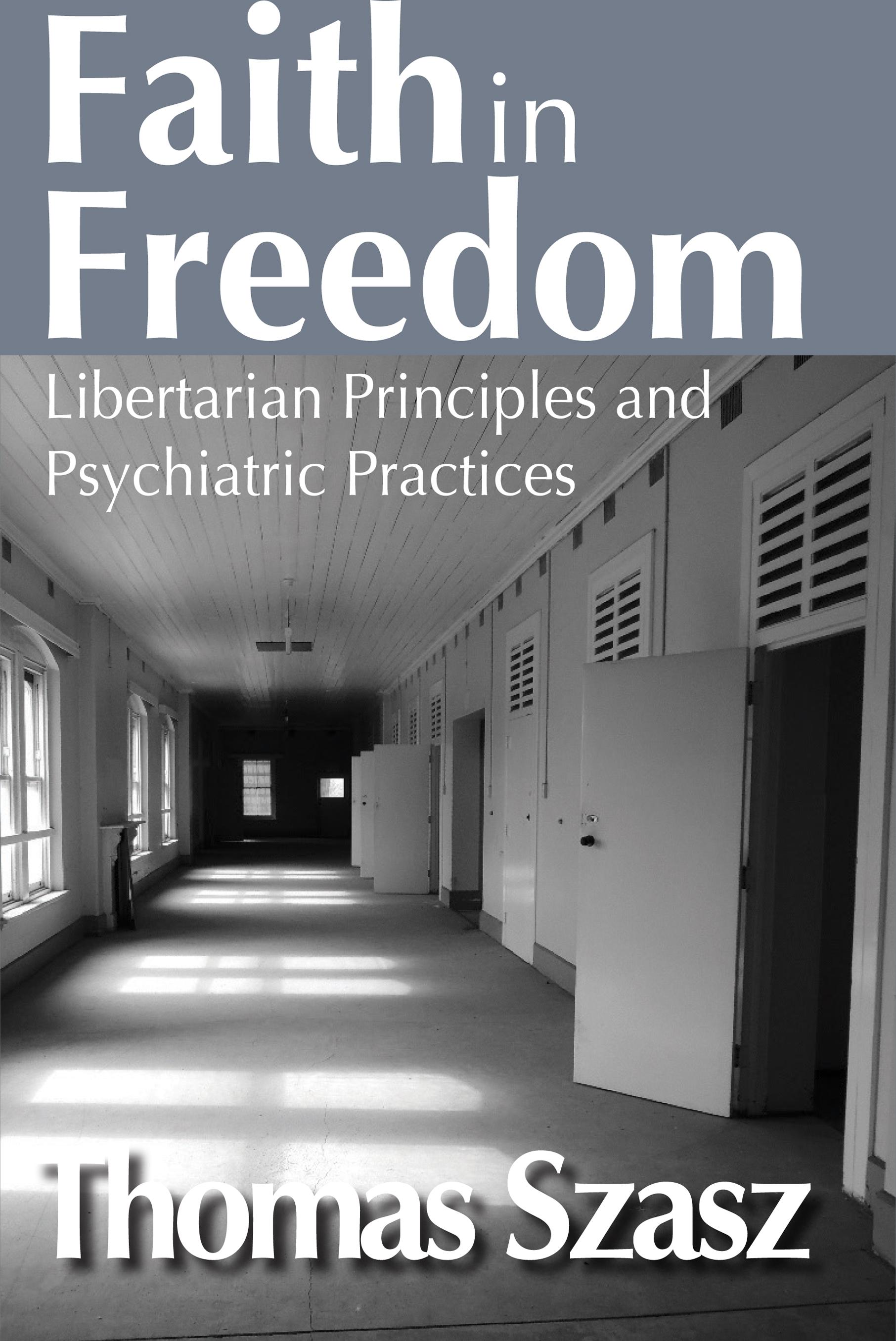
The libertarian philosophy of freedom is characterized by two fundamental beliefs: the right to be left alone and the duty to leave others alone. Psychiatric practice routinely violates both of these beliefs. It is based on the notion that self-ownership—exemplified by suicide—is a not an inherent right, but a privilege subject to the review of psychiatrists as representatives of society. In Faith in Freedom, Thomas Szasz raises fundamental questions about psychiatric practices that inhibit an individual's right to freedom.
His questions are fundamental. Is suicide an exercise of rightful self-ownership or a manifestation of mental disorder? Does involuntary confinement under psychiatric auspices constitute unjust imprisonment, or is it therapeutically justified hospitalization? Should forced psychiatric drugging be interpreted as assault and battery on the person or is it medical treatment?
The ethical standards of psychiatric practice mandate that psychiatrists employ coercion. Forgoing such "intervention" is considered a dereliction of the psychiatrists' "duty to protect." How should friends of freedom—especially libertarians—deal with the conflict between elementary libertarian principles and prevailing psychiatric practices? In Faith in Freedom, Thomas Szasz addresses this question more directly and more profoundly than in any of his previous works.
Betal enkelt med kort, Klarna, Apple Pay eller Google Pay. Ikke fornøyd? Du har alltid 14 dagers angrerett. Les mer i våre vilkår. Har du spørsmål, send oss en e-post på hello@memmo.org.
Memmo gjør det enklere å studere – uansett hvor du er i verden. Hos oss samler du pensumbøker og smarte studieverktøy på ett og samme sted: sammendrag, quizer, podkaster og flashcards. Og så Ted, din studiekompis som svarer på alt du lurer på. Over 50 000 studenter studerer allerede her – bygget for at du skal lære raskere og stresse mindre.