
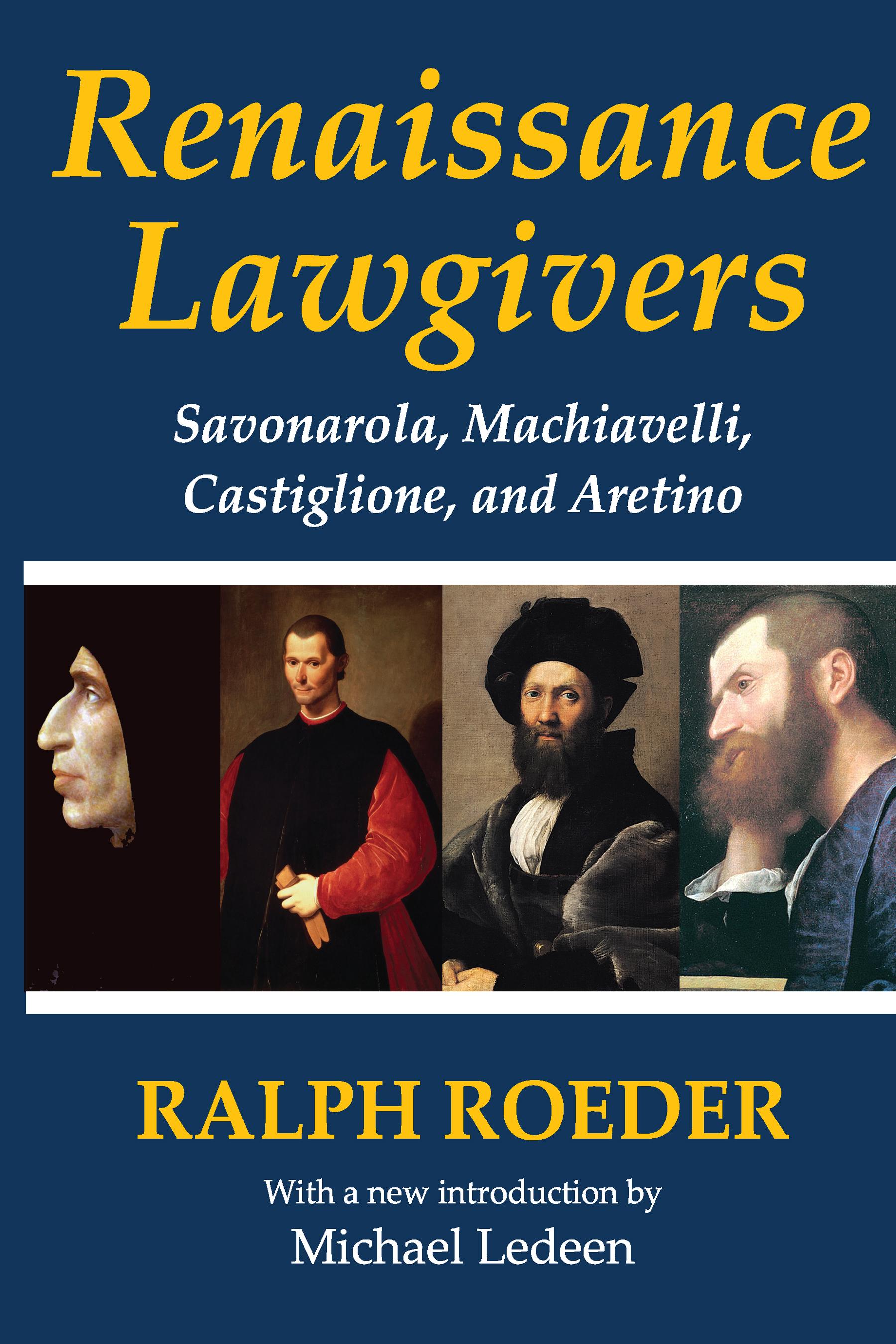
The Italian Renaissance culminated between the years 1494 and 1530. The figures examined in this classic volume illustrate four key figures representing the moral life of the period. The usual picture of that period is one of exuberant energy and positive achievement. Roeder reminds us that it was also one of moral travail and misery. Its triumphs are preserved in art, its reverses in its spiritual story. Both were the product of the same source: the period's spiritual vitality. The book is written with a sharp eye for detail, and no less, a keen appreciation of what made the Italian Renaissance a gold mine in ideas no less than in art and literature.
In the broadest sense, the Italian Renaissance can be described as one of those crises in cultural affairs that bursts accepted codes and allows for the free expression of instinct and experience in human conduct. Roeder notes that such special moments are not accomplished without resistance or completed without reaction. In Italy, the struggle was peculiarly acute because of the high civilization achieved and the intense individualism it generated. It was a period in which unbridled individualism came face-to-face with civilization and a cherished humanity.
The brief period of 1494 to 1530 marked the pinnacle of the Italian Renaissance's artistic development and the crisis of its religious, political, and social disintegration. In the lives of the four protagonists examined in this period, Roeder traces how they complemented as well as conflicted with each other. These four lawgivers sought to deal with the lawlessness of nature and its emphasis on chance and freedom, as well as the need to master the physical world and the life of the spirit. They did so by the uses of intelligence, by appeals to the moral compass embodied by the law, and in the spirit of nationalism and patriotism. This is an unusually provocative effort written on a large canvas of four larger-than-life figures.
Betal enkelt med kort, Klarna, Apple Pay eller Google Pay. Ikke fornøyd? Du har alltid 14 dagers angrerett. Les mer i våre vilkår. Har du spørsmål, send oss en e-post på hello@memmo.org.
Memmo gjør det enklere å studere – uansett hvor du er i verden. Hos oss samler du pensumbøker og smarte studieverktøy på ett og samme sted: sammendrag, quizer, podkaster og flashcards. Og så Ted, din studiekompis som svarer på alt du lurer på. Over 50 000 studenter studerer allerede her – bygget for at du skal lære raskere og stresse mindre.